
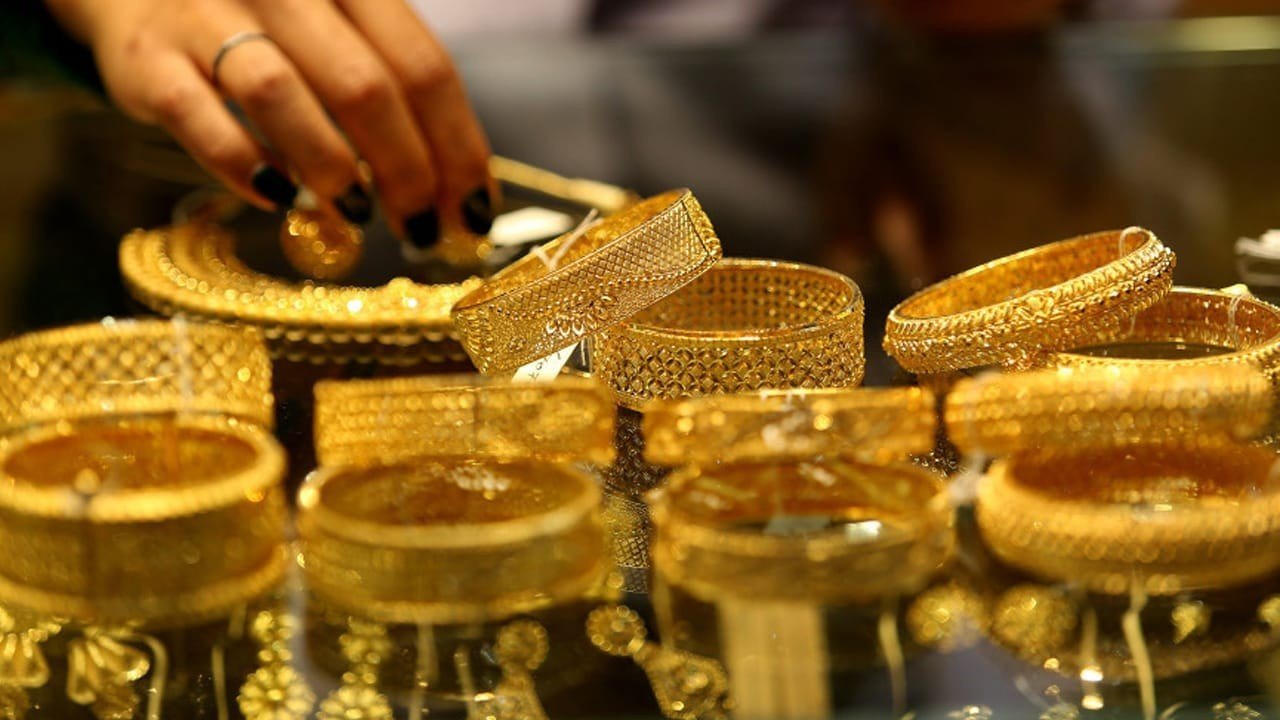

Gold prices continued their downward trend in Pakistan on Monday. The decline followed weakening global demand and ongoing uncertainty in international markets. Investors closely tracked movements in the global bullion sector as prices softened further.
According to data from the All Pakistan Sarafa Association, the price of gold per tola in Pakistan dropped significantly. It fell by Rs4,900, bringing the new rate to Rs501,162 in local markets.
Sharp Decline in Local Gold Rates
The downward pressure also affected smaller gold units. The price of 10 grams of gold decreased by Rs4,201. This brought the new rate to Rs429,665.
Market dealers reported reduced buying activity. Many investors chose to wait due to ongoing price fluctuations. As a result, trading volume remained moderate across major bullion markets in the country.
Global Market Weakness Impacts Prices
International bullion markets also showed a clear decline. Gold prices dropped by 49 dollars per ounce. The new global rate settled at 4,788 dollars per ounce.
This decline reflects broader economic uncertainty. Analysts say global demand for safe-haven assets has eased. Therefore, gold prices have come under pressure.
In addition, currency movements and investor sentiment have played a key role. Market participants are closely monitoring global financial trends before making new investments.
Silver Shows Mixed Performance
Unlike gold, silver showed mixed movement in global and local markets. International silver prices increased by 1.45 dollars per ounce, reaching 79.33 dollars.
However, local silver prices moved in the opposite direction. In Pakistan, silver per tola fell by Rs145, reaching Rs8,417. Similarly, the price of 10 grams dropped by Rs124 to Rs7,216.
This contrast highlights instability in precious metal markets. While global demand supported silver, local market conditions pulled prices down.
Geopolitical and Economic Factors Behind the Drop
Analysts link the decline in gold prices to several global developments. Rising military spending due to the ongoing Russia-Ukraine conflict has affected economic stability.
Reports of gold reserve sales by countries such as Turkey have also influenced market sentiment. These sales are aimed at managing financial pressures, which has added supply-side pressure to the market.
In addition, tensions surrounding negotiations between the United States and Iran continue to create uncertainty. These geopolitical developments have contributed to volatility in global bullion prices.
Market Outlook Remains Uncertain
Experts believe the market will remain unstable in the short term. Fluctuations in global politics and economic policies are expected to continue influencing prices.
Investors are advised to remain cautious. Sudden changes in international markets can quickly impact local rates. Therefore, short-term trading carries higher risk.
Despite the recent decline, gold remains a preferred long-term investment. Many investors continue to view it as a hedge against inflation and global instability.
For now, the market is in a wait-and-watch phase. Future price direction will depend on global economic signals and geopolitical developments.

