
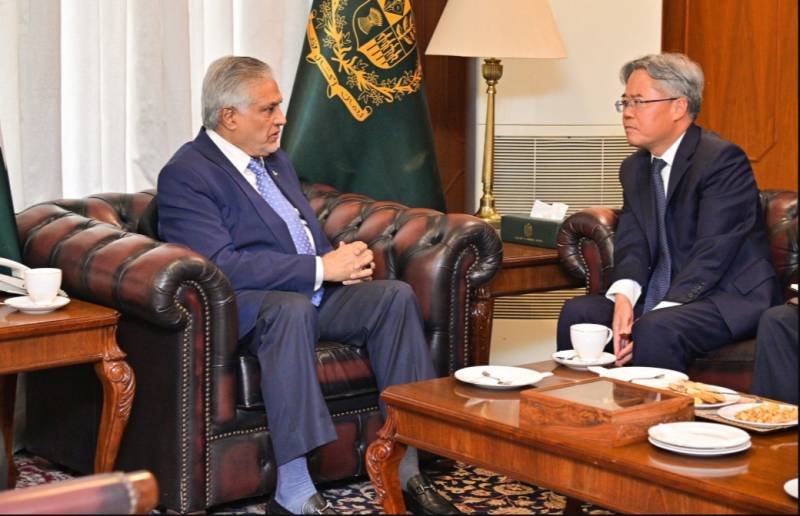

Jiang Zaidong met Ishaq Dar in Islamabad on Tuesday. The meeting focused on regional developments and ongoing diplomatic efforts. Both sides discussed cooperation and stability in the Middle East.
According to a statement from the Ministry of Foreign Affairs Pakistan, China expressed strong support for Pakistan’s mediation role. Beijing appreciated Islamabad’s efforts to facilitate dialogue between the United States and Iran.
China Supports Pakistan’s Peace Initiative
Ambassador Jiang Zaidong praised Pakistan’s diplomatic engagement. He emphasized the importance of dialogue for long-term peace. China supports efforts aimed at reducing tensions in the region.
Pakistan has been working to encourage communication between Washington and Tehran. These efforts aim to prevent further escalation. Therefore, China’s backing adds weight to Pakistan’s diplomatic role.
Strengthening Pakistan-China Strategic Partnership
During the meeting, Ishaq Dar reaffirmed strong bilateral relations. He highlighted the importance of the Pakistan-China All-Weather Strategic Cooperative Partnership. This partnership remains a key pillar of regional cooperation.
Moreover, both sides stressed the need for continued high-level exchanges. Regular engagement helps strengthen trust and coordination. As a result, both countries can respond effectively to regional challenges.
US-Iran Talks and Ceasefire Developments
Recent developments have increased global attention on US-Iran relations. Donald Trump previously stated that China played a role in encouraging Iran to accept a temporary ceasefire.
This ceasefire reportedly lasted for two weeks. It created space for initial peace talks held in Islamabad. While China confirmed its support for peace efforts, it downplayed its direct involvement.
However, analysts believe China’s role may be more strategic. Beijing has strong interests in regional stability. Energy security and global trade routes are key concerns.
China’s Expanding Diplomatic Influence
China is increasingly active in international diplomacy. Its involvement in Middle East affairs reflects a broader strategy. The country aims to position itself as a stabilizing force.
By supporting Pakistan’s efforts, China strengthens its regional presence. At the same time, it avoids direct confrontation with other global powers.
Experts suggest that China prefers a balanced approach. It supports peace initiatives while maintaining strategic flexibility. Therefore, its influence continues to grow quietly.
Implications for Regional Stability
The collaboration between Pakistan and China could shape future diplomacy. Their joint efforts may help reduce tensions between major powers.
In addition, successful dialogue between the United States and Iran could improve regional stability. It may also lower risks of conflict in sensitive areas.
However, challenges remain. Trust between the involved countries is still fragile. Diplomatic progress will depend on sustained engagement and mutual cooperation.
Outlook for Future Talks
Observers believe Pakistan will continue its mediation role. China is likely to remain supportive behind the scenes. This partnership could influence future negotiations.
As global dynamics shift, regional cooperation becomes more important. Countries are increasingly relying on diplomacy to manage conflicts.
The meeting in Islamabad highlights this trend. It shows how strategic partnerships can support peace efforts.
Overall, China’s support strengthens Pakistan’s diplomatic position. It also signals a growing role for Beijing in global conflict resolution.

