
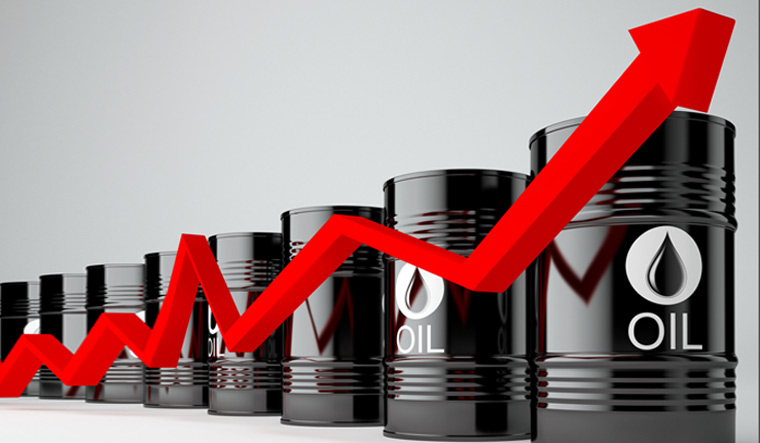

Oil prices have surged amid ongoing geopolitical tensions, especially linked to conflict scenarios involving Iran.
However, analysts warn that markets often react before facts are fully verified, creating space for misinformation to influence trading behavior.
In fast-moving crises, oil markets do not wait for confirmation. Instead, they respond immediately to early signals and breaking headlines.
As a result, even false or misleading reports can briefly move global energy prices if they appear credible in the moment.
Growing Risk of Fabricated Market Signals
Experts highlight that modern energy markets are now exposed not only to geopolitical risk but also to engineered or fabricated digital information.
Unlike traditional misinformation, AI-generated content can now replicate realistic visuals, videos, and reports at large scale.
This makes it increasingly difficult to distinguish between verified disruptions and artificial signals in real time.
In such conditions, a fabricated incident does not need to be proven. It only needs to appear believable long enough to influence trading decisions.
Fast Markets Create Space for False Signals
During geopolitical shocks, oil markets typically react within minutes based on incomplete information.
Price movements often occur before official confirmation of events such as pipeline disruptions, tanker attacks, or refinery incidents.
If the initial signal later proves false, markets may still have already adjusted, causing volatility and correction cycles.
This creates a structural gap between perception and reality in energy pricing.
Rise of AI-Generated Misinformation
The report highlights how artificial intelligence has changed the information ecosystem.
Synthetic images, videos, and audio clips are now widely shared across social media platforms, often going viral before verification.
Examples include AI-generated celebrity content, fake conflict footage, and digitally created disaster scenes that spread rapidly before being debunked.
In conflict zones, misleading visuals can be mistaken for real-time battlefield updates, amplifying panic and market reactions.
As a result, misinformation is no longer limited to text-based rumors. It now includes highly realistic multimedia content.
Expanding Data and Detection Technologies
To address this challenge, technology platforms are developing systems designed to detect manipulated or synthetic content in real time.
These systems analyze multiple layers of data, including pixel patterns, compression structures, audio signatures, metadata, and linguistic behavior.
The goal is to identify whether content is authentic or artificially generated before it influences public perception or financial decisions.
Some platforms already use large datasets containing millions of labeled examples of real and synthetic media to train detection models.
These systems continuously improve as new forms of AI-generated content emerge.
Verification Through Multi-Layer Analysis
Modern verification tools use a combination of artificial intelligence models working together.
One model may generate synthetic content, while another is trained to detect inconsistencies within it.
This continuous cycle allows detection systems to evolve alongside increasingly sophisticated AI generation tools.
In some cases, content can also be digitally signed at its source using cryptographic systems to confirm authenticity.
This approach helps establish content provenance before it is distributed across financial or media platforms.
Integration Into Financial and Media Systems
Verification tools are being designed for integration into sectors where rapid decision-making is critical.
These include financial trading systems, enterprise communication platforms, media pipelines, and identity verification services.
In these environments, decisions are often made within seconds, increasing the risk of acting on false or unverified information.
By embedding authenticity checks directly into workflows, organizations aim to reduce exposure to misinformation-driven volatility.
Market Impact of Digital Uncertainty
As digital content becomes harder to verify, analysts warn that financial markets may become increasingly sensitive to false signals.
Oil markets, in particular, are highly reactive to geopolitical headlines, making them vulnerable to misinformation-driven spikes.
Even brief viral misinformation can influence trading behavior before corrections occur.
This creates a new form of market risk where perception can temporarily outweigh reality.
Conclusion: A New Layer of Market Risk
The intersection of AI-generated content and fast-moving financial markets introduces a new challenge for global energy pricing.
Oil traders and institutions must now consider not only geopolitical events but also the authenticity of digital information driving those narratives.
As technology evolves, verification systems may become as important as traditional market intelligence in preventing misinformation-driven volatility.

