

When Governance Becomes a National Security Imperative
Every nation eventually reaches a point when institutions that once served it well begin to strain under the weight of new realities. Population growth, rapid urbanisation, climate change and evolving security threats gradually expose administrative systems designed for another era. The question is not whether those institutions suddenly failed; it is whether they have evolved quickly enough to meet the demands of a changing state.
Pakistan may be approaching such a moment.
For decades, debates surrounding Balochistan have largely been framed through the lens of security. Terrorist attacks, insurgent violence, border management and military operations have understandably dominated public discourse as successive governments sought to restore stability in Pakistan’s largest province. The sacrifices made by Pakistan’s armed forces, law enforcement agencies and ordinary citizens in this struggle are immense, while countless intelligence-based operations have disrupted militant networks and significantly weakened organisations seeking to challenge the writ of the state.
Yet military success has not always translated into permanent stability.
Violence continues to re-emerge in different forms. Coordinated terrorist attacks, assaults on security installations, attacks on public infrastructure and attempts to disrupt strategic development projects demonstrate that militant organisations continue to adapt their tactics. According to the Global Terrorism Index 2026, Pakistan experienced one of the sharpest deteriorations in terrorist violence globally, with Khyber Pakhtunkhwa and Balochistan accounting for the overwhelming majority of attacks and fatalities. The report serves as a stark reminder that while terrorism remains a national challenge, its centre of gravity has increasingly shifted towards Pakistan’s western regions. Pakistan’s response has remained firm.
Security forces continue to conduct intelligence-based operations across Balochistan, dismantling terrorist hideouts and disrupting networks responsible for attacks against civilians and state institutions. These operations remain indispensable to protecting lives and preserving national security.
Increasingly, however, Pakistan’s own leadership is recognising that military operations represent only one part of a much broader equation.
During a recent media briefing, DG ISPR Lieutenant General Ahmed Sharif Chaudhry emphasised that while terrorists would continue to be pursued relentlessly, lasting peace ultimately depends upon effective governance, development and the state’s ability to serve its citizens. Separately, Interior Minister Mohsin Naqvi argued that Pakistan’s existing administrative system has reached its limits and that governance must be brought closer to the people through stronger administrative arrangements.
Although these statements emerged in different contexts, together they reflect an important shift in national thinking.
The conversation is no longer confined to defeating terrorists alone.
It is increasingly focused on whether Pakistan’s governance architecture is capable of responding to the complex realities of the twenty-first century. That debate is particularly relevant in Balochistan.
Covering approximately 44 percent of Pakistan’s total land area while accommodating less than six percent of the country’s population, Balochistan presents governance challenges unlike those of any other province. Delivering healthcare, education, policing, disaster management and development projects across vast deserts, mountain ranges and sparsely populated districts requires administrative systems capable of responding quickly to local realities rather than relying solely on distant provincial capitals.
The question, therefore, extends well beyond security. It asks whether governance itself has kept pace with Pakistan’s transformation.
According to the 2023 Population and Housing Census, Pakistan’s population has reached approximately 241.5 million, making it the world’s fifth most populous country. Punjab alone is home to nearly 127.7 million people, representing almost 53 percent of the national population. Yet the country’s provincial structure largely reflects an administrative model developed for a Pakistan whose population was only a fraction of today’s size.
This demographic transformation has fundamentally altered the responsibilities of government.
Provincial administrations today are expected not only to provide education, healthcare and infrastructure, but also to manage cyber threats, coordinate counterterrorism, respond to climate emergencies, oversee rapidly expanding urban centres and deliver increasingly sophisticated public services to populations that have grown exponentially over the past seven decades.
Climate change has made these governance challenges even more urgent.
The catastrophic floods of 2022 represented one of the largest humanitarian disasters in Pakistan’s history. According to the World Bank’s Post-Disaster Needs Assessment, more than 33 million people were affected, over 1.7 million homes were damaged or destroyed, and total economic losses exceeded US$30 billion. Beyond the staggering human and economic cost, the disaster exposed the enormous pressure placed upon Pakistan’s administrative institutions during national emergencies.
Many hoped the catastrophe would remain an exceptional event. Instead, it appears to have become part of a troubling pattern.
The 2025 monsoon season once again brought widespread flooding across several regions of Pakistan, affecting millions of people, damaging public infrastructure, agricultural land and thousands of homes, while placing enormous pressure on provincial disaster-management authorities. Humanitarian organisations and post-season assessments concluded that climate-induced disasters were becoming increasingly frequent, reinforcing warnings that Pakistan remains among the countries most vulnerable to climate change.
The trend has continued into 2026.
According to the National Disaster Management Authority (NDMA) and the Pakistan Meteorological Department (PMD), the current monsoon season has already resulted in significant loss of life, infrastructure damage and flash floods across multiple provinces, while authorities continue to warn of above-normal rainfall during the remainder of the season. The recurring nature of these disasters demonstrates that climate emergencies are no longer isolated events—they have become recurring governance challenges requiring faster decision-making, stronger institutional coordination and more responsive administrative structures.
This is where the national conversation begins to change.
Climate resilience is no longer simply an environmental objective.
It has become a measure of governance capacity.
Every flood now tests the ability of district administrations, provincial governments, rescue agencies, health departments and local institutions to coordinate effectively under extraordinary pressure. Every delayed response, every breakdown in communication and every administrative bottleneck carries consequences measured not merely in financial losses but in human lives.
Over the period of time, The Truth International has consistently argued that this broader governance debate deserves national attention. Through its policy research and special publications, the publication has maintained that discussions on administrative restructuring should not be viewed primarily through ethnic or political lenses. Rather, they should be understood as a debate about state capacity—the ability of public institutions to deliver security, justice, development and disaster response efficiently across a federation that has changed beyond recognition since independence.
Viewed from this perspective, the question is no longer simply whether Pakistan requires better governance.
The more fundamental question is whether the country’s existing administrative architecture remains adequate for governing a nation of more than 241 million people, confronting recurring climate disasters, persistent security threats and rapidly evolving economic and demographic realities.
That question lies at the heart of Pakistan’s next great governance debate.
Why Administrative Reform Has Returned to Pakistan’s Debate
The debate over administrative restructuring in Pakistan has repeatedly resurfaced during periods of economic uncertainty, security challenges and governance failures. However, the discussion has often moved beyond administrative efficiency and become linked with political representation, ethnic identity and resource distribution.
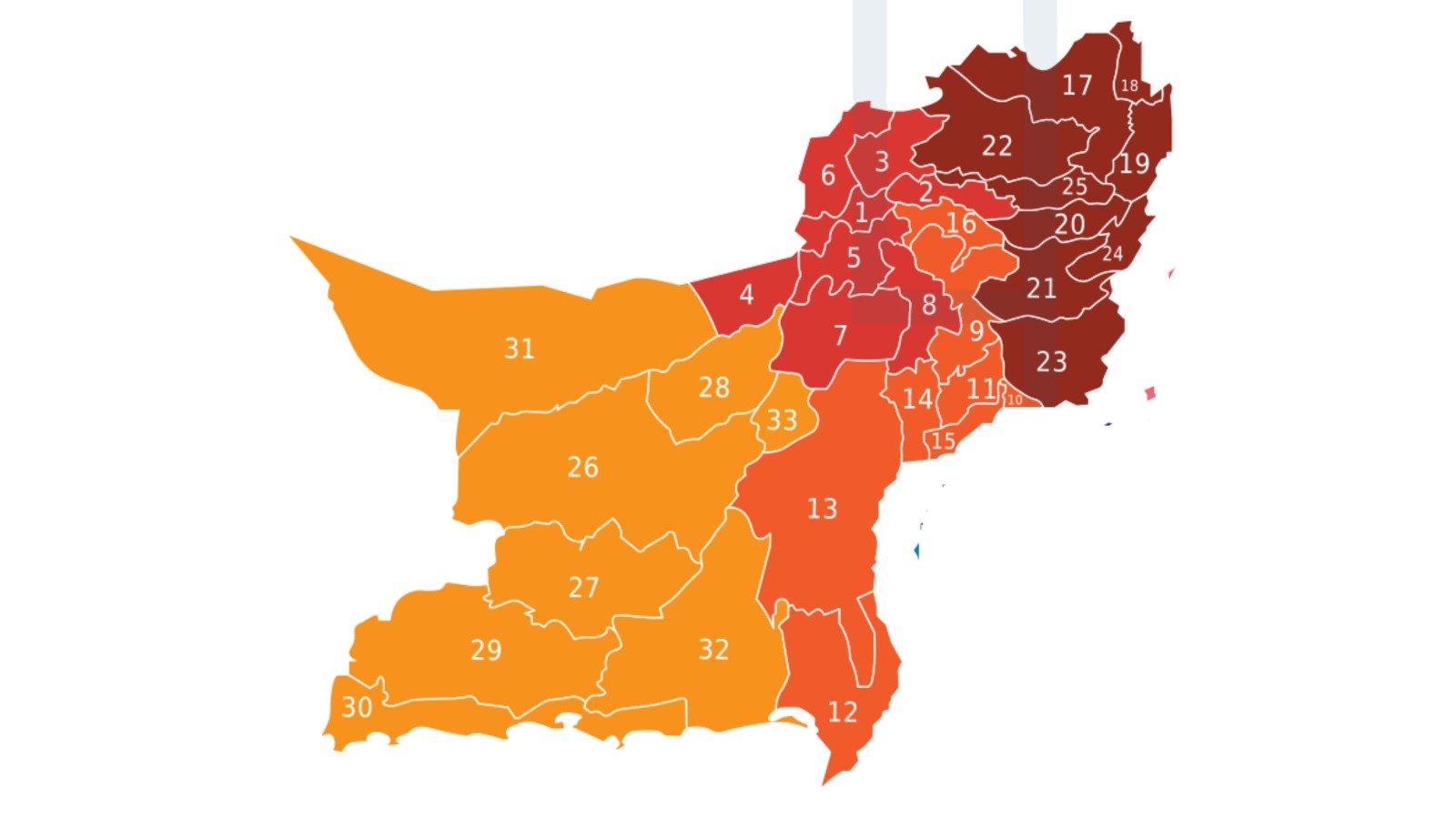
Balochistan has emerged as a key focus of this debate because the province reflects many of the challenges confronting Pakistan’s governance system. Despite being the country’s largest province by area, covering nearly 44 per cent of Pakistan’s territory, Balochistan has the smallest population among all provinces. Its vast landscape, scattered settlements and difficult terrain make public service delivery considerably more challenging than in densely populated regions.
For many residents of remote districts, access to healthcare, education, government offices and emergency services requires travelling long distances. During natural disasters such as floods, these geographical barriers become more severe, slowing rescue operations and relief efforts.
The argument for administrative reform is therefore based largely on the question of state capacity. Supporters believe that smaller and more empowered administrative units could improve decision-making, strengthen accountability and allow governments to respond more effectively to local needs.
However, experts argue that restructuring alone cannot resolve governance challenges. Without financial independence, stronger institutions and effective local governments, new administrative arrangements may simply reproduce existing problems. The success of any reform depends not only on changing boundaries but also on improving institutional capacity.
Balochistan’s challenges are shaped by multiple factors, including infrastructure shortages, limited economic opportunities, security concerns and decades of uneven development. Any meaningful governance reform must therefore address these underlying issues rather than focusing only on administrative divisions.
The experience of other countries shows that successful restructuring requires a combination of political consensus, fiscal authority and strong institutions.
International Lessons in Administrative Reform
Around the world, several countries have reorganised their administrative systems to improve governance and service delivery. These reforms have generally been driven by the need to bring government closer to citizens, reduce regional inequalities and strengthen local decision-making.
Countries with large territories, including Indonesia, Australia and Canada, have adopted decentralised governance models that provide greater authority to regional administrations while maintaining national coordination.
Indonesia’s decentralisation reforms after 1998 transferred significant responsibilities to provinces and local governments, allowing regions to design policies according to local requirements. Similarly, Australia and Canada rely on strong provincial and state governments that manage many areas of public policy while remaining part of a federal structure.
However, international examples also demonstrate that decentralisation succeeds only when regional governments have adequate financial resources and administrative expertise.
For Pakistan, the lesson is clear: administrative restructuring cannot be treated as a simple redrawing of provincial boundaries. It must be part of a broader strategy aimed at improving governance, strengthening institutions and ensuring equal access to development.
For Balochistan, where geography and governance challenges intersect, the debate represents an opportunity to rethink how the state delivers services in its most strategically important yet historically underserved region.

