
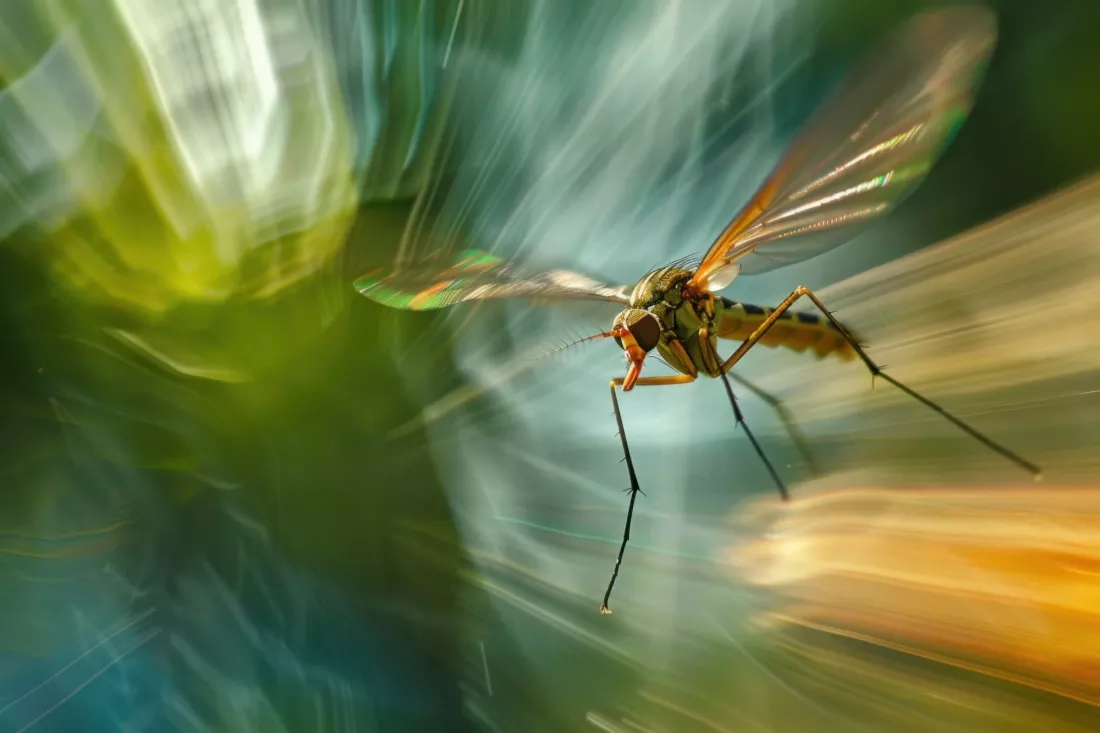

Steven Cheng, a computer vision and robotics specialist, built a system that uses deep learning and a laser to target and kill mosquitoes. He documented the project as he developed what he calls the ultimate mosquito killer, turning a common household problem into an engineering challenge.
Cheng trained a custom mosquito detection model using a dataset he built himself. He captured high-resolution images with a DSLR camera and a zoom lens to record mosquitoes in flight. He also used the same camera as a live sensor for detection. He manually labeled images to teach the model to recognize mosquitoes against complex backgrounds.
Cheng said data collection left him covered in mosquito bites, showing the real-world difficulty of the project. He also said the training process pushed his graphics card heavily while it processed large image sets. Eventually he reported strong performance, saying the model reliably detected mosquitoes in real time.
After training the model, Cheng built a response system using a precision laser mounted on a high-speed rotary stage. The system tracks mosquitoes and fires the laser with high accuracy. Cheng described the laser as capable of instantly destroying mosquitoes once the model confirms a target.
The system works in a closed loop. The camera detects a mosquito, the model confirms it, and the hardware adjusts aim and fires in real time. Cheng also added a wide-angle safety camera to detect people and flammable objects. If it detects risk, the system disables the laser to prevent accidents.
He said the project demonstrates how computer vision can solve everyday problems using accessible hardware and custom AI models, while also highlighting the challenges of building reliable real-time detection systems in uncontrolled environments.

