
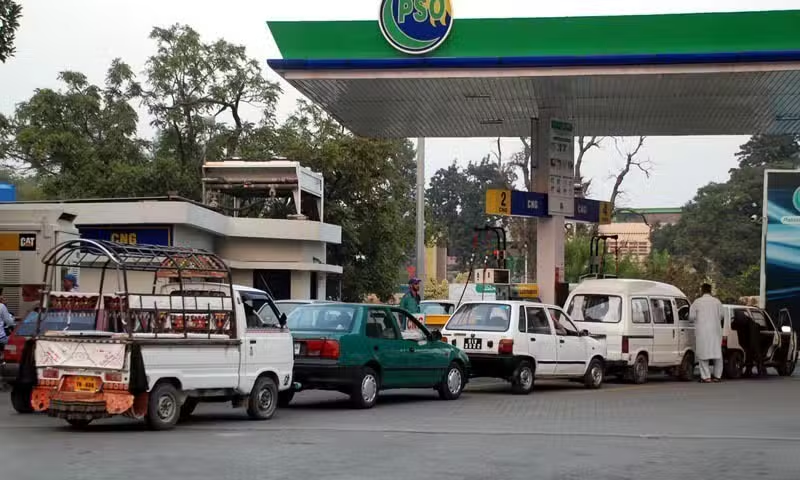

After months of pressure from rising fuel costs and regional instability, the government has signaled possible relief for consumers by indicating that petroleum prices could decline in the coming review cycle if international market trends continue in the same direction.
The development comes as global oil markets react to expectations that Iranian crude could gradually return to international supply channels, creating downward pressure on prices and raising hopes for inflation relief.
Federal Minister for Petroleum Ali Pervaiz Malik said the government was preparing to share encouraging developments regarding petroleum pricing and emphasized that public relief remains part of the government’s stated approach.
Government Signals Possible Fuel Price Reduction
Speaking about the latest developments in energy markets, the petroleum minister indicated that the government may announce lower petroleum prices in the coming days.
“We will bring good news regarding a reduction in petroleum prices,” the minister said.
He acknowledged that households had faced financial pressure in recent months due to regional tensions and rising international oil costs.
According to the minister, authorities remain committed to reducing prices whenever conditions allow.
Global Oil Markets Shift After US-Iran Developments
The latest expectations emerged after progress toward ending tensions between the United States and Iran created optimism across international energy markets.
The conflict had disrupted regional stability and affected shipping routes linked to global oil supply.
As expectations grew that Iranian crude could return to international markets, oil prices started moving downward.
Brent crude futures dropped below the $80 mark and reached their lowest level since the beginning of the regional conflict earlier this year.
Before tensions escalated, Brent crude had closed at $72.48 per barrel on February 27, while West Texas Intermediate closed at $67.02 per barrel.
These movements renewed expectations that countries dependent on imported energy could eventually benefit from lower fuel costs.
Weekly Fuel Reviews Continue in Pakistan
The government has been reviewing petroleum prices on a weekly basis since regional conflict disrupted energy markets earlier this year.
According to current rates, petrol stands at Rs373.78 per litre while high-speed diesel is priced at Rs378.78 per litre.
The next pricing decision is expected on Friday following continued monitoring of international oil trends.
The petroleum minister reiterated that relief remains part of the government’s policy direction.
“There is a promise and the prime minister’s direction that we will reduce prices to the extent possible,” Malik added.
He also stated that lower international oil prices could create room for adjustments in domestic pricing.
Government Says Global Relief Will Reach Consumers
The minister further explained that the government intends to transfer international price benefits to consumers if market conditions improve.
“The prime minister had assured that whenever global prices fall, the benefit will be transferred to the people,” he said.
He also noted that expectations surrounding Iranian oil availability were already influencing market behavior.
“On this expectation, oil prices are falling in the international market,” he added.
How Fuel Prices Reached Record Levels
Pakistan experienced sharp fuel price increases earlier this year after conflict disrupted regional trade routes and energy supply expectations.
International oil prices rose rapidly, leading to multiple domestic revisions.
Fuel prices increased more than 50 percent during the early phase of the crisis.
Petroleum rates were revised twice during the first week of March.
The most significant increase came in April.
During that period, petrol reached a record Rs458.4 per litre after a rise of Rs137 per litre.
Shortly afterward, the government reduced the petroleum levy by Rs80 per litre, bringing prices down to approximately Rs378 per litre.
Last month, another increase added Rs26.77 per litre to both petrol and diesel.
A further adjustment followed the next week and pushed prices closer to Rs400 per litre before later revisions brought some reduction.
Will Consumers Finally See Relief?
While no official reduction has been announced yet, recent movements in international energy markets have strengthened expectations of lower domestic fuel prices.
The final decision will depend on global oil trends and the government’s pricing review process.
For consumers managing higher transport and household costs, the coming announcement may determine whether international market changes begin translating into meaningful relief at local fuel stations.

