

Tragedy struck Chakwal city on the night of June 10. A peaceful family visit quickly turned into a horrific nightmare. Nine-year-old Hania Ahmed, an Australian citizen, lost her life on the spot. Initial reports blamed fleeing robbers for her tragic death. However, a stunning new twist has completely changed the course of this investigation.
The victim’s father, Adeel Ahmed, has come forward with a devastating claim. He states that robbers did not actually open fire during the incident. Instead, he reveals that direct firing by a Crime Control Department (CCD) officer caused the tragedy. This shocking revelation has ignited intense public outrage. Furthermore, it raises serious questions about police accountability and systemic corruption.
The Fatal Night in Chakwal
Adeel Ahmed was traveling with his family when the incident occurred. The family had traveled from Australia to visit their loved ones in Pakistan. During a robbery attempt, gunfire erupted suddenly. Little Hania died instantly from a gunshot wound.
Meanwhile, the gunfire seriously injured Adeel and his 11-year-old brother, Affan. Only the mother, Dr. Sidra Khan, escaped physical harm. However, she remained deeply traumatized by the horrific event.
The tragic loss of an innocent child sparked immediate international concern. Consequently, authorities faced massive pressure to deliver swift justice. The Punjab police eventually admitted to a catastrophic mistake. Both the police department and the CCD later described the incident as a case of “criminal negligence”. Yet, the family’s fight for the truth was only just beginning.
Allegations of a Police Cover-Up
Adeel Ahmed recently submitted a formal application to District Police Officer (DPO) Kashif Zulfiqar. In this document, he leveled serious accusations against local law enforcement officers. Specifically, he targeted City Police Sub-Inspector Ahsan Abdullah.
Adeel alleged that the sub-inspector deliberately misrepresented the facts in the First Information Report (FIR). The initial FIR claimed that unknown robbers opened fire to secure their escape. According to Adeel, this narrative was completely fabricated.
The father also detailed abusive behavior at the District Headquarters Hospital. He claimed that Constable Ateeque misbehaved with him at the police service counter. At that moment, Adeel was fighting for his life in critical condition.
“The father recalled that when City Police Station personnel arrived at the hospital, Constable Ateeque and sub-inspector Abdullah listened to the entire incident and then allegedly pressured him to sign and put his thumbprint on a blank paper, saying he would only then be allowed to see a doctor.”
Coercion Under Extreme Distress
The timeline of events paints a grim picture of police coercion. While the family reeled from the shooting, officers allegedly exploited their vulnerability. Adeel added that he and his son were severely injured. His young daughter had already passed away. Additionally, his traumatized wife was in severe distress due to profound shock.
Despite their agony, officers allegedly forced Adeel to sign blank papers. Only after securing his thumbprint did authorities allow a medical examination. Due to their critical condition, the hospital doctor referred them to an advanced facility. Both victims were quickly rushed to Benazir Bhutto Shaheed Hospital in Rawalpindi.
Discovering the Altered Charges
The deception became clear the following day. Adeel returned to Dhudial to attend his daughter’s funeral. There, he met with CCD Sub-Inspector Muhammad Irfan. By this time, officials had transferred the case investigation to the CCD.
During this meeting, Adeel learned the horrific truth about the shooting. He discovered that a CCD constable’s weapon caused the fatal shots. Furthermore, he realized that Sub-Inspector Abdullah had altered his official statement.
The officer applied Section 322 regarding unintentional murder of the Pakistan Penal Code. He purposefully avoided Section 302, which covers intentional murder. He did this despite the facts clearly pointing toward intentional murder.
The original FIR claimed that robbers snatched jewelry from Adeel’s wife. It stated that they took cover behind a vehicle and fired shots.
“This was fabricated by the Sub-Inspector Ahsan Abdullah solely to benefit the accused in the case,” Adeel alleged.
The grieving father later provided the true details to Sub-Inspector Irfan. Fortunately, Irfan recorded a fresh statement based entirely on facts. Adeel has now requested strict legal action against Abdullah and Constable Ateeque. He wants to ensure their malicious intentions do not ruin the murder case.
The Official Response and Ongoing Inquiries
In response to the application, DPO Zulfiqar ordered an immediate inquiry. He directed the Headquarters’ deputy superintendent of police to lead the investigation. The DPO ordered the officer to complete the fact-finding inquiry within three days. He also instructed the team to contact Adeel by phone if he returns to Australia.
However, local station police strongly deny these serious claims. A senior officer recently termed Adeel’s allegations as entirely baseless. He maintained that the FIR followed standard operating procedures perfectly. He also claimed the registration occurred in front of the family.
“The constable who has been accused of misbehaviour did not misbehave. In a situation where a family’s innocent child has been killed, the father and brother are seriously injured, and the mother is in severe shock, no one could even imagine misbehaving with such a family,” the officer added.
Wider Criticisms of the Crime Control Department
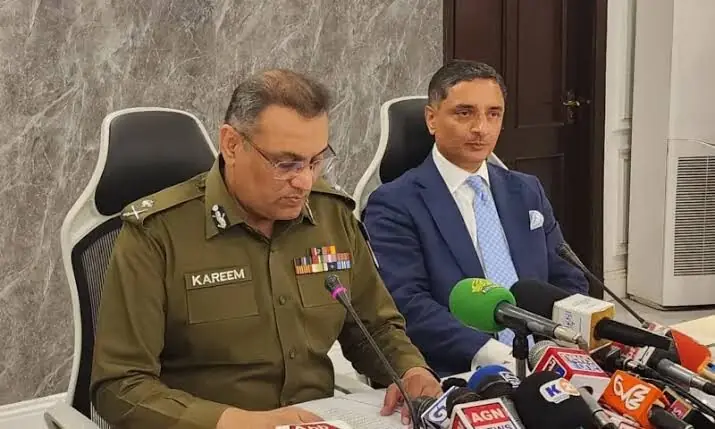
Despite local denials, higher authorities are taking the matter seriously. On June 18, CCD Additional Inspector General Sohail Zafar Chattha spoke out. He stated that the nominated policeman would receive no sympathy from the department. He also promised to complete the charge-sheet within one single week.
Nevertheless, this incident has renewed fierce criticism of the CCD. Human rights advocates routinely criticize the department for brutal tactics. Civil society members frequently report extrajudicial encounters and high casualty rates.
Earlier this year, a human rights group published a damning report. The report alleged that the CCD routinely uses a deliberate policy of staged police encounters. These actions ultimately lead to unlawful extrajudicial killings. Hania’s tragic death highlights a deep need for systemic reform. The world is watching closely as this grieving family demands transparent justice.

