
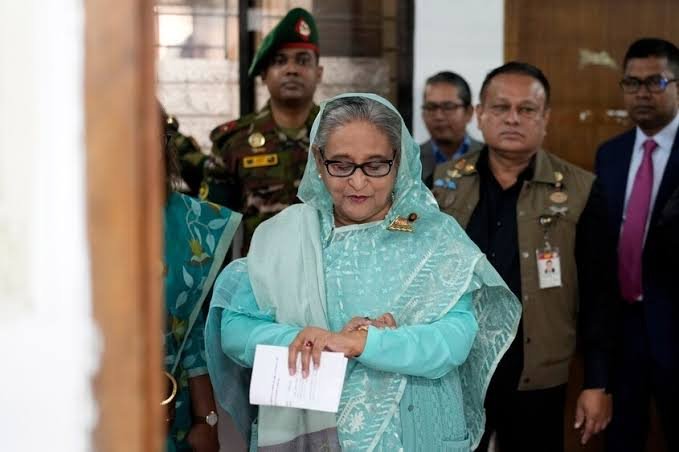

Financial Intelligence Unit Opens 98 Cases
Bangladesh has frozen or confiscated assets valued at approximately 760 billion taka, equal to about $6.2 billion, during investigations linked to former prime minister Sheikh Hasina, members of her family and 10 major business groups.
The Bangladesh Financial Intelligence Unit disclosed the figures while presenting its annual activity report. Agency chief Ikhtiar Mohammad Mamun said investigators had opened 98 cases involving Hasina, close associates and companies accused of benefiting during her 15 years in power.
According to the agency, around 570 billion taka in assets were traced and restricted inside Bangladesh. A further 190 billion taka were identified overseas.
Officials are still working with foreign governments, financial regulators and legal authorities to recover funds suspected of being transferred outside Bangladesh.
Mamun said the process of recovering overseas assets remained difficult because it required international cooperation, court orders and proof that the money was connected to unlawful activity. He expressed hope that further progress could be announced before the end of 2026.
Local reporting described the measures as asset freezes in several priority investigations, meaning ownership disputes and final confiscation may still require court decisions.
Hasina, Family and Business Groups Face Financial Investigations
The investigations began after Hasina was removed from power during a student-led uprising in August 2024 and fled to India.
Authorities have since examined bank accounts, properties, investments and business transactions connected to the former prime minister, her relatives and corporate groups believed to have maintained close links with her administration.
Investigators are looking into allegations of corruption, money laundering, misuse of public funds and illegal transfers of wealth abroad.
The authorities have not publicly stated that every asset covered by the 760-billion-taka figure is personally owned by Hasina. The total includes assets associated with her family and 10 large business groups being examined in separate cases.
Among the companies reportedly included in priority investigations are major Bangladeshi industrial groups operating across banking, energy, textiles, construction and other sectors.
The affected individuals and companies will have the right to challenge the allegations and asset restrictions through the courts.
A financial investigation or asset freeze does not by itself establish criminal guilt. Prosecutors must provide evidence before courts can order permanent confiscation or impose penalties.
Former Prime Minister Faces Multiple Court Judgments
Hasina has remained in India since leaving Bangladesh in August 2024.
Since her removal, Bangladeshi courts have convicted her in several cases. These include corruption proceedings connected to the allocation of government land in an expensive area of Dhaka.
In November 2025, Bangladesh’s International Crimes Tribunal convicted Hasina in absentia of crimes against humanity over the deadly suppression of the 2024 student uprising. She was sentenced to death. Hasina has rejected the charges and described the proceedings against her as politically motivated.
Human rights groups have said accountability for abuses committed during the uprising is essential. However, some have also raised concerns about whether proceedings held in absentia met international fair-trial standards.
Bangladesh has formally requested Hasina’s extradition from India so she can face the judgments and other pending cases.
She recently said she intended to return to Bangladesh by December 2026 and surrender to the authorities. Government officials responded that she would be imprisoned upon arrival and required to face the legal process.
Government Says Court Will Decide Hasina’s Fate
Bangladesh Home Minister Salahuddin Ahmed said the government wanted Hasina returned to the country to face justice.
He said the authorities would implement the court’s verdict and that any right to appeal would be determined by the judiciary.
Hasina’s possible return could create further political tension. Her Awami League has faced restrictions since her removal, while many former ministers, officials and party members have been arrested, placed under investigation or forced into hiding.
The government says the financial investigations are part of a wider campaign to recover public money and hold former officials and politically connected businesses accountable.
Hasina and her supporters argue that the cases are being used to eliminate political opposition.
The success of the asset recovery campaign will depend heavily on whether Bangladeshi investigators can establish a clear link between the targeted wealth and criminal activity.
Recovering the 190 billion taka identified overseas may take years. Foreign courts usually require detailed financial records and strong legal evidence before returning disputed assets.
The $6.2 billion figure nevertheless represents one of the largest financial enforcement actions announced in Bangladesh since Hasina’s removal.
Authorities say the investigations will continue, with additional cases and overseas recovery efforts expected as officials trace funds allegedly moved during the former government’s rule.

