
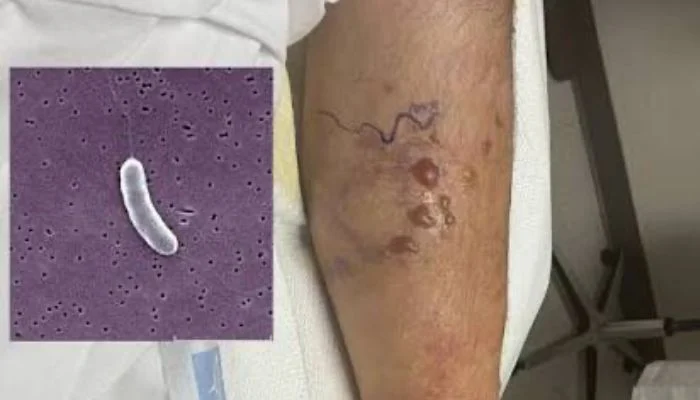

What Is the So-Called ‘Flesh-Eating’ Bacteria?
Health officials in Louisiana are warning residents and visitors about Vibrio vulnificus, a potentially deadly bacterium found naturally in warm coastal waters.
Recent reports citing Louisiana health authorities say nine cases have been recorded in the state during 2026, with five deaths.
All nine patients reportedly required hospital treatment.
The cases were linked to people who had open wounds exposed to seawater, according to the reports. Those affected also had underlying medical conditions that increased their risk of severe infection.
Vibrio vulnificus belongs to the wider Vibrio family of bacteria.
These bacteria naturally live in salt water and brackish water, where fresh and salt water mix.
They become more common as water temperatures increase, particularly between May and October.
The bacterium is sometimes described as “flesh-eating” because certain infections can develop into necrotising fasciitis.
This is a severe condition in which tissue around an infected wound begins to die.
However, the US Centers for Disease Control and Prevention stresses that Vibrio vulnificus is only one of several bacteria capable of causing necrotising fasciitis.
How Does Vibrio Vulnificus Infect People?
People can become infected in two main ways.
One route involves an open wound coming into contact with contaminated coastal water.
Cuts, scrapes, surgical wounds, recent tattoos and piercings can all provide an entry point for the bacteria.
People can also become infected while handling raw seafood if contaminated juices enter an open wound.
Another major risk comes from eating raw or undercooked seafood, particularly oysters.
Oysters can concentrate Vibrio bacteria while filtering seawater.
They may look, smell and taste completely normal even when harmful bacteria are present.
Proper cooking is therefore important because visual inspection cannot determine whether an oyster contains dangerous bacteria.
Most Vibrio infections do not develop into severe flesh and bloodstream infections.
However, Vibrio vulnificus can progress extremely quickly.
The CDC says approximately one in five people infected with this particular species die. Some deaths occur within one or two days after illness begins.
Serious cases can require intensive care.
Some patients require emergency surgery to remove infected or dead tissue. In the most severe situations, amputation may be necessary.
Symptoms of a wound infection can include redness, swelling, increasing pain, warmth, skin discoloration and discharge.
A bloodstream infection can cause fever, chills, dangerously low blood pressure and blistering skin lesions.
Digestive infections can cause watery diarrhoea, stomach cramps, nausea, vomiting and fever.
Who Faces the Greatest Risk and How Can Infection Be Prevented?
Anyone can develop a Vibrio infection, but some people have a much greater risk of severe illness.
Those considered particularly vulnerable include people with liver disease, cancer, diabetes, HIV and other conditions that weaken the immune system.
People receiving immune-suppressing treatments are also at greater risk.
The CDC advises people with open wounds to avoid salt water and brackish water whenever possible.
If contact cannot be avoided, wounds should be completely covered with waterproof bandages.
Any cut exposed to coastal water should be washed immediately with soap and clean running water.
People handling raw seafood should also prevent seafood juices from contacting open wounds.
Raw and undercooked oysters should be avoided, particularly by people with underlying medical conditions.
Anyone who develops rapidly increasing pain, redness, swelling or other signs of infection after coastal water exposure should seek medical treatment immediately.
The CDC warns against waiting for symptoms to improve because serious Vibrio vulnificus infections can progress rapidly.
Louisiana has experienced elevated Vibrio activity before. In 2025, the state health department officially recorded 26 cases and five deaths, with most patients reporting wound or seawater exposure.
Public health specialists continue to monitor Vibrio infections along the Gulf Coast, where warm marine conditions provide a favourable environment for the bacteria.

