

Three Nations Agree on Collective Defence Framework
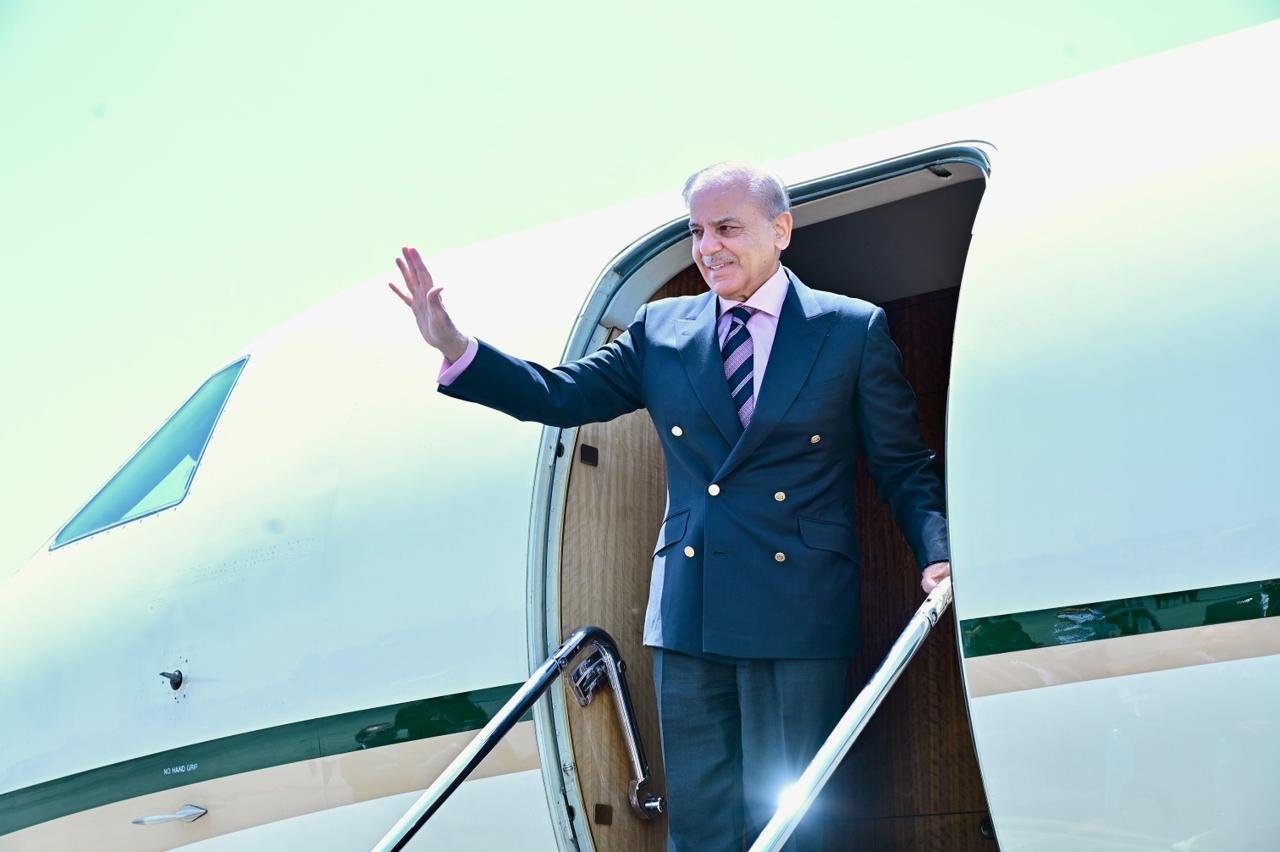
Prime Minister Shehbaz Sharif has returned home after concluding an important official visit to Saudi Arabia.
The visit was marked by the signing of the Makkah Joint Defence Agreement between Pakistan, Saudi Arabia and Turkiye.
The agreement was signed in Makkah on Friday, August 7, by Shehbaz Sharif, Saudi Crown Prince and Prime Minister Mohammed bin Salman, and Turkish President Recep Tayyip Erdogan.
The three leaders met at Al-Safa Palace for the Makkah Summit for Joint Defence.
The agreement is aimed at strengthening collective security and expanding military cooperation between the three countries.
Under the pact, an armed attack against any one of the three countries will be treated as an attack against all three.
The agreement also provides for broader defence cooperation between Pakistan, Saudi Arabia and Turkiye.
The three countries said the pact reflects their shared commitment to regional peace, security and stability.
Their longstanding strategic relationships and existing defence cooperation formed the basis for the new arrangement.
The agreement brings together Pakistan’s military capabilities, Turkiye’s expanding defence industry and Saudi Arabia’s regional security role.
It is expected to create new opportunities for joint defence projects, military coordination and security cooperation.
Erdogan later said the agreement was based on collective defence and would strengthen cooperation in security and joint defence projects.
He also stressed that the pact was not directed against any particular country.
Shehbaz Visits Madinah Before Leaving Saudi Arabia
Following the defence summit, Shehbaz travelled to Madinah with his delegation.
The prime minister visited the Prophet’s Mosque and offered prayers.
He also prayed for Pakistan’s progress, prosperity and the well-being of its people.
Shehbaz later paid his respects at the resting place of Prophet Muhammad.
The religious visit came before the prime minister concluded his Saudi trip and departed for Pakistan.
Madinah Governor Prince Salman bin Sultan bin Abdulaziz Al Saud saw the prime minister off at the airport.
Shehbaz was accompanied during the wider Saudi visit by a senior Pakistani delegation.
The delegation included Deputy Prime Minister and Foreign Minister Ishaq Dar, senior defence and government officials, and military leadership.
The high-level representation reflected the strategic importance Islamabad placed on the talks.
Makkah Pact Draws Regional Attention
The trilateral agreement has already attracted considerable attention across the region.
The Organisation of Islamic Cooperation welcomed the agreement and described it as an important strategic development.
Bahrain, Yemen and Somalia also expressed support for the pact.
Saudi Foreign Minister Prince Faisal bin Farhan described the agreement as an important milestone for peace, development and prosperity among the participating countries.
Pakistan and Saudi Arabia already had a bilateral Strategic Mutual Defence Agreement signed in September 2025.
That agreement stated that aggression against either Pakistan or Saudi Arabia would be considered aggression against both countries.
The new Makkah agreement expands the collective defence structure by bringing Turkiye into a three-country framework.
Officials from the participating countries have presented the arrangement as a defensive partnership focused on deterrence and regional stability.
The agreement comes during a period of heightened security concerns across the Middle East and surrounding maritime routes.
For Pakistan, the pact represents a significant expansion of defence relations with two of its closest strategic partners.
For Saudi Arabia, it adds another layer to its evolving regional security partnerships.
Turkiye’s participation also connects the alliance with one of the region’s largest and most advanced defence industries.
Further details regarding joint military exercises, intelligence cooperation, defence technology and implementation mechanisms are expected to emerge as the three governments begin putting the agreement into practice.

