

Scientists Turn Sharks Into Mobile Ocean Data Collectors
Scientists in the United States are testing an unusual new method to improve hurricane forecasting by using sharks as mobile ocean-data collectors.
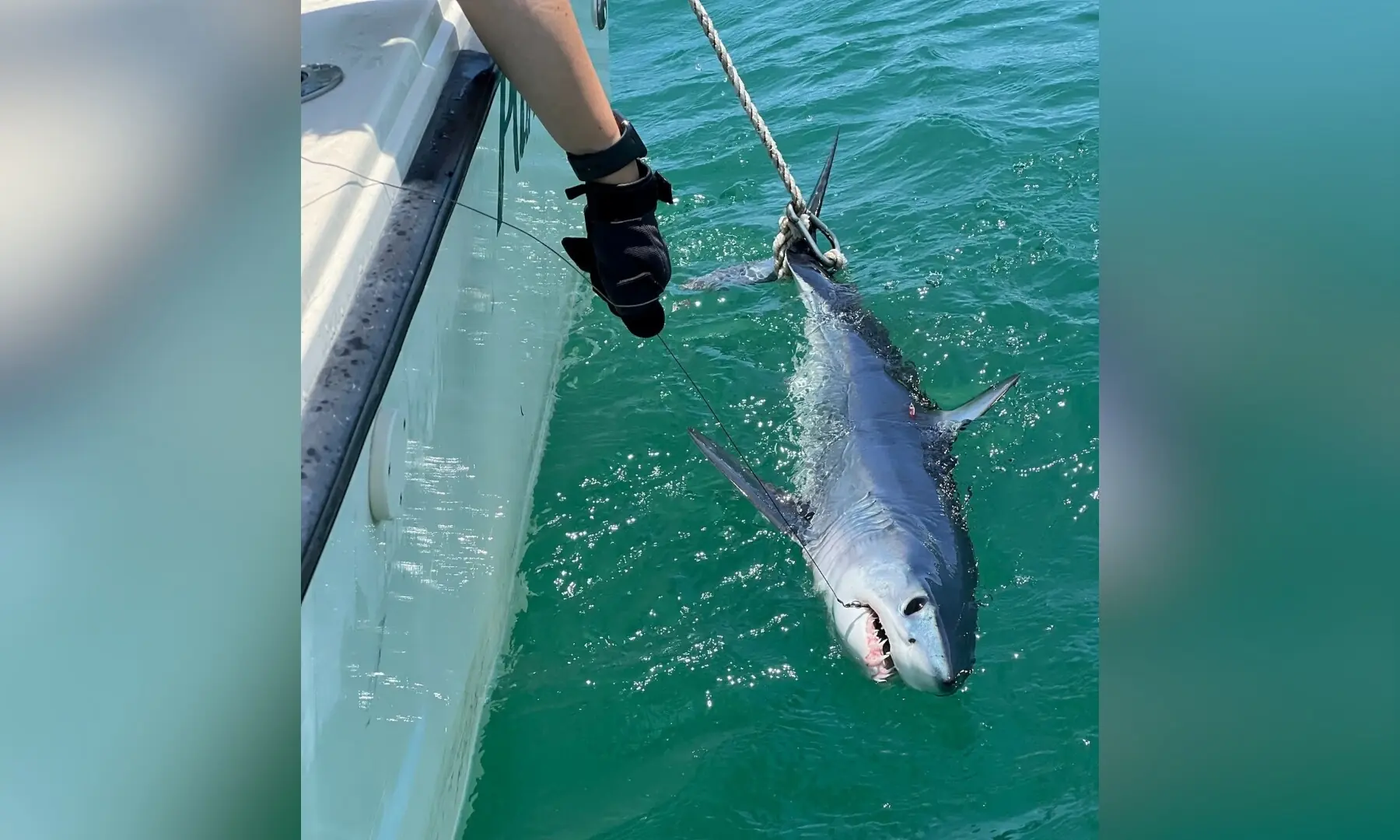
Researchers at the University of Delaware are attaching small electronic sensors to selected sharks swimming off the US East Coast.
The sensors measure temperature, depth and conductivity, which is closely linked to ocean salinity.
These measurements could help scientists better understand how much heat is stored beneath the ocean surface before hurricanes develop or intensify.
The project is focused on producing near-real-time ocean information that can be used in atmospheric, oceanographic and climate models.
Researchers believe sharks could collect valuable measurements from areas where conventional observing equipment is limited.
Animal-mounted sensors have already been successfully used on marine mammals, particularly elephant seals in remote polar regions.
However, researchers say sharks could provide an important new source of information because they are widely distributed and move through large sections of the ocean.
Aaron Carlisle, a professor at the University of Delaware’s School of Marine Science and Policy, is leading the research.
He said sharks could offer scientists regular access to parts of the ocean that are difficult to monitor using ships or fixed instruments.
Warm Ocean Layers Can Determine Hurricane Strength
Scientists are particularly interested in measuring the upper layer of the ocean, known as the mixed layer.
This section contains heat that can provide energy to tropical storms and hurricanes.
Warmer water can support stronger storms if other atmospheric conditions are favourable.
Researchers therefore want better information about the temperature and depth of this warm layer before hurricanes approach populated coastal areas.
Traditional ocean measurements can sometimes leave gaps, particularly in remote or rapidly changing areas.
Sharks could help fill those gaps as they naturally move through the ocean.
Researchers are selecting species that travel through areas useful for hurricane forecasting and regularly swim close enough to the surface for sensors to transmit information.
Shortfin mako sharks, blue sharks, smooth hammerheads and juvenile great white sharks have been identified as promising candidates in the North Atlantic.
The tags are attached to the sharks’ dorsal fins.
When a tagged shark reaches the surface, information collected during its dive can be transmitted to satellites.
Scientists can then access the data and potentially incorporate it into forecasting systems.
The project could eventually help researchers understand whether ocean conditions are capable of supporting rapid hurricane intensification.
Sharks Could Improve Coastal Storm Warnings
Fieldwork begins in early May when highly migratory shark species move closer to the US East Coast from deeper Atlantic waters.
Research teams travel between 50 and 65 kilometres offshore.
They use baited lines to temporarily catch suitable sharks before attaching the monitoring equipment.
Researchers say the process is designed to be quick.
The entire tagging operation generally takes less than five minutes.
Scientists also examine each shark before release to ensure it is healthy.
The tags are attached using materials designed to gradually corrode and eventually fall away.
Researchers say protecting the animals is important not only for ethical reasons but also for scientific accuracy.
A stressed or injured shark could change its natural behaviour and produce less reliable measurements.
If the programme proves successful, shark-generated data could contribute to more accurate hurricane intensity forecasts along the US East Coast.
Communities stretching from North Carolina to Massachusetts could potentially benefit from better information about approaching storms.
More accurate intensity predictions could give emergency officials and residents additional information when preparing for dangerous hurricanes.
The project could also change public perceptions of sharks.
Scientists say the animals are often portrayed as threats in films and popular culture.
In reality, researchers argue that sharks are highly adapted marine animals that could provide valuable information about ocean conditions.
Instead of simply being tracked to understand their movements, sharks could increasingly become active partners in climate and weather research.
Scientists now hope the project will demonstrate that these predators can help protect coastal communities by improving understanding of the powerful storms developing above them.

