
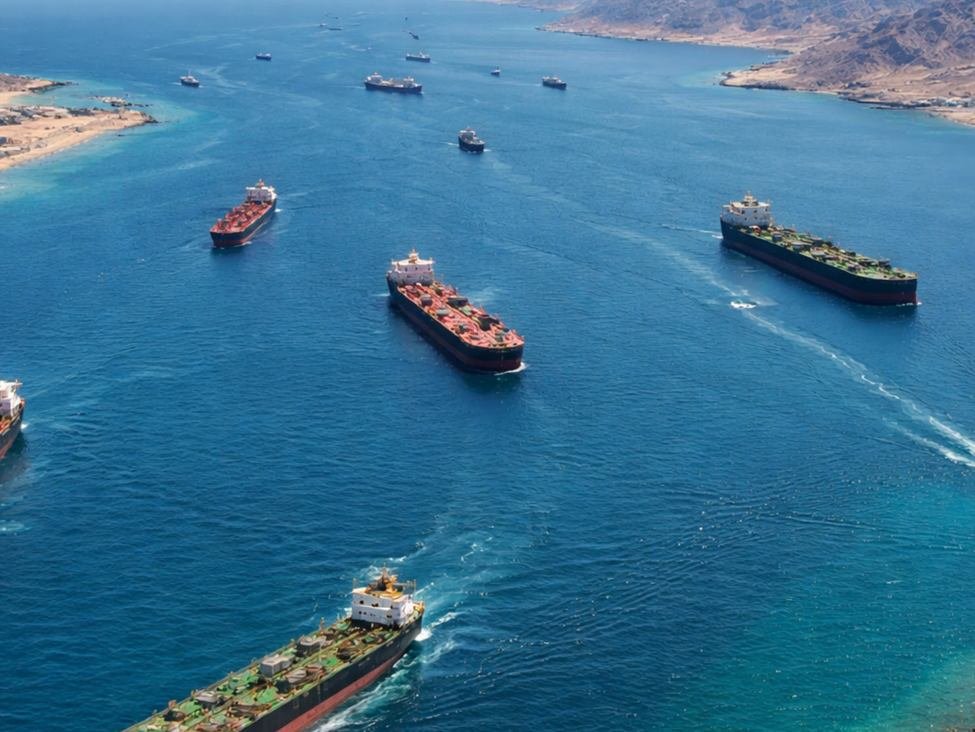

UAE Says Iranian Missile Targeted ADNOC-Linked Vessel
Tensions in the Strait of Hormuz have intensified after the United Arab Emirates accused Iran of targeting a vessel linked to state-owned energy company ADNOC.
The UAE Foreign Ministry said the tanker was struck by a missile while passing through the strategic waterway on Saturday.
No casualties were reported in the incident.
The United Kingdom Maritime Trade Operations also reported that a vessel in the Strait of Hormuz had been struck by an unidentified projectile.
The impact caused a fire aboard the ship. However, the crew managed to extinguish the blaze.
UKMTO said no casualties or environmental damage had been reported.
It was not immediately clear whether the UKMTO incident involved the same vessel identified by the UAE.
Iranian authorities had not immediately commented on the UAE accusation.
The incident adds to a growing series of attacks on commercial shipping in the waterway.
ADNOC said on Friday that 15 vessels connected to the company had been attacked since the regional conflict began.
Three of those incidents reportedly occurred during the past week.
Oman also condemned repeated attacks on vessels travelling through the strait. However, Muscat did not directly identify Iran as responsible.
The Strait of Hormuz is one of the world’s most important energy routes.
Before the current conflict, approximately one-fifth of global oil and gas shipments passed through the narrow waterway.
Disruption to shipping has therefore created serious concerns for global energy markets, transport costs and inflation.
Oman Says Hormuz Negotiations Are Making Progress
Despite the latest shipping incident, Oman said negotiations with Iran over navigation arrangements in the Strait of Hormuz were progressing positively.
The Omani Foreign Ministry described the discussions as taking place in a positive and constructive atmosphere.
Muscat urged all sides to avoid actions that could damage the negotiations or reverse the progress already achieved.
Iranian Foreign Minister Abbas Araqchi also said Tehran and Muscat were very close to reaching an agreement.
The two countries are discussing a new shipping route through the strait.
Iran has rejected the previous traffic arrangement and is negotiating a temporary route while technical and legal questions surrounding a permanent system are addressed.
Iran and Oman sit on opposite sides of the Strait of Hormuz.
In June, both countries agreed to continue discussions over the future administration of navigation, maritime services and associated costs.
They also committed to consulting other Gulf states and relevant parties while respecting international law and coastal sovereignty.
However, the latest talks do not guarantee that normal commercial traffic will immediately resume.
Araqchi said an agreement with Oman alone would not be enough for Iran to fully reopen the waterway.
Iran Sets Additional Conditions for Full Reopening
Tehran says reopening the Strait of Hormuz depends on additional demands involving the United States.
Iranian officials have called for compensation from Washington.
They have also demanded an end to US threats and military action, the lifting of sanctions and restrictions on Iranian ports, and the release of frozen Iranian assets.
Iran’s Revolutionary Guards also said the reopening of the strait should not be considered an automatic result of the Oman negotiations.
The Guards maintained that Washington must first accept Iran’s broader conditions.
A US official had previously said Washington expected an Iran-Oman agreement that could allow normal commercial shipping to resume.
The official said the United States could lift its blockade of Iranian ports after an agreement restoring unrestricted commercial navigation was implemented.
Another major issue concerns Iran’s possible future authority over ships entering the Gulf.
Sources previously told Reuters that a proposed arrangement could give Tehran some level of control over inbound vessels.
US officials have repeatedly opposed any agreement that would allow Iran to control access to the strategic energy corridor.
Iran has also sought payments connected to vessels using the strait.
Washington opposes Iranian transit tolls.
Under international maritime principles, ships generally cannot be charged simply for passing through an international strait, although fees may be permitted for specific services.
For now, negotiations are continuing while attacks on commercial vessels keep the security situation highly unstable.
Any final agreement will need to resolve questions surrounding navigation routes, Iranian authority, maritime fees and broader US-Iran conditions before normal shipping can fully return.

