
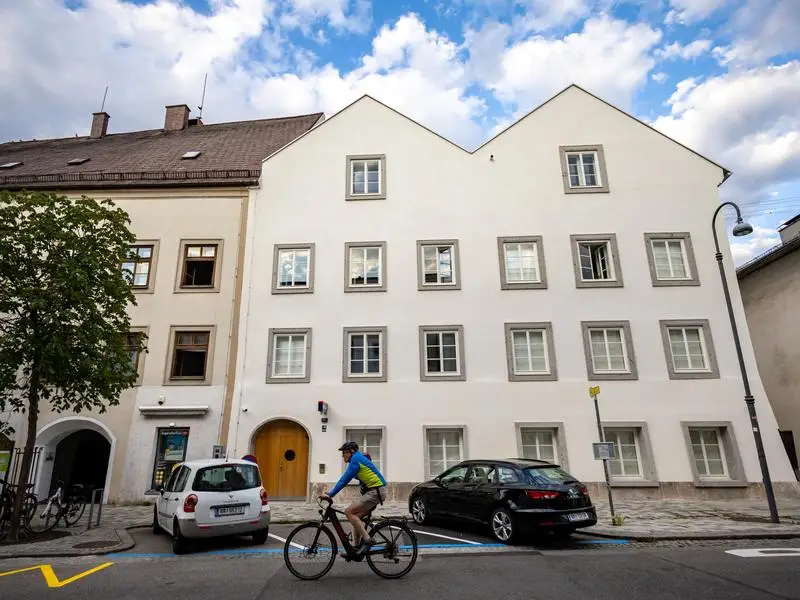

Austria has officially opened a new police station inside Adolf Hitler’s former birthplace in Braunau-am-Inn. The government hopes the move will discourage far-right extremists from visiting the site.
The building, located near the German border, has remained a controversial place for decades. Authorities believe its new purpose will help end the long debate over how to handle the location.
Austria has often faced criticism over its response to its role during the Nazi era. Therefore, officials say the transformation represents a clear rejection of extremist movements.
Historic Building Receives Major Renovation
The Austrian government completed a 20-million-euro renovation project after several delays. The work finished three years later than originally planned.
The 17th-century building now looks very different from its previous appearance. Austrian architecture firm Marte redesigned the structure while maintaining its historical identity.
A police sign now hangs above the entrance. However, a memorial stone outside the building remains in place.
The inscription on the stone reads, “For Peace, Freedom and Democracy. Never Again Fascism. Millions of Dead Warn.”
Hitler was born in the building on April 20, 1889. Later, Nazi Germany annexed Austria in 1938, leading to the deaths of 65,000 Austrian Jews and the exile of around 130,000 others.
Debate Over Future of the Site
For years, Austria debated what should happen to the building. Many historians rejected the idea of demolishing it.
Experts argued that removing the site would avoid confronting Austria’s history during the Nazi period. They believed the country needed to acknowledge the crimes committed under Hitler’s regime.
Initially, authorities considered several options. However, they avoided turning the building into a memorial because of concerns that it could attract extremists.
Eventually, an expert commission recommended converting it into a police station.
Critics Question Government Decision
The Austrian government said the police presence would show that Nazi glorification would not be tolerated. Officials also said the move would help “neutralise” the site.
However, some historians and anti-extremism groups remain skeptical.
Robert Eiter, spokesman for the Mauthausen Committee Austria, criticized the decision.
He said, “But that’s absurd: humanity will not forget where the worst mass murderer in history was born.”
He added, “And this renovation will not prevent a single neo-Nazi from making the pilgrimage to Braunau.”
The building’s transformation reflects Austria’s ongoing struggle to balance historical remembrance with efforts to prevent extremist symbolism.

