
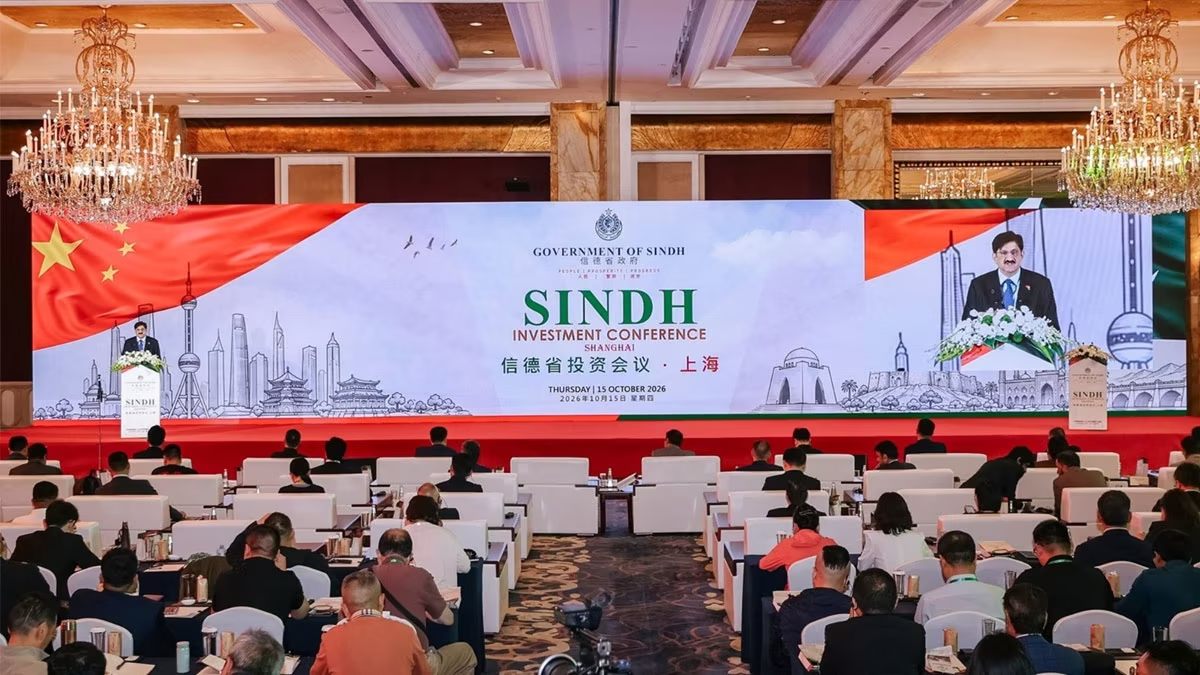

The Sindh government has signed 16 memorandums of understanding (MoUs) with Chinese companies at an investment conference in Shanghai. The agreements aim to attract foreign investment, promote industrial growth and create employment opportunities across the province.
Sindh Chief Minister Murad Ali Shah said the conference would open new avenues for Chinese investors. He also assured them of security arrangements and one-window facilities to simplify investment procedures.
The event attracted around 400 representatives from more than 100 companies from China and other countries. Private-sector businesses also signed separate agreements during the conference. <Cite refs={[“turn309576search0″,”turn309576search1”]}/>
Sindh Targets Energy, Agriculture and Digital Development
The chief minister highlighted investment opportunities in Thar coal, renewable energy, agriculture, electric vehicles and digital technology. He said the provincial government wanted to strengthen cooperation with Chinese businesses across these sectors.
Sindh also plans to attract investment in wind and solar power projects. According to Murad Ali Shah, the province’s wind corridor has the potential to generate more than 50,000 megawatts of electricity.
The government also sees opportunities to expand electric vehicle manufacturing and charging infrastructure. These projects could support industrial development and help local businesses access new technologies.
Dhabeji Special Economic Zone Offers Incentives
The Dhabeji Special Economic Zone featured among the major investment opportunities presented at the conference. The proposed industrial development covers more than 1,530 acres and offers incentives, including a 10-year income tax exemption and duty-free machinery facilities.
The project aims to attract manufacturing businesses and strengthen industrial activity near Karachi. Its location could also support logistics, trade and supply chains serving domestic and international markets.
Officials presented additional opportunities in minerals, agriculture, infrastructure and energy. However, the conference announcements do not necessarily mean that all proposed projects have secured financing or entered implementation.
CPEC Phase Two Focuses on Industrial Growth
Murad Ali Shah said the second phase of the China-Pakistan Economic Corridor (CPEC) places greater emphasis on industry, agriculture, minerals and technology.
He also highlighted Sindh’s contribution to Pakistan’s national economy, saying the province accounts for more than 27% of economic output.
The agreements could strengthen economic ties between Sindh and China. Their long-term impact will depend on investment commitments, project implementation and the extent to which the partnerships create jobs and expand local industries.
For the latest updates, visit and follow The Truth International website (www.thetruthinternational.com) and subscribe to the YouTube Channel.

