
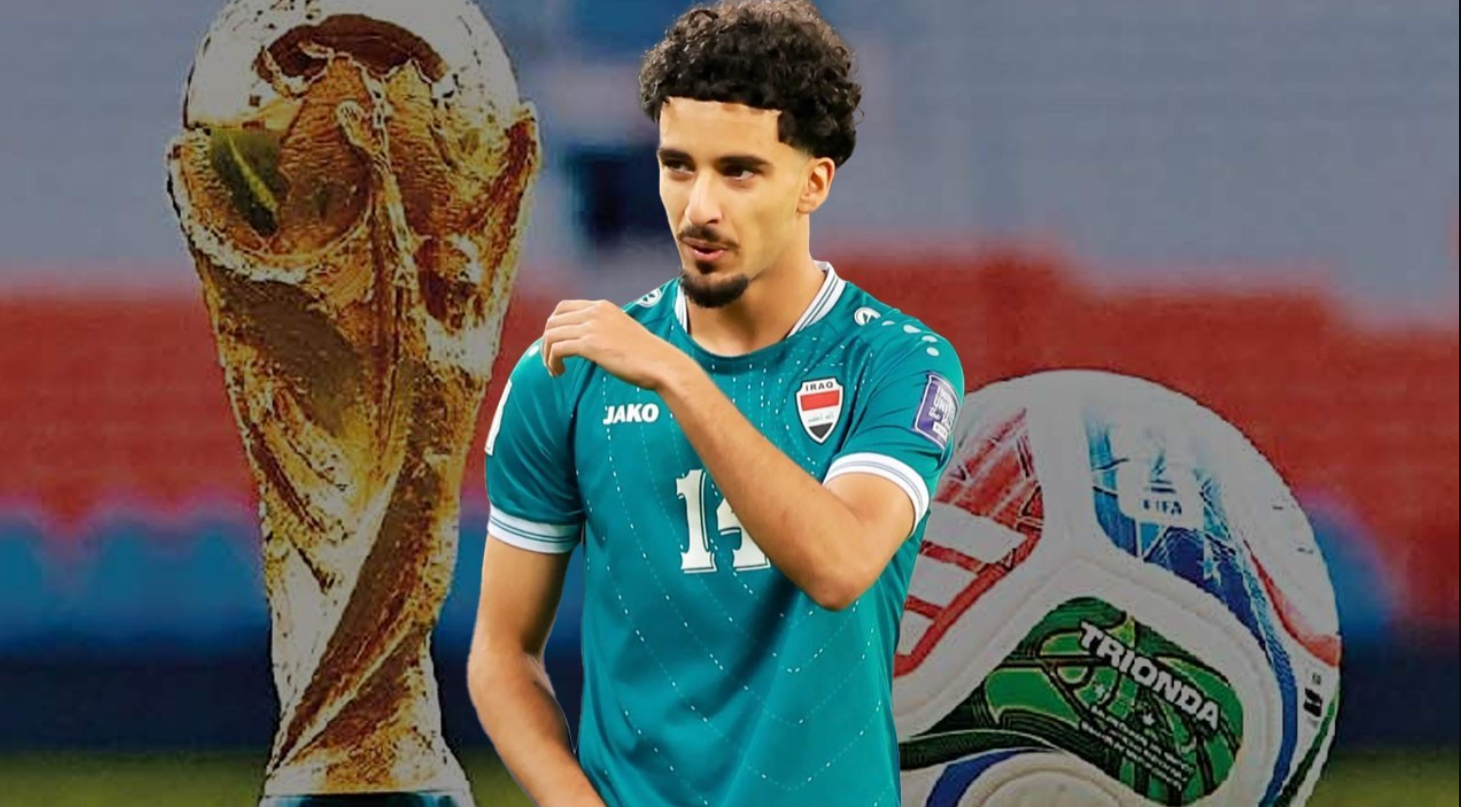

Zidane Iqbal is set to make football history by becoming the first player of Pakistani heritage to feature in a men’s FIFA World Cup, a milestone that carries strong symbolic importance for Pakistan’s global football identity.
The 23-year-old midfielder, developed at Manchester United’s academy and currently playing for FC Utrecht, will represent Iraq at the 2026 FIFA World Cup. His participation adds a major achievement to a career already marked by breaking barriers for British South Asian footballers at elite levels of the game.
For Pakistan, a country with more than 240 million people and no previous World Cup qualification, his appearance on football’s biggest stage has created a powerful emotional connection among fans and the wider diaspora.
A Historic World Cup Milestone for Pakistani Heritage
Iqbal’s qualification for the 2026 FIFA World Cup marks a unique moment in football history. He becomes the first player of Pakistani heritage to reach the tournament, even though he will represent Iraq internationally.
The achievement highlights how diaspora talent continues to shape global football narratives, especially for countries with limited international success in the sport.
Speaking about the moment, Iqbal said he was initially unaware of its significance.
“To be honest, I didn’t even know it myself. I followed the account that posted it and sent it to my dad straight away. I think we were both surprised. When I tried to qualify for the World Cup with Iraq, I didn’t think of anything like this.”
Identity Rooted in Pakistan, Iraq, and Manchester
Born and raised in Manchester, Zidane Iqbal comes from a multicultural background with a Pakistani father and an Iraqi mother. He has consistently expressed pride in all parts of his identity, both on and off the pitch.
He shared a personal detail about how he represents his heritage during matches.
“I wear the Iraqi flag on my left side and the Pakistani flag on my right side,” he told BBC Sport.
“I think that’s because I respect both sides. When people ask me what I feel more connected to, I can’t answer. For me, they’re both equal. It’s about respect and something I carry with a lot of pride.”
His identity has remained central to his journey, shaping both his personal and professional outlook.
He further explained his connection in an earlier conversation with Manchester United’s official website.
“I’ve grown up in Manchester my whole life so I’d say I’m a proud Mancunian, but I’m also proud of my heritage as well. I’m proud of being English, Pakistani and Iraqi.”
Iqbal also clarified that representing Iraq does not weaken his link to Pakistan.
“Me choosing to play for Iraq doesn’t mean I’m not a proud Mancunian or a proud Pakistani. I just feel this is the right opportunity for me as a player, the right step in my career and an honour, but it doesn’t take away the fact that I’m a Mancunian and a Pakistani as well.”
Inspiration for Pakistan’s Football Community
Pakistan’s national football team remains ranked 198th in the world and has recorded only one World Cup qualifying win in its history. Against this backdrop, Iqbal’s presence at the tournament carries strong symbolic value for fans.
It has also inspired discussions across social media and among young football followers in Pakistan and abroad, who see his journey as representation at the highest level of the sport.
Football analyst Ahmed Shahzad described the impact of Iqbal’s achievement and the response from fans.
“Every Pakistani football fan knows about Zidane Iqbal. Historically, there’s been very little Pakistani representation at the top level of football, especially on the global stage like the World Cup. And that is a big inspiration for a lot of young Pakistanis, even locally and in the diaspora. I see a lot of people saying that Pakistan now has a nation to support at the World Cup, and they won’t be just backing Zidane Iqbal, they will be backing Iraq to go as far as they can in that tournament.”
Iraq’s Long Road to the World Cup
Iraq secured qualification after a demanding 21-match campaign, the longest qualification route of any team heading into the 2026 FIFA World Cup. The tournament will mark Iraq’s second World Cup appearance and its first since the 1986 edition in Mexico.
Iqbal has reflected on the emotional connection to that history.
“Funnily enough, that 1986 World Cup was in Mexico, and now this World Cup is in Mexico. I think that’s beautiful as well,” he said.
Embracing the Underdog Role
Iraq enters the tournament in a challenging group featuring France, Norway, and Senegal. Despite the difficulty, Iqbal remains positive about his team’s chances and mindset.
“I think we’ve got a free shot. We go there, it’s our first World Cup in 40 years. We’re the underdogs. If we lose, people expect us to lose. If we win, we shock the world.”
For Pakistani football fans, Iraq’s journey at the World Cup carries emotional significance due to Iqbal’s presence. His participation ensures representation at the highest level, even if indirectly, and gives supporters a new point of connection in global football.

