

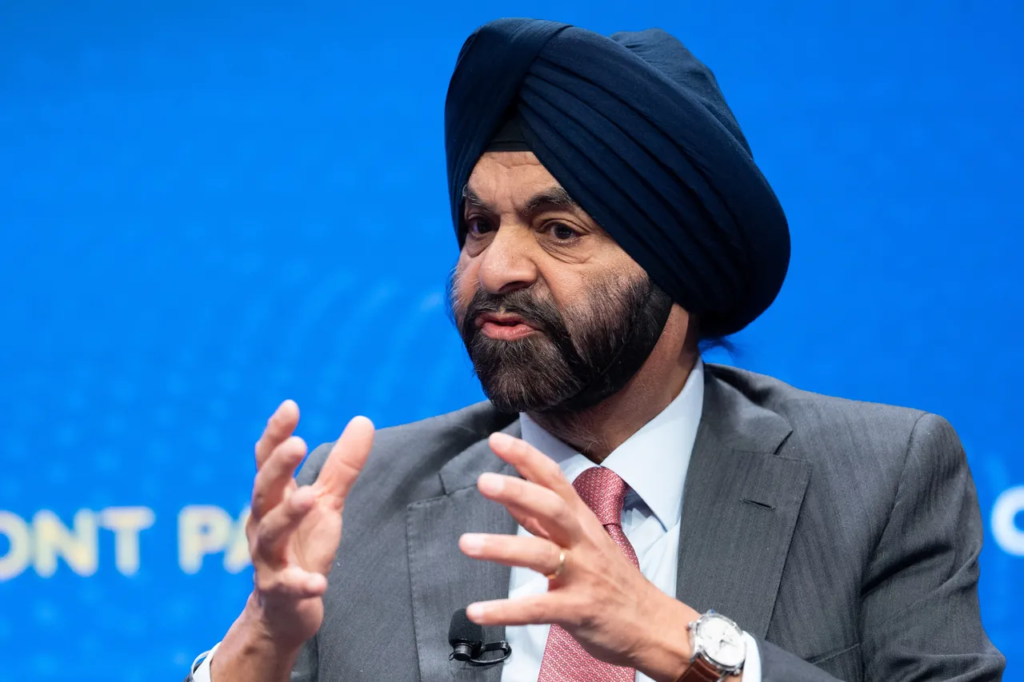
On Friday, the president of the World Bank, Ajay Banga, gave a grim warning regarding the severe economic consequences of the ongoing war in the Middle East. He stated to Reuters that, despite a precarious truce being in place, the war would have a significant negative impact on world growth.
This war has already claimed the lives of thousands of people in the Middle East and increased oil prices by 50%. Not only that, but it has disrupted the supply chain for oil, gas, fertilisers, helium, and other essential items. Tourism and air travel have also been heavily affected by this war.
Global Economy Faces Sharp Slowdown from Conflict
According to Banga, the world’s GDP growth may fall in the range of 0.3%–0.4% if the war ends quickly. But if the war continues, it may have a total impact of 1%. Besides, the increase in the price level is likely to be in the range of 200–300 points. It could see a more serious spike of up to 0.9% if the war continues.
Moving from those numbers to real-life effects, the first thing Banga noted is the broad impact of the events. This impact would not only affect countries in the region but also the whole world. In particular, states dependent on foreign energy imports and supply chains would face serious problems. Besides, the rising cost of energy will affect everyone.
Ceasefire Failure Could Deepen the Damage
Banga stated that it will lead to greater destruction if the ceasefire agreed upon by US President Donald Trump collapses and fighting resumes. He emphasized the need to abide by the ceasefire and move towards a sustainable peace.
Developing nations, including Pakistan, are closely monitoring these proceedings because higher oil prices and inflation will adversely affect them. They also face problems with debt and food security.
According to the head of the World Bank, urgent diplomacy is required to stop the war. He is certain that without a sustainable ceasefire, it will have dire consequences for the global economy.

