

The US Senate witnessed a major political confrontation after Senate Democrats blocked a $1.15 trillion National Defence Authorisation Act (NDAA). Democratic lawmakers opposed the measure because of growing concerns over President Donald Trump’s handling of the ongoing Iran conflict and his decision to deploy US forces without congressional approval.
Although the bill received more votes in favor than against, it failed to secure the 60 votes required to advance in the Senate.
The vote marked an unusual setback for legislation that has traditionally enjoyed strong bipartisan support.
Democrats Cite Concerns Over Iran Conflict
Senate Democrats argued that Congress should not move forward with the defence bill while questions remain about the administration’s military actions in Iran.
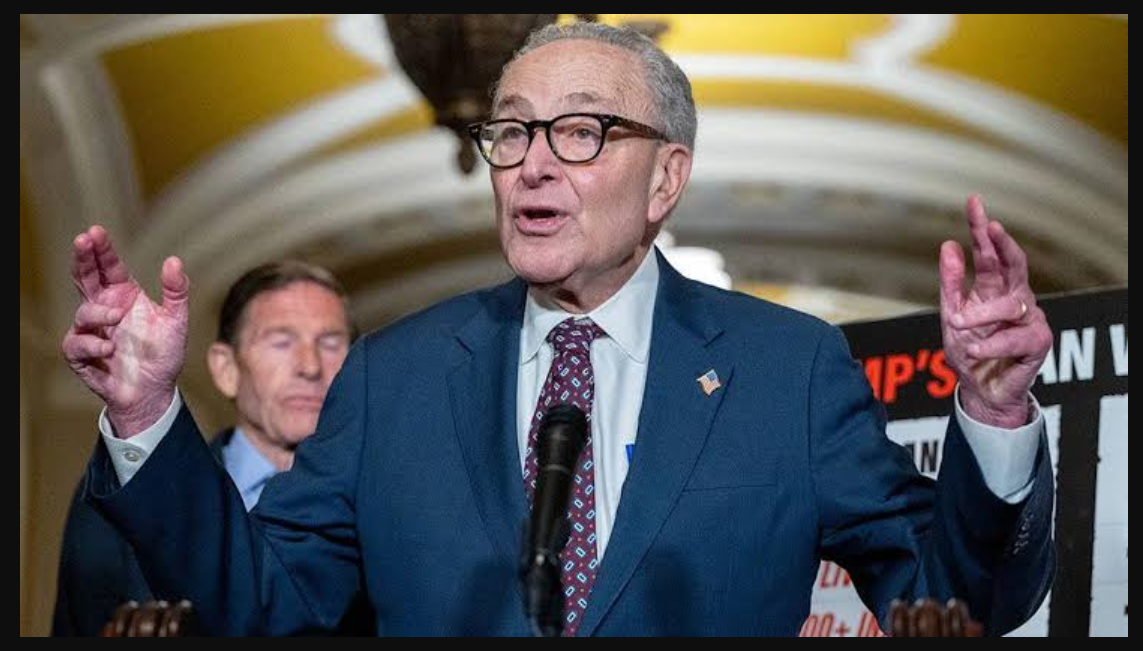
Senate Democratic Leader Chuck Schumer criticized President Trump’s approach during remarks on the Senate floor.
“Trump started this war without authorisation, without a strategy, and without an exit,”
Schumer said he would vote against advancing the legislation because of those concerns.
Democratic lawmakers believe Congress should play a greater role in decisions involving military action and national security.
Defence Bill Falls Short in Senate Vote
The procedural vote on the National Defence Authorisation Act (NDAA) ended in a 50-46 result.
Although supporters received more votes than opponents, the bill failed because Senate rules require 60 votes to move procedural legislation forward in the 100-member chamber.
Voting largely followed party lines.
Nearly every Republican supported advancing the bill. However, Senate Majority Leader John Thune voted against it for procedural reasons, allowing him to submit a motion for reconsideration under Senate rules.
The outcome had been widely anticipated after nine Democratic members of the Senate Armed Services Committee voted against the proposal during committee deliberations last month.
Democrats Oppose Increased Military Spending
Apart from concerns over the Iran conflict, Democratic lawmakers also objected to the administration’s proposed increase in defence spending.
The NDAA authorizes $1.15 trillion for defence programs.
In addition, President Trump has requested another $350 billion through the budget reconciliation process. That process would allow the funding to move through Congress without Democratic support.
Democrats argue that increasing military spending while reducing funding for domestic social programs sends the wrong policy message.
They also believe approving the defence bill during the ongoing conflict could be interpreted as congressional endorsement of the administration’s military actions in Iran.
Conflict Escalates as Debate Continues
The Senate vote came as the Trump administration announced another escalation in the conflict with Iran.
According to the administration, a naval blockade on Iranian ports has been reimposed.
Officials also confirmed the beginning of another round of military strikes, adding further urgency to the political debate in Washington.
The developments intensified concerns among lawmakers who questioned both the strategy and congressional oversight surrounding military operations.
Republicans Defend the Defence Bill
Republican leaders urged lawmakers to move the legislation forward despite Democratic objections.
Speaking in support of the bill, John Thune stressed the importance of maintaining military readiness.
“It’s the bill that helps ensure our military is ready today and prepared for tomorrow,”
Republicans argue that the NDAA focuses on national defence rather than political disagreements surrounding foreign policy.
They maintain that delaying the legislation could affect military planning and operational preparedness.
What the Defence Bill Includes
The National Defence Authorisation Act determines annual defence policy and spending priorities for the United States.
This year’s proposal authorizes a record $1.15 trillion in defence funding.
The legislation covers a wide range of military programs, including:
- Procurement of ships, aircraft, and missile systems.
- Pay raises for military personnel.
- Funding for defence operations.
- Measures addressing emerging geopolitical threats.
For decades, the NDAA has been regarded as one of Congress’s few consistently bipartisan bills and has become law every year for more than sixty years.
What Happens Next?
Despite Tuesday’s setback, the legislative process is far from over.
Each year, the House of Representatives and the Senate approve separate versions of the National Defence Authorisation Act.
Afterward, negotiators from the Armed Services Committees work to produce a single compromise bill.
Once both chambers approve that final version, the legislation is sent to the White House, where President Donald Trump can either sign it into law or veto it.
Although Democrats temporarily blocked the current measure, discussions over defence spending and military policy are expected to continue as Congress works toward a final agreement.

