
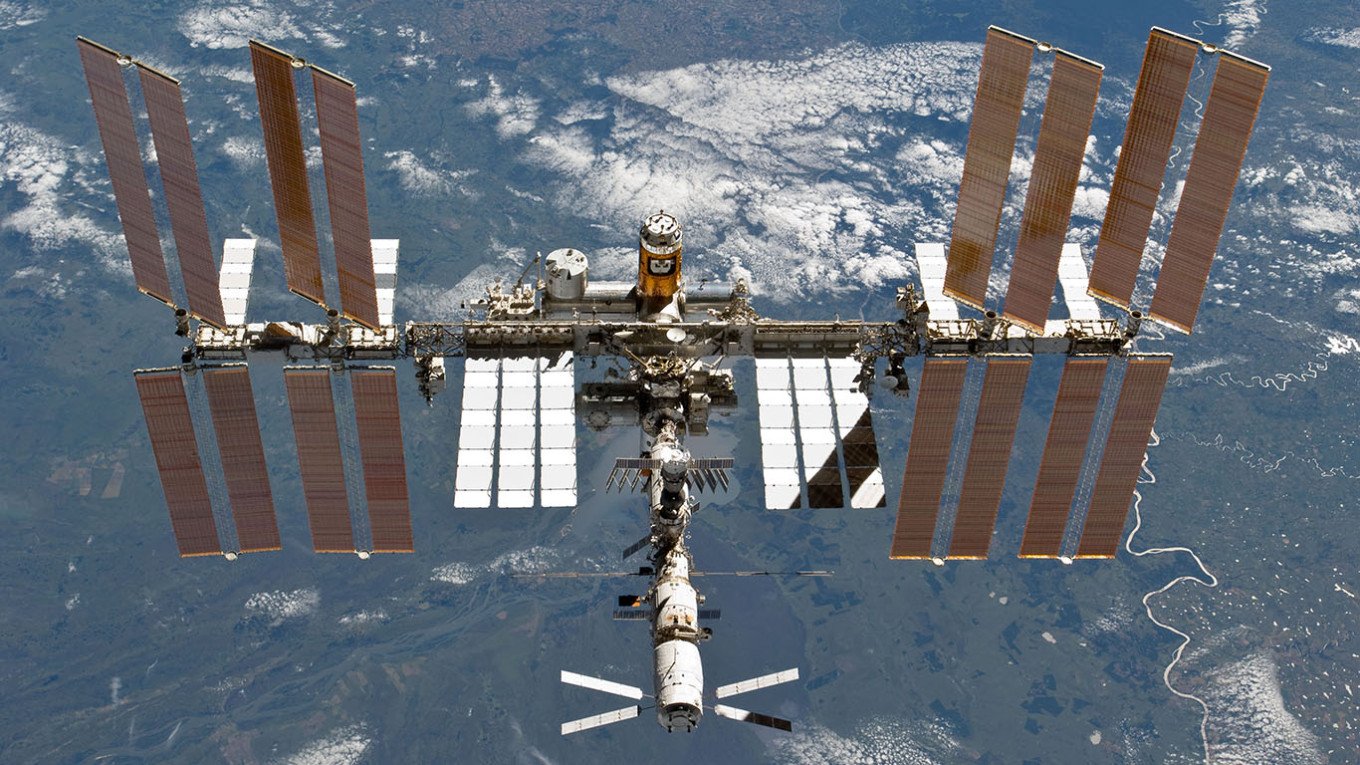

Russia and the United States have agreed on a joint program to end operations of the International Space Station (ISS) after 2030, according to the office of Russian First Deputy Prime Minister Denis Manturov.
The announcement followed a meeting between Manturov and US astronaut and entrepreneur Jared Isaacman at the Baikonur Cosmodrome. Russian officials said both countries had coordinated plans for the gradual retirement of the orbiting laboratory after nearly three decades of service. They, nonetheless, agreed to extend operations of the ISS till 2030.
For years, the ISS has remained one of the few enduring examples of scientific cooperation between Washington and Moscow despite broader geopolitical tensions. However, recent disagreements between NASA and Russia’s Roscosmos space agency have strained that partnership.
Last month, NASA reportedly instructed its astronauts aboard the ISS to prepare for a possible emergency evacuation during a dispute with Roscosmos over how to repair persistent air leaks on the aging station. The incident highlighted growing concerns about the safety and long-term reliability of the orbital outpost.
Meanwhile, Roscosmos recently completed repairs to a damaged launchpad at the Baikonur Cosmodrome, an important facility used for Russian space missions. The repairs are expected to support future launches as Russia continues operating its space programme during the remaining years of the ISS.
Despite ongoing cooperation in space, technical challenges and political tensions have complicated relations between the two agencies. Nevertheless, both sides continue to coordinate essential ISS operations while preparing for the station’s planned retirement.
Russia’s space programme has also faced significant domestic challenges in recent years. Budget constraints, ageing infrastructure, and corruption scandals have affected several major projects and delayed development efforts. Consequently, the country has sought to modernise its facilities while maintaining its role in international space exploration.
The ISS, launched in 1998, has hosted astronauts from multiple countries and served as a major centre for scientific research in orbit. As its operational life nears its conclusion, partner agencies are preparing for a controlled transition toward new commercial and national space stations expected to replace it.

