
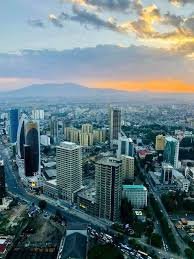

Addis Ababa has captured global attention after videos showcasing the Ethiopian capital’s modern infrastructure spread widely across social media platforms. Many viewers compared the city’s advanced roads, skyscrapers, transport systems, and urban planning to developments commonly associated with wealthier nations. As a result, online discussions have intensified around Ethiopia’s economic transformation and its growing cooperation with China.
The viral footage highlighted newly developed highways, commercial districts, modern rail systems, and large-scale construction projects across Addis Ababa. Furthermore, social media users expressed surprise at the pace of urban development in a country whose economy remains significantly smaller than many emerging markets. Several commentators noted that Ethiopia’s gross domestic product is far lower than India’s, yet its visible infrastructure expansion appears more advanced in certain urban areas. Click on the tweet below to watch a stunning development in Addisa Ababa.
https://x.com/Eng_china5/status/2052011614971580867
China’s Growing Investment Presence
China has played a major role in Ethiopia’s infrastructure growth during the past decade. Through financial support, construction partnerships, and development initiatives, Chinese companies have contributed to roads, railways, industrial parks, and public transport projects across the country. Consequently, Addis Ababa has become one of Africa’s fastest-developing urban centers.
Analysts believe Ethiopia’s leadership has focused heavily on infrastructure modernization to attract investment and improve regional trade opportunities. Moreover, the Addis Ababa-Djibouti railway and other transport projects have strengthened economic connectivity within East Africa.
Debate Over Development Models Continues
The viral comparison between Ethiopia and India also sparked debate among economists and social media users. While some praised Ethiopia’s visible urban progress, others argued that comparing countries solely through infrastructure footage overlooks broader economic realities, population size, and social development indicators.
Nevertheless, Addis Ababa’s transformation continues to attract international interest and fuel discussions about infrastructure-led economic growth strategies worldwide.

