

Cuban President Targeted in New US Action
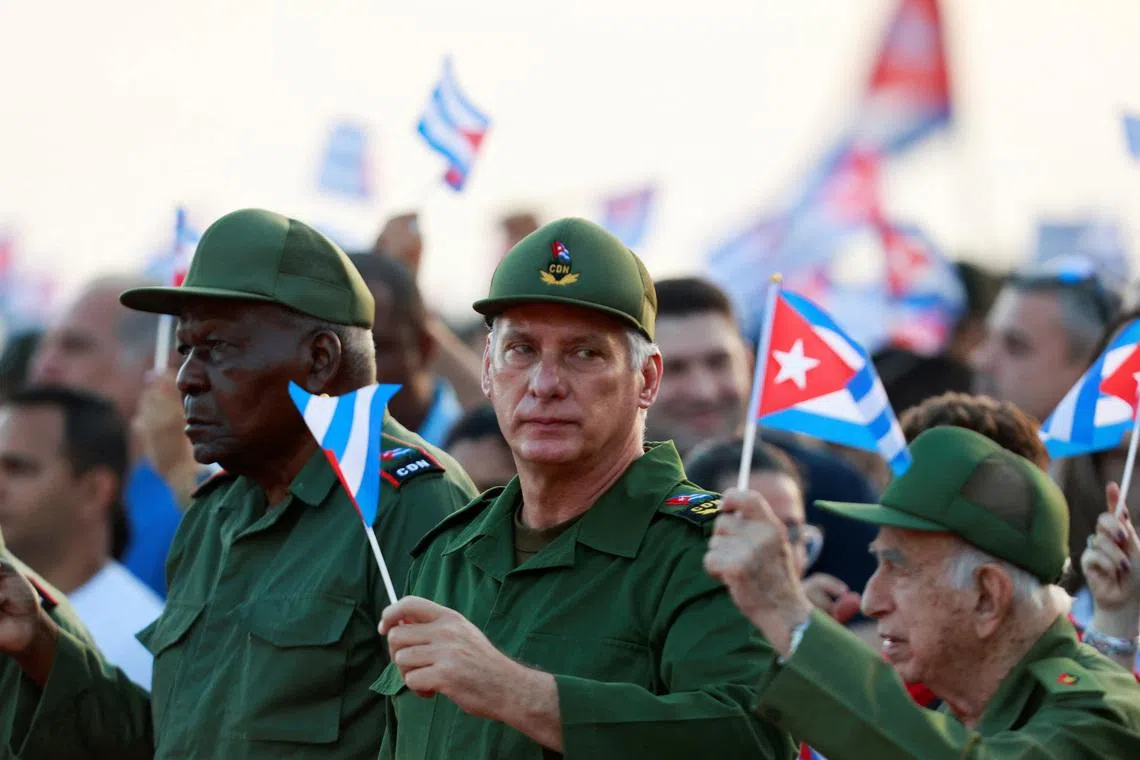
The United States has imposed sanctions on Cuban President Miguel Diaz-Canel, according to the US Treasury Department’s website.
The latest action marks another escalation in Washington’s pressure campaign against Cuba’s communist leadership.
The sanctions were announced on Thursday. They also targeted several people and entities linked to the Cuban government.
Among those named were Diaz-Canel’s wife, Lis Cuesta Peraza, two members of the Castro family, and the Ministry of the Revolutionary Armed Forces.
Four other individuals and five entities were also placed under sanctions.
The Cuban government did not immediately issue an official response to the move.
Diaz-Canel, 66, has served as Cuba’s president since 2018. He took office after Raúl Castro, the brother of former Cuban leader Fidel Castro, stepped down from the role.
Trump Says US Wants Cuba to Be Better Run
The sanctions came as US President Donald Trump spoke to reporters about Washington’s position on Cuba.
Trump said the United States wanted Cuba “to be a nicely run country.”
The statement reflected Washington’s continued criticism of Havana’s political system and leadership.
The latest sanctions are part of a wider US effort to increase pressure on Cuban officials.
Last month, the US government also imposed sanctions on 11 Cuban officials.
Those targeted included Cuba’s communications minister, several military leaders, and the country’s main intelligence agency.
Washington has repeatedly accused Cuban authorities of repression and political control.
Cuba Condemns Sanctions as Intervention
Cuban Foreign Minister Bruno Rodriguez strongly criticized the sanctions in a social media post.
He called the move “despicable” and described it as another example of US interventionism.
Rodriguez said every US action aimed at creating conflict between the two countries would fail.
His comments showed Havana’s anger over Washington’s latest decision.
The sanctions could further strain relations between the two countries.
Tensions have remained high for years due to political disputes, economic restrictions, and human rights concerns.
The United States also recently charged Raúl Castro with murder over his alleged role in a 1996 incident.
In that incident, Cuban jets shot down planes operated by a Cuban exile group.
The new sanctions show that Washington is not easing its stance.
Instead, the US is widening its pressure on Cuba’s leadership, military-linked institutions, and senior political figures.

