

Autonomous Vessel Retrieves Soldiers After Helicopter Incident
The United States Navy has carried out what is believed to be the first personnel rescue at sea using an unmanned military vessel after a drone craft recovered two Army helicopter crew members whose aircraft went down in the Middle East.
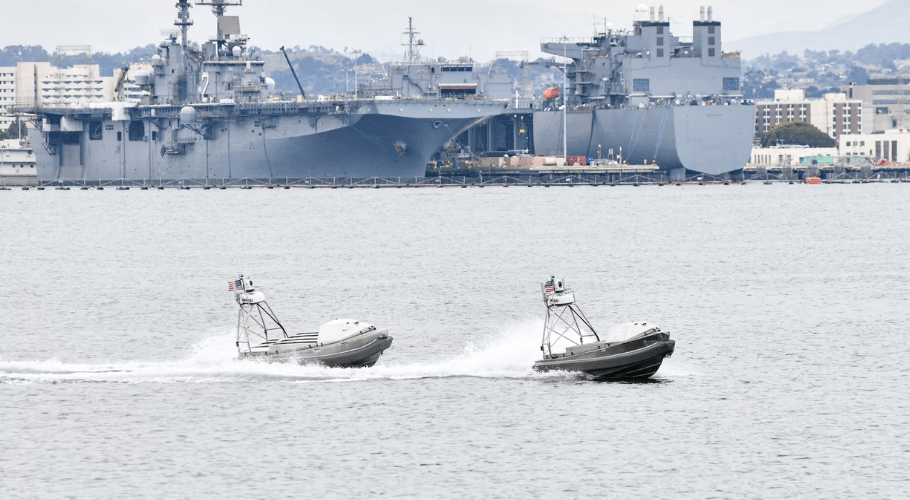
According to US military officials, the rescue was conducted by a Saronic Corsair, a 24-foot autonomous surface vessel designed to operate without a crew on board. The operation marked a significant milestone in the Pentagon’s growing effort to integrate advanced unmanned systems into military operations.
The Navy said the drone successfully located and assisted the two service members following the helicopter incident, demonstrating the expanding role of autonomous technology in real-world missions.
The Corsair is among the latest additions to the US military’s fleet of unmanned systems and forms part of a broader strategy aimed at enhancing operational flexibility while reducing risks to personnel.
Growing Role of Autonomous Systems in Modern Warfare
The rescue also highlighted the work of Task Force 59, the US Navy’s first unit dedicated entirely to unmanned systems. Established in 2021 and based in Bahrain, the task force began deploying Corsair vessels across the Middle East earlier this year.
In addition to surface drones, the US military operates a variety of underwater autonomous vehicles. These systems support missions ranging from surveillance and reconnaissance to mine detection and maritime security operations.
Furthermore, military planners view autonomous vessels as a cost-effective way to expand naval capabilities while improving response times in contested environments. The Pentagon has outlined plans for wider deployment of unmanned platforms, including hundreds and potentially thousands of autonomous vessels in the future.
Although the technology continues to evolve and faces operational challenges, recent conflicts have demonstrated its growing military value. Analysts frequently point to the effectiveness of sea drones in modern warfare, particularly their ability to conduct high-risk missions while minimizing exposure for human personnel.
The successful rescue operation underscores the increasing importance of autonomous systems in shaping the future of naval and military operations worldwide.

