

Troops cite shortages and declining living standards
United States Marines deployed aboard naval vessels in the Middle East have reported difficult living conditions, according to accounts cited by USA Today. Personnel described ongoing shortages of essential supplies, raising concerns about morale and operational readiness.
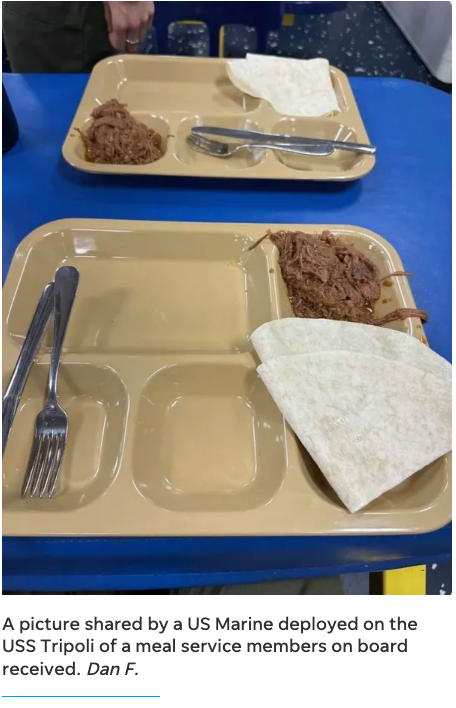
Marines said food quality has deteriorated significantly, with meals often described as tasteless and lacking nutritional value. Moreover, fresh produce has become scarce, while rationing measures have limited access to available supplies. As a result, many service members reported feeling constantly hungry during extended deployments.
In addition, hygiene products have reportedly started running low, further complicating daily routines aboard the ships. Meanwhile, the suspension of mail delivery has disrupted communication with families, leaving thousands of packages undelivered and affecting troop morale.
These challenges have emerged during a period of heightened military activity in the region, increasing pressure on personnel stationed at sea.
Operational issues add to mounting concerns
Alongside supply shortages, technical problems aboard key vessels have intensified difficulties. Reports indicate that the USS Gerald R. Ford has faced plumbing issues, while a laundry-related fire incident added to operational disruptions.
Similarly, other ships, including the USS Tripoli and the USS Abraham Lincoln, remain actively deployed in the region under demanding conditions.
Furthermore, analysts note that prolonged deployments without adequate resupply can strain both personnel and equipment. Therefore, addressing logistical challenges remains critical for maintaining effectiveness.
Overall, the reports highlight the human and operational toll of sustained naval missions, particularly in high-tension environments where resources and support systems face continuous strain.

