
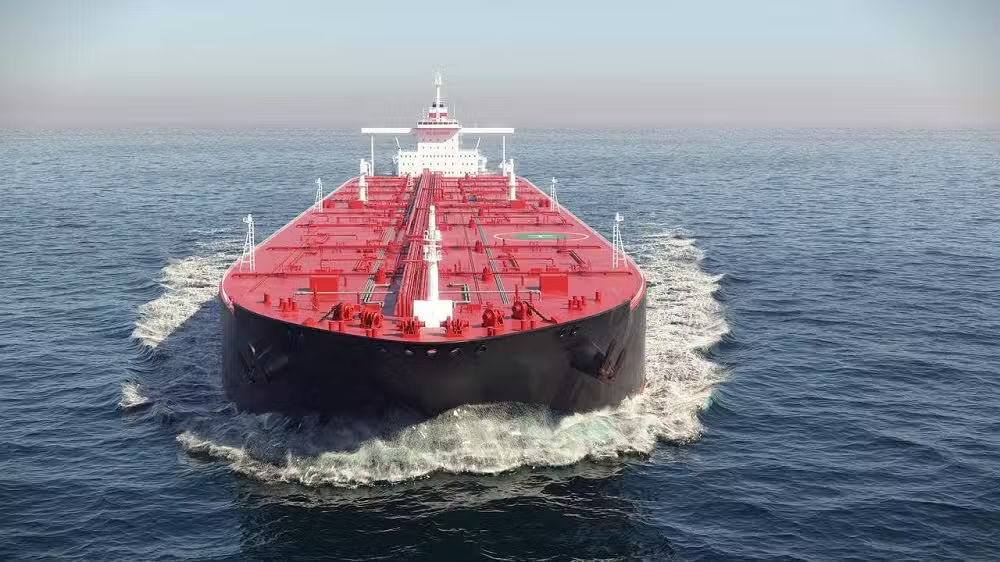

The United States Central Command reported that US naval forces have directed 38 ships to turn around or return to port as the blockade of Iranian maritime facilities continues to intensify. The announcement, shared on the social media platform X, signals a sustained enforcement effort to restrict commercial and energy flows linked to Iran.
The move has raised concerns among shipping companies, insurers, and energy markets about the stability of maritime trade routes in the region.
Military officials indicated that the directive forms part of a broader operational strategy to monitor vessel movements and prevent shipments that are considered in violation of sanctions or security restrictions. Moreover, the blockade has created operational uncertainty for commercial carriers navigating waters near key Iranian ports. Analysts note that such measures can increase transit times, raise insurance premiums, and disrupt supply chains, particularly in energy-dependent economies.
Oil shipments continue despite maritime restrictions
Despite the intensified naval presence, maritime analytics firm TankerTrackers.com reported that Iran successfully loaded the equivalent of 4.6 million barrels of crude oil at its export terminals. The data, cited by Al Jazeera, suggests that Iranian energy exports continue at a significant pace even under heightened scrutiny. In addition, the firm estimated that roughly four million barrels of Iranian oil appear to have bypassed the blockade line, indicating the persistence of alternative shipping routes and logistical strategies.
Importantly, these developments highlight the strategic importance of maritime corridors connected to the Strait of Hormuz, one of the world’s most critical energy transit points. A substantial share of global oil shipments moves through this narrow passage, making any disruption there a matter of international economic concern. Therefore, sustained enforcement actions and countermeasures in the region could contribute to volatility in global oil prices and shipping costs.
Furthermore, analysts warn that prolonged maritime standoffs increase the risk of accidental confrontation between naval forces and commercial vessels. As tensions persist, policymakers across energy-importing nations — including Pakistan — continue to monitor the situation closely due to its direct implications for fuel supply stability, inflation trends, and broader economic planning.

