
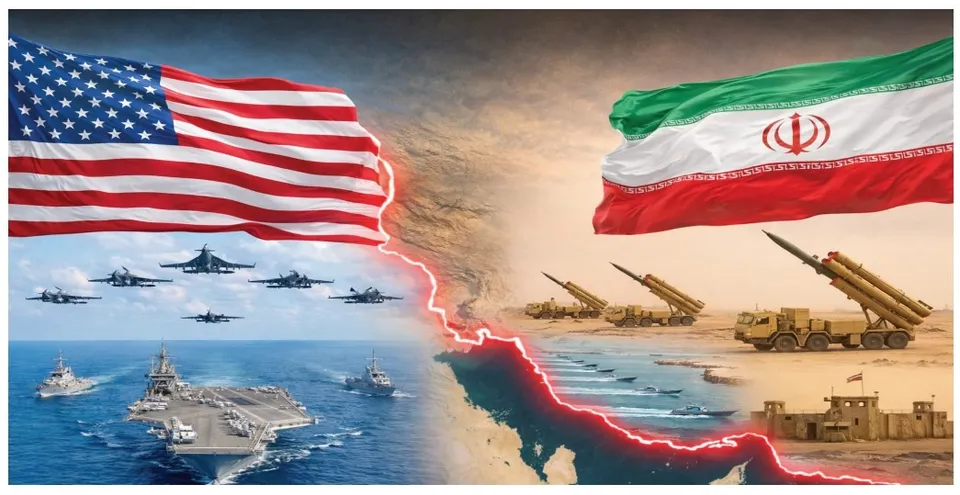

The United States and Iran exchanged fresh military strikes on Saturday. The escalation added new uncertainty to ongoing diplomatic efforts.
According to the US military, American forces shot down four Iranian drones. Officials said the drones were heading toward the Strait of Hormuz. The military believed they posed a threat to regional maritime traffic.
Following the interceptions, US forces targeted Iranian coastal surveillance sites. The strikes hit radar and monitoring facilities in Goruk and Qeshm Island. Both locations sit near the strategic Strait of Hormuz.
Tensions Rise Across the Gulf
Iran’s Foreign Ministry condemned the US operation. Officials claimed the action violated an April 8 ceasefire agreement. Furthermore, Tehran accused Washington of undermining efforts to reduce tensions.
Meanwhile, Iran’s Revolutionary Guards announced retaliatory measures. They claimed to have launched attacks against US bases in Kuwait and Bahrain. The group also said it targeted tankers attempting to cross the strait.
Kuwait’s military reported intercepting seven ballistic missiles. Officials said the missiles caused property damage but no casualties. In Bahrain, authorities activated warning sirens and urged residents to seek shelter.
The United States later stated that six missiles were intercepted. Officials added that another missile failed to reach its intended target.
Diplomatic Efforts Face New Challenges
The latest confrontation comes amid indirect negotiations between Washington and Tehran. Both sides continue discussions aimed at reducing hostilities. However, repeated clashes have complicated progress toward an agreement.
Iran seeks sanctions relief and access to frozen financial assets. Additionally, Tehran wants greater flexibility regarding oil exports. The country also seeks influence over the Strait of Hormuz.
US President Donald Trump acknowledged that Iran still possesses missile capabilities. However, he claimed previous operations significantly weakened its military resources. He also suggested that negotiations may require more time.
The conflict has disrupted shipping routes and increased global energy concerns. Consequently, oil prices and supply chain pressures remain elevated across international markets.

