

New Remote Vision Upgrade Set for Production Rollout
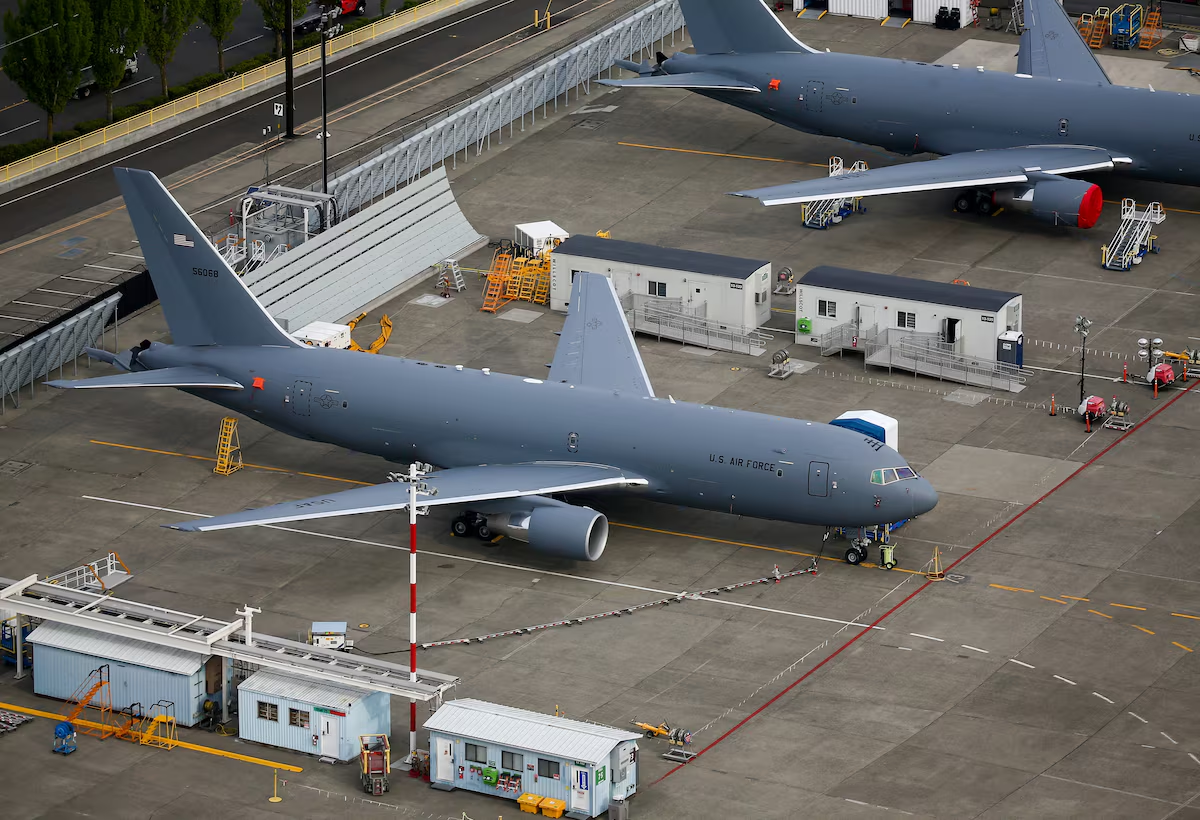
The United States Air Force has expressed confidence that a long-standing technical issue affecting Boeing’s KC-46 aerial refueling tanker has finally been resolved. Air Force Secretary Troy Meink told a Senate appropriations subcommittee on Tuesday that testing of the upgraded Remote Vision System (RVS) 2.0 had produced encouraging results.
The Remote Vision System plays a critical role in midair refueling operations, allowing operators to guide the tanker’s refueling boom remotely. Problems with the original system have delayed the aircraft’s full operational capability for several years.
According to Meink, the upgraded version has undergone successful testing, and the Air Force expects Boeing to begin integrating the new system into the production line by 2028. However, the timeline represents a five-year delay compared with earlier plans.
Boeing announced earlier this month that it had completed initial flight testing of the RVS 2.0 upgrade, marking a significant milestone in efforts to improve the tanker’s performance.
Costly Delays Continue to Challenge Boeing Program
The KC-46 program remains one of Boeing’s most challenging defense contracts. The company has already delivered more than 100 aircraft from an initial Air Force order of 188 tankers. Meanwhile, the Air Force is considering purchasing an additional 75 aircraft, which would increase the fleet to 263 tankers.
Despite steady deliveries, Boeing has absorbed more than $7 billion in losses under the fixed-price contract due to cost overruns and technical setbacks. In addition to vision system problems, the KC-46 has faced issues involving its refueling boom and fuel system leaks.
Air Force officials have repeatedly stated that future tanker purchases depend on Boeing resolving the remaining deficiencies. Furthermore, the military announced in May that retrofitting existing aircraft with the upgraded vision system would take approximately seven years.
Boeing Chief Executive Kelly Ortberg acknowledged earlier this year that the tanker contract had been financially difficult for the company. Nevertheless, successful testing of the new system has renewed confidence that the program is moving closer to achieving its long-delayed operational goals.

