
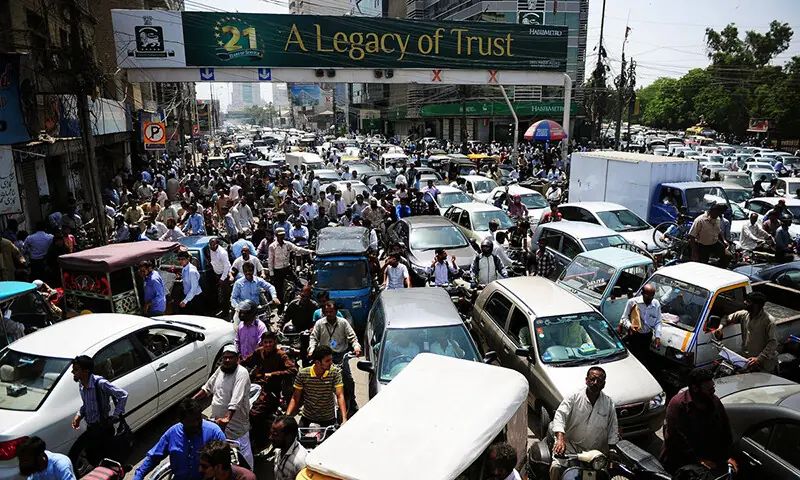

Population Reaches 257.2 Million as Pressure on Resources Grows
Pakistan’s rapid population growth is no longer only a public health concern. It has become a major economic, social and strategic challenge requiring an urgent national response, according to the United Nations Population Fund.
UNFPA Pakistan Representative Dr. Luay Shabaneh raised the alarm during a media briefing held in connection with World Population Day 2026. He said Pakistan’s population had reached approximately 257.2 million, placing growing pressure on education, healthcare, housing, employment, food supplies and public infrastructure.
Nearly one-third of Pakistan’s population is between the ages of 10 and 24. This large youth population could become a powerful economic asset, but only if young people receive quality education, market-relevant skills, healthcare and meaningful employment opportunities.
Without adequate investment, Pakistan could struggle to create enough schools, hospitals, homes and jobs for its expanding population. Rising unemployment and inequality could also increase social frustration and place further pressure on national stability.
UNFPA said Pakistan’s demographic future would depend on the choices, opportunities and capabilities available to young people today. The issue is closely linked to economic productivity, gender equality, human capital and the country’s ability to benefit from its young workforce.
National Population Council Signals Higher Government Priority
Dr. Shabaneh welcomed the federal government’s renewed focus on population management and development planning.
The government has established a National Population Council under the leadership of Prime Minister Shehbaz Sharif. The council brings together federal and provincial institutions to improve coordination on population-related policies.
UNFPA said the council could support a whole-of-government approach by connecting population planning with health, education, economic development and provincial policymaking.
Reports that senior military leadership has also been included in the government’s population management framework reflect the growing strategic importance being attached to the issue.
Federal Health Minister Syed Mustafa Kamal said Field Marshal Syed Asim Munir had been included in a high-level government committee dealing with population growth. He said the inclusion showed that the government was treating the issue as a major national priority.
However, UNFPA’s official statement did not itself formally declare population growth a national security threat. It described the issue as an urgent economic, social, gender equality and human capital challenge requiring coordinated national action.
Political, Religious and Community Leaders Urged to Act
Dr. Shabaneh said Pakistan’s population challenge could not be addressed by health departments alone.
He called for stronger participation from parliamentarians, provincial lawmakers, religious scholars, educators, civil society groups and community leaders.
These groups can help promote responsible parenthood, birth spacing, girls’ education and informed reproductive choices. They can also challenge misconceptions surrounding family planning and reproductive healthcare.
Access to affordable and reliable family planning services remains essential. UNFPA has welcomed the government’s removal of taxes on contraceptives, saying the measure could improve access for poorer and marginalised communities.
The organisation has also supported efforts to strengthen laws protecting women and girls, including measures against child marriage and sexual violence.
UNFPA stressed that population policies should respect individual rights and choices. It warned against reducing population management to numerical fertility targets alone.
Instead, policies should focus on whether people have the financial security, healthcare, housing and social support needed to make informed decisions about marriage and parenthood.
Survey Finds Pakistani Youth Remain Hopeful Despite Serious Concerns
UNFPA also presented findings from its 2026 global report, Lives, Choices and Futures: What Young People Want and What Shapes Their Decisions About Relationships and Parenthood.
The Demographic Futures Survey collected responses from 108,926 internet-connected people aged 18 to 39 across 73 countries and territories. UNFPA noted that the online survey does not statistically represent the entire population of each participating country.
More than 1,700 Pakistani respondents participated in the country-level survey. UNFPA Pakistan reported that 76 percent felt positive or very positive about their future.
However, optimism was accompanied by serious concerns. Around 53 percent of Pakistani respondents identified conflict and security risks, economic insecurity, inequality, health emergencies and environmental threats among their biggest worries.
The results suggest that many young people remain hopeful but are worried that unstable economic and social conditions could prevent them from achieving their personal and family goals.
Pakistanis Want More Children Than They Currently Have
The survey also examined the difference between the number of children respondents currently had and their ideal family size.
Pakistani women reported having an average of 1.8 children but said they would ideally prefer 2.5 children. Men reported having an average of 2.5 children, while their preferred family size was 3.4 children.
Among Pakistani respondents aged 35 to 39, around 30 percent had no children. Of that group, 65 percent said they would like to become parents.
These findings show that family decisions are not based only on personal preferences. Financial conditions, employment, housing and access to services strongly influence whether people can have the families they want.
UNFPA said young people identified stable employment, financial security, emotional readiness, affordable housing, healthcare, gender equality and quality public services as important conditions for parenthood.
The global report similarly found that young adults often want families but face barriers such as housing costs, uncertain employment and unequal care responsibilities.
Youth Population Could Become Economic Strength or Growing Burden
Pakistan’s large youth population presents both an opportunity and a serious risk.
A well-educated and skilled young workforce could increase productivity, innovation and economic growth. Young Pakistanis could strengthen technology, business, manufacturing and service industries.
However, the demographic advantage could be lost if the country fails to improve education and employment opportunities.
Millions of young people entering the labour market without adequate skills or jobs could increase poverty, inequality and social tension.
UNFPA said Pakistan must place young people at the centre of its development agenda, not simply as beneficiaries but as partners and leaders in national progress.
Investment in girls is particularly important. Girls who remain in school longer are generally better positioned to enter the workforce, make informed health decisions and support the economic well-being of their families.
Digital Access Essential for Education and Employment
Dr. Shabaneh also highlighted internet access as a critical part of Pakistan’s population and development strategy.
Digital connectivity now provides access to education, professional training, job opportunities, healthcare information and civic participation.
Young people without reliable internet access face increasing disadvantages. These challenges are particularly serious for girls, rural communities and families from poorer households.
UNFPA warned that digital exclusion could prevent young Pakistanis from developing skills and participating in emerging economic sectors.
Expanding affordable internet services could support Pakistan’s growing freelance workforce and give young people access to clients and employers around the world.
However, internet expansion must be supported by digital literacy, reliable electricity, quality education and protections against online harassment and exploitation.
Pakistan’s population growth will remain a major challenge unless federal and provincial authorities adopt consistent long-term policies.
UNFPA said coordinated investment in young people, reproductive healthcare, education, employment and digital inclusion could help transform population pressure into sustainable economic progress.

