
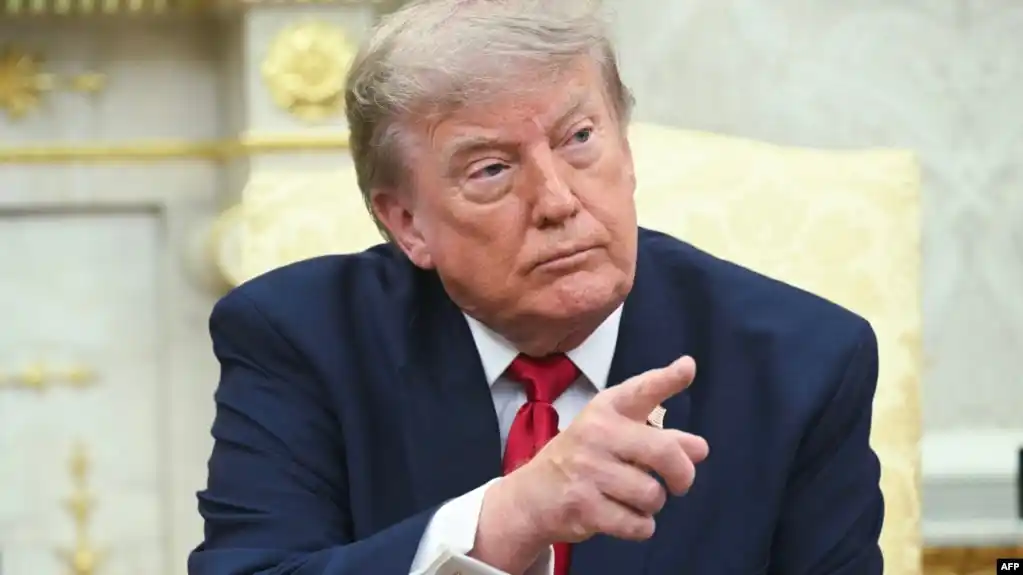

US President Donald Trump has ruled out using nuclear weapons against Iran, yet he has warned that further strikes against Iranian nuclear facilities remain possible. Meanwhile, Iranian President Masoud Pezeshkian has condemned the environmental destruction caused by regional conflicts, describing it as “ecocide”.
The developments come as Tehran maintains its hard-line position on the Strait of Hormuz, while concerns over US missile defence stockpiles raise questions about Washington’s military readiness. Although Trump predicts an early end to the war, his remarks indicate that further military action remains under consideration.
Iran President Calls Middle East Conflict ‘Ecocide’
Iranian President Masoud Pezeshkian urged the international community on Friday to condemn the environmental damage caused by what he described as “wars of aggression”.
Addressing a nature summit in Armenia attended by United Nations Secretary-General Antonio Guterres, Pezeshkian highlighted the consequences of conflicts in Gaza and across the wider Middle East.
“What has occurred in our region as a result of wars of aggression is ecocide, or environmental genocide, and it must be condemned,” Pezeshkian said.
He stressed that the destruction extends beyond national borders and requires “international solutions”. Therefore, his remarks called for broader international attention to the environmental consequences of regional warfare.
Trump Rules Out Nuclear Weapons Against Iran
Trump has dismissed the possibility of using nuclear weapons against Iran, arguing that the United States does not need them.
During an interview on Thursday, he addressed reports suggesting that his administration had considered using a powerful bomb against Iran, potentially after the US midterm elections.
However, Trump clarified that the weapon under discussion was conventional rather than nuclear.
“The mother of all bombs is not nuclear,” Trump said, adding: “This is just an extremely large bomb.”
He repeated the distinction, stating: “The mother of all bombs is one big bomb, but it’s not nuclear.”
When asked directly whether he would use nuclear weapons, Trump replied: “No, I wouldn’t use nuclear. We don’t have to,” ruling out their use in the conflict.
Could Washington Launch More Strikes Against Iran?
Despite rejecting nuclear weapons, Trump indicated that the United States could conduct additional attacks against Iranian nuclear facilities.
He specifically mentioned Pickaxe Mountain, a suspected underground nuclear site that Washington may target in a future operation.
“Now, we’re looking at Pickaxe Mountain. We may have to go there,” Trump said.
“We’ll take a shot at that one. We’ll knock it out fast.”
However, Trump expressed little interest in deploying American ground troops for such an operation. Asked whether troops would participate, he replied: “No, I don’t see that. I don’t see that.”
He also suggested that the United States might need further military action within a year if it withdrew without ensuring Iran could not obtain nuclear weapons.
“We want to make it so that they will never have a nuclear weapon,” he said.
Trump Predicts Iran War Will End Soon
Despite keeping the possibility of further strikes open, Trump predicted that the conflict would end soon and claimed Tehran was negotiating with Washington.
“The Iran war will be over very soon. It’s going to end very soon,” he said.
He also forecast falling energy prices after the conflict, stating: “One way or the other, it’ll end very soon. And oil will go dropping like a rock — and gas prices as well.”
Furthermore, Trump claimed Iranian officials had requested a halt to American and Israeli military operations.
“They’ve asked us to please stop. And we do, because we’re negotiating with them,” he said.
When asked whether he trusted Israeli Prime Minister Benjamin Netanyahu, Trump expressed reservations about political relationships.
“I don’t trust anybody, honestly,” he responded.
He repeated his position, saying: “I don’t trust anybody. In the world of politics, I don’t trust anybody.”
Iran Says Strait of Hormuz Will Remain Closed
Meanwhile, Iran has maintained its position on the strategically important Strait of Hormuz, saying the waterway will remain closed until Iranian rights receive recognition.
Major General Amir Hatami, commander-in-chief of the Islamic Republic of Iran Army, made the statement on Thursday during a ceremony at Imam Ali Officers’ University in Tehran.
Hatami argued that the conflict began because Iran’s adversaries underestimated its military capabilities and assumed the country was in a weak position.
He said the Iranian Army and the Islamic Revolutionary Guard Corps (IRGC) responded forcefully, launching numerous strikes against their adversaries from the earliest hours of what he described as the imposed war.
His remarks reinforced Tehran’s position that the conflict’s outcome must address Iran’s demands.
US Missile Defence Shortages Could Last Until 2030
Alongside the continuing conflict, concerns have emerged over American missile defence inventories and the time needed to replenish them.
Former US Army Chief of Staff General Randy George reportedly warned in late December that American missile defence stockpiles were critically low. His assessment came approximately two months before the US-Israeli war against Iran began.
Defence Secretary Pete Hegseth removed George from his position in April while the war was underway.
The general’s assessment, included in the Pentagon’s fiscal 2027 force allocation planning, identified shortages of Terminal High Altitude Area Defence (THAAD) interceptors and Patriot missiles. The assessment indicated that supplies could remain at strategically low levels until 2030.
Officials attributed the shortfalls to weapons transfers to Ukraine, American military support for Israel and limited defence industry production capacity.
Moreover, the war with Iran has placed additional pressure on available supplies.
Estimates from the Center for Strategic and International Studies (CSIS) indicate that US forces entered 2026 with approximately 2,300 Patriot interceptors. They reportedly used between 1,050 and 1,430 during the conflict.
The United States had approximately 355 THAAD interceptors before the war. Estimates suggest that American forces subsequently expended between 190 and 290 of them.
Why US Missile Supplies Matter in a Potential China Conflict
The reported shortages have raised concerns about America’s ability to sustain missile defence operations during another major confrontation, particularly one involving China.
Mark Cancian, a retired Marine colonel and senior adviser at CSIS, highlighted the importance of these systems in a potential conflict with Beijing.
“Air defence — missile defence — that will be huge,” he said, explaining that a major confrontation with China would require substantial interceptor supplies.
However, replenishing these weapons takes considerable time. Estimates indicate that new THAAD interceptor contracts require more than four years to fulfil, while Patriot PAC-3 orders take an average of three and a half years.
Consequently, rebuilding depleted stockpiles could remain a significant challenge for American defence planners.
Pentagon Rejects Claims of Munitions Shortages
Despite the reported concerns, the Pentagon has rejected claims that the United States faces a shortage of munitions.
Chief spokesman Sean Parnell dismissed the allegations, stating: “Claims of US munitions shortages are false.”
He added that Washington retains “everything required to strike at the time and place of the President’s choosing.”
The conflicting assessments leave questions about the scale of America’s missile defence challenges and the time required to replenish supplies. Meanwhile, Trump’s rejection of nuclear weapons has not ruled out further conventional strikes against Iran, even as he predicts an imminent end to the conflict.
For the latest updates, visit and follow The Truth International website (www.thetruthinternational.com) and subscribe to the YouTube Channel.

