
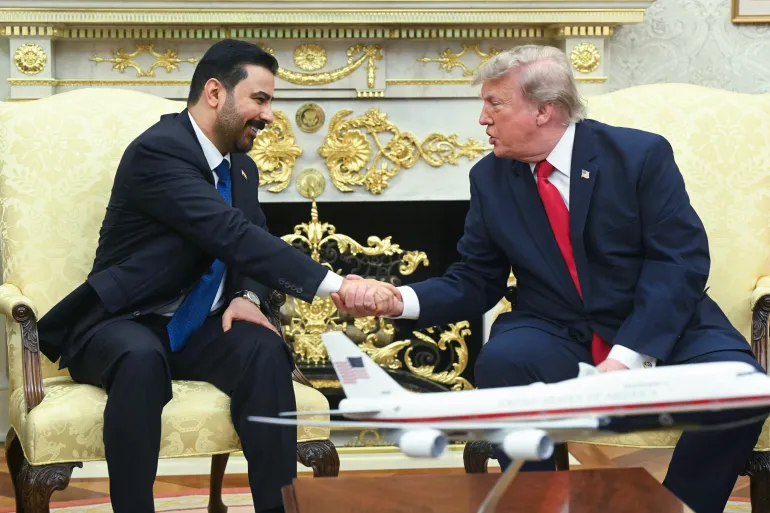

Leaders discuss oil production, investment, security cooperation and future US-Iraq relations
WASHINGTON: US President Donald Trump and Iraqi Prime Minister Ali al-Zaidi met at the White House on Tuesday, pledging to strengthen economic cooperation, expand energy investment and deepen bilateral ties as Iraq seeks greater oil production and long-term economic growth.
During the Oval Office meeting, Trump praised al-Zaidi, describing him as “a fantastic champion” and expressing confidence in Iraq’s economic potential. He said both countries would pursue major investment opportunities, particularly in the energy sector, while increasing oil production and creating jobs.
“We’re going to be doing a lot of deals,” Trump said, adding that Iraq’s vast oil resources offer significant opportunities for both nations.
Al-Zaidi described the visit as the beginning of a new phase in US-Iraq relations, emphasizing that the partnership was shifting from a security-focused relationship toward broader economic cooperation.
Energy and security dominate discussions
The Iraqi government expects several oil and gas agreements to emerge from the visit as part of wider efforts to boost trade and investment.
Al-Zaidi also reiterated Iraq’s request for a larger production quota within the Organization of the Petroleum Exporting Countries (OPEC), arguing that increased output is essential to finance reconstruction following years of conflict.
He said Iraq continues to face more than $400 billion in war-related damage, with many displaced families still living in temporary shelters.
Meanwhile, both leaders stated that the remaining US military forces in Iraq, estimated at fewer than 2,000 personnel, are expected to complete their withdrawal by September 30. Al-Zaidi also reaffirmed his commitment to disarm armed factions operating across Iraq, although he did not outline how the plan would be implemented.
Regional tensions remain a key concern
The meeting took place against the backdrop of heightened regional tensions, including renewed confrontation between the United States and Iran and ongoing instability surrounding the Strait of Hormuz.
Iraq has faced growing economic pressure as disruptions to shipping through the strategic waterway have affected energy exports, with nearly 90 percent of the country’s crude oil shipments relying on the route.
Despite the security challenges, both governments expressed optimism that stronger economic cooperation, expanded investment and new energy agreements would reinforce the long-term strategic partnership between Washington and Baghdad while supporting Iraq’s reconstruction and economic development.

