
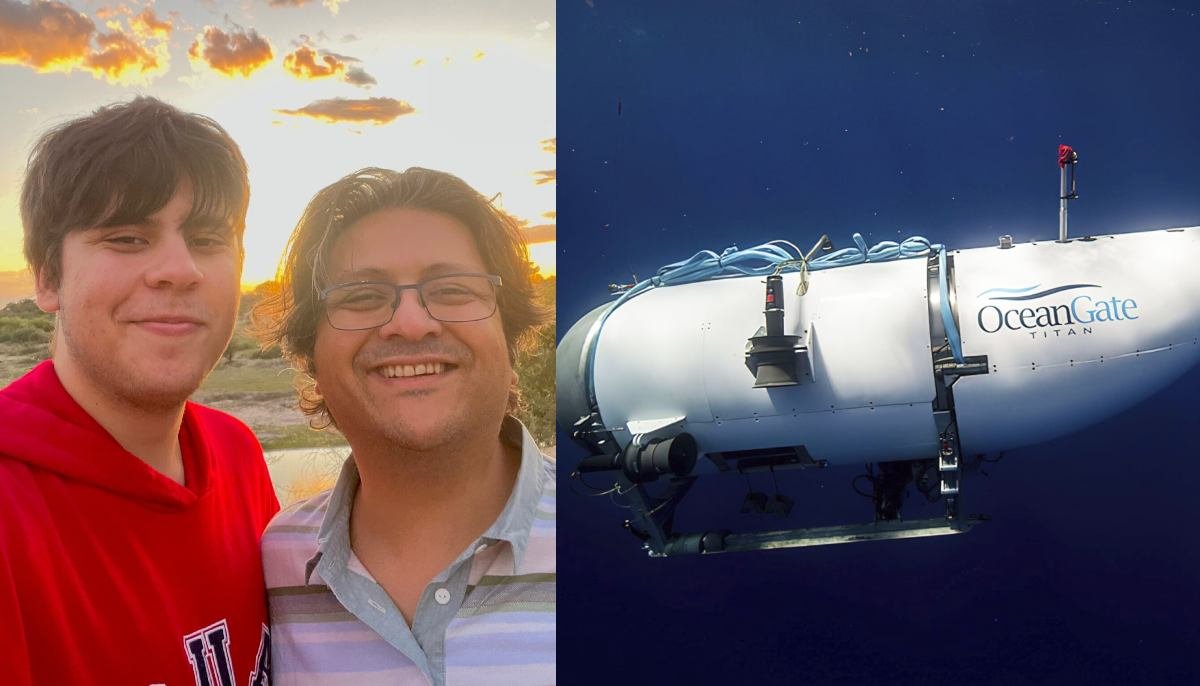

London: A woman who lost her husband and son in the Titan submarine disaster has described the painful process of receiving their remains months after the tragedy, shedding light on the complexities of deep-sea recovery efforts.
Christine Dawood told The Guardian that it took nine months for authorities to return what could be identified as the remains of her husband, Shahzada Dawood, and her son, Suleman Dawood. She explained that the material recovered from the ocean floor was severely fragmented due to the extreme conditions at depth.
Moreover, she said the remains were returned in two small containers and identified through DNA testing. According to her account, recovery teams collected mixed biological material from the site, making separation difficult. Consequently, officials relied on forensic methods to determine which remains could be attributed to specific individuals.
Dawood added that authorities informed her about additional unidentified material that contained mixed DNA from multiple victims. However, she chose to accept only the portions confirmed to belong to her family members.
Furthermore, her account underscores the emotional toll on families following the disaster, which drew global attention when the submersible imploded during a deep-sea expedition. The incident highlighted both the risks associated with such missions and the technical challenges involved in recovery operations at extreme depths.
In addition, experts note that deep-sea conditions often complicate retrieval and identification processes, particularly in high-pressure environments.
Ultimately, Dawood’s experience reflects the human impact of the tragedy and the prolonged uncertainty faced by families awaiting closure.

