
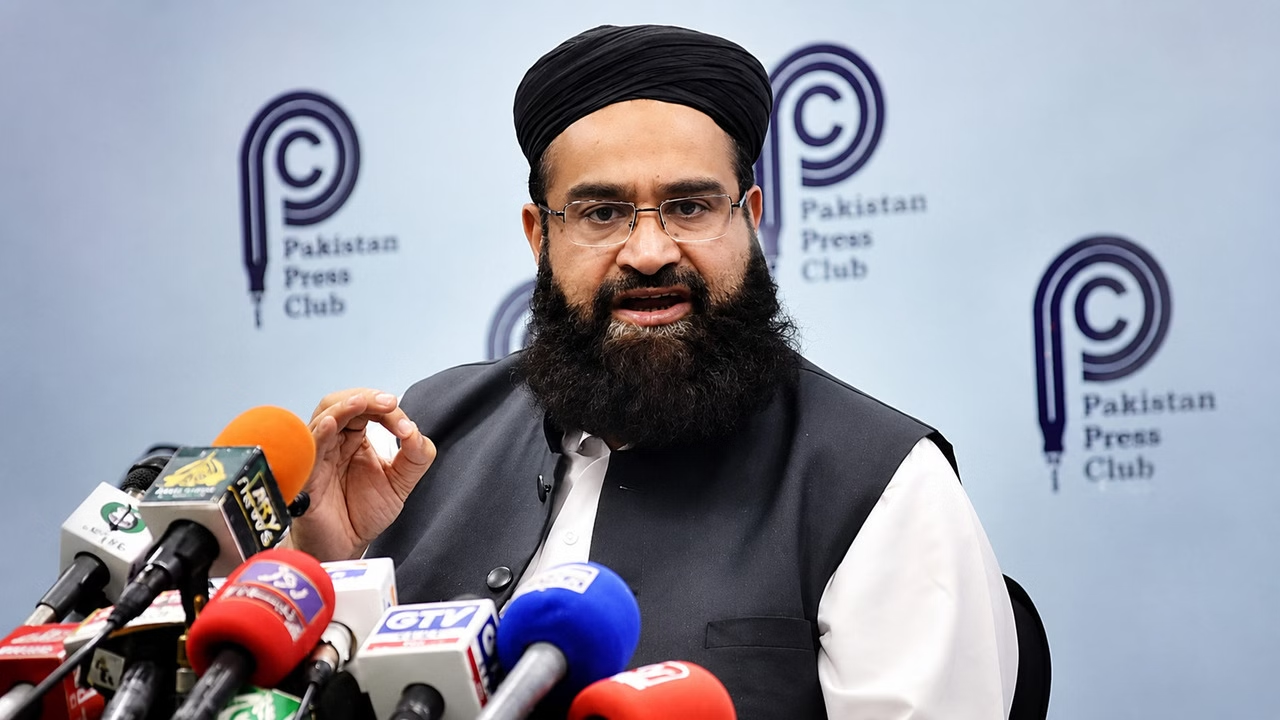

Religious leaders reaffirm support for peace, Paigham-e-Pakistan and national security
ISLAMABAD: Pakistan Ulema Council Chairman Maulana Tahir Ashrafi has said efforts are underway to regulate social media while reaffirming the country’s religious scholars’ firm opposition to terrorism, extremism and suicide attacks.
Speaking after the Ulema and Mashaikh Conference, Ashrafi said participants unanimously condemned all forms of terrorism and violent extremism through a joint declaration. He also paid tribute to the country’s security personnel and martyrs, saying they had made immense sacrifices for Pakistan and deserved the nation’s respect and gratitude.
Ashrafi added that the families of martyrs would continue to receive the support of the country’s religious leadership.
Conference stresses unity and peace
Referring to Paigham-e-Pakistan, the national narrative against extremism, Ashrafi said anyone violating its principles would not receive the support of the Pakistan Ulema Council.
He also stated that serious efforts were being made to regulate social media, although he did not provide details about the proposed measures or implementation process.
Commenting on content recently aired by a television channel, Ashrafi said state institutions had taken notice of the matter and had taken appropriate action.
He further claimed that around 8,000 religious scholars had embraced martyrdom over the years, highlighting what he described as the sacrifices made by the religious community in the fight against extremism.
Support voiced for stability
Ashrafi also praised the country’s leadership, saying the Chief of Army Staff and the prime minister had played important roles in preventing Pakistan and the wider Muslim Ummah from being drawn into conflict.
In addition, he said efforts were continuing to resolve longstanding issues facing religious seminaries, adding that he personally understood their concerns because he had also studied at a seminary.
He emphasised that senior religious scholars remained committed to promoting peace and national harmony. Ashrafi said religious leaders were prepared to travel wherever necessary to help resolve disputes, encourage dialogue and contribute to lasting peace and stability across the country.
The conference concluded with participants reaffirming their commitment to supporting national unity, religious harmony and peaceful coexistence while rejecting violence in all its forms.

