
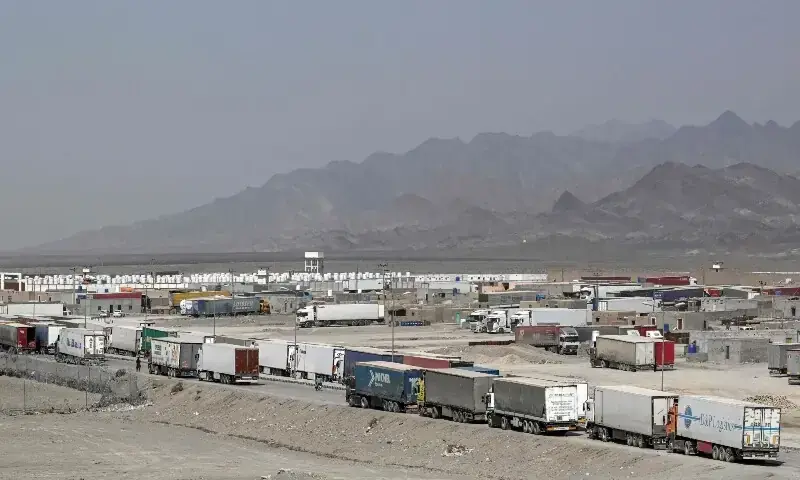

ISLAMABAD: The Federal Board of Revenue has declared Railway Station Taftan a land customs station under customs notification SRO1055 of 2026. The notification places the 11.75-acre railway facility into Pakistan’s formal customs network for the loading, unloading, and clearance of imported and exported goods.
The notification defines the station’s geographical limits and formally links the railway terminal with customs operations. Officials expect the move to activate rail-based cargo handling at Taftan. Despite its strategic location, the station has remained underutilised for years as Pakistan’s primary land gateway to Iran.
By granting land customs station status, authorities aim to streamline documentation, inspection, and clearance procedures. The decision also seeks to reduce informal trade channels and lower transportation costs for cross-border commerce.
The development comes as Pakistan works to expand formal trade with Iran. Trade has faced restrictions due to sanctions, limited banking options, and weak border infrastructure. Officials from both countries have repeatedly pledged to raise bilateral trade to five billion dollars. However, actual trade volumes have stayed well below potential.
Logistical gaps at border crossings have remained a major challenge. The absence of fully operational customs and transport facilities has slowed cargo movement. It has also discouraged large-scale commercial activity. The latest notification addresses part of this issue by enabling rail-linked cargo clearance at Taftan.
Trade analysts say integrating rail infrastructure with customs systems can reduce costs and improve efficiency. They note that bulk commodities benefit the most from rail transport. These include agricultural goods, minerals, and petroleum products, which dominate Pak-Iran trade.
The formal recognition of Taftan railway station as a land customs station signals a policy shift. It reflects efforts to institutionalise trade routes that have long operated below capacity. The move also supports broader goals to normalise economic engagement with Iran through regulated and documented channels.

