
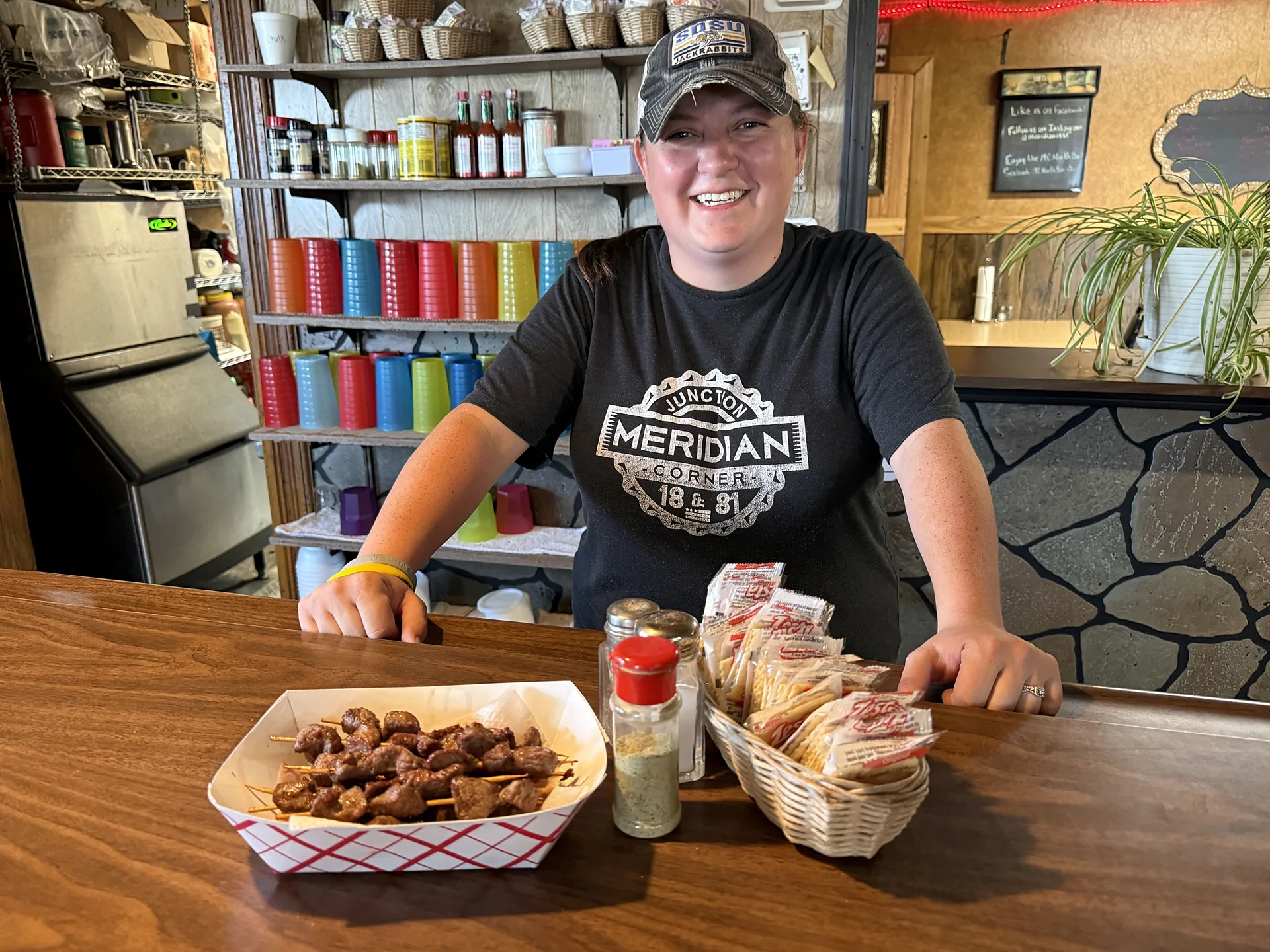

FREEMAN: Chislic, South Dakota’s celebrated meat snack, may appear distinctly American, but its history stretches thousands of kilometres to communities around the Black Sea.
The dish traditionally features small pieces of lamb or mutton cooked and served with garlic salt and crackers. It remains particularly popular around Freeman, where restaurants, bars and families have preserved the tradition for generations.
South Dakota formally recognised chislic as its official state “nosh” in 2018, cementing the snack’s place in local culinary culture.
German-Russian Immigrants Brought Shashlyk Tradition to Dakota
Chislic’s origins trace to shashlyk, a Black Sea and Caucasus tradition involving chunks of mutton marinated and grilled on skewers.
German settlers living in the Russian Empire adopted the dish before many emigrated to Dakota Territory during the 1870s.
According to local historical records, immigrant Johann Hoellwarth introduced shashlyk around Freeman. Residents reportedly interpreted his pronunciation as “chislic,” and the name endured.
However, limited ingredients and resources on the Great Plains transformed the recipe. Settlers replaced metal skewers and traditional grilling methods with willow sticks, lard and simple seasonings, eventually producing the deep-fried version associated with South Dakota.
Modern Variations Challenge Traditional Chislic Recipe
Meanwhile, chislic continues to evolve. Traditionalists around Freeman’s roughly 30-mile “Chislic Circle” largely favour lamb and mutton, while restaurants elsewhere serve beef, venison and other variations.
Some establishments griddle the meat with onions, while others add cheese, jalapeños or dipping sauces.
Moreover, the Chislic Festival has encouraged experimentation while maintaining separate recognition for traditional recipes.
Despite these changes, local historians say chislic represents more than food. Its evolution reflects immigration, adaptation and the German-Russian heritage that helped shape South Dakota’s Great Plains communities.

