
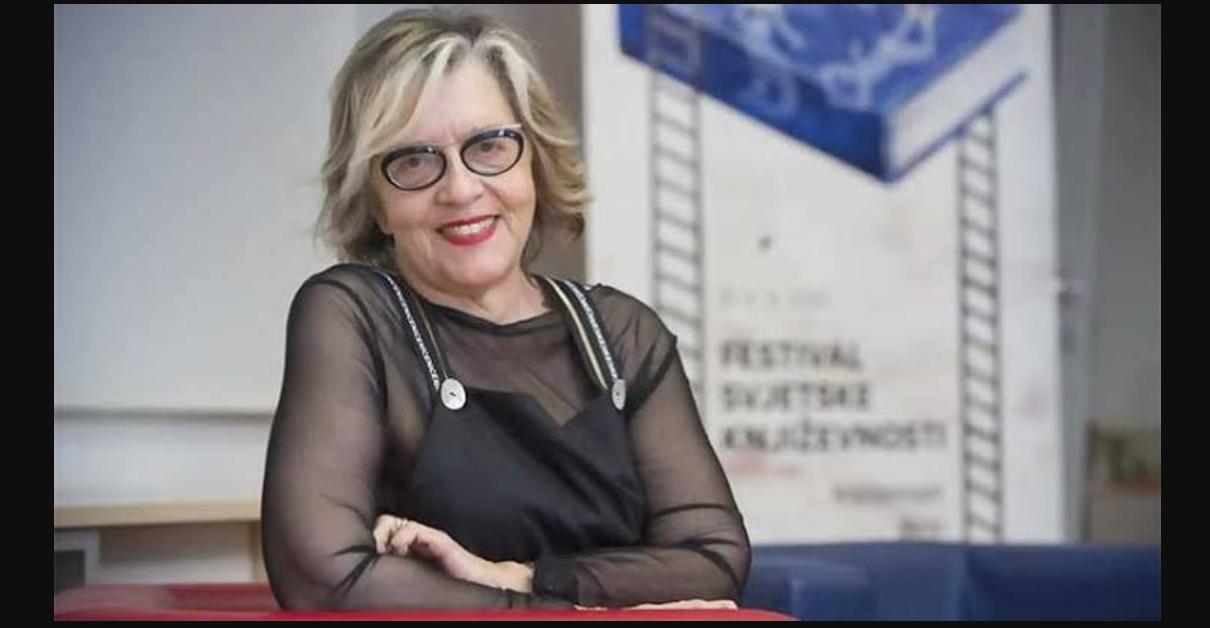

Croatian feminist writer and journalist Slavenka Drakulić, widely regarded as one of the region’s most influential literary voices, has died at the age of 76. A close friend confirmed her death in Croatia on Saturday, marking the end of a powerful intellectual legacy that shaped feminist and political discourse across Europe.
Drakulić was among the earliest writers in former Yugoslavia to bring feminist issues into mainstream public discussion. Her work consistently challenged social norms and highlighted women’s experiences in both private and political life.
Early Life and Academic Background
Born in 1949 in the northern Croatian city of Rijeka, Slavenka Drakulić developed an early interest in literature and social sciences. She later studied comparative literature and sociology at the University of Zagreb.
She began her writing career in the late 1970s. From the beginning, she combined journalism and literary expression to explore deeper social realities. Her writing style blended analysis with personal insight, making her work accessible and impactful.
Breakthrough Works and Feminist Themes
Drakulić gained early recognition with her essay collection “The Deadly Sins of Feminism” published in 1984. This work positioned her as a bold voice addressing gender inequality in a conservative political environment.
She followed it with her debut novel “Holograms of Fear” in 1987, further establishing her reputation as a powerful literary figure.
Over the years, she produced numerous novels and essay collections translated into more than 20 languages. Her writing often focused on women’s lives, identity, and historical trauma.
She also explored the lives of notable female figures, drawing inspiration from individuals such as Mexican artist Frida Kahlo and Mileva Einstein, the first wife of Albert Einstein.
Writing on War, Politics, and Society
Drakulić was known for her fearless examination of political change in Eastern Europe. She wrote extensively about the collapse of communism and the rise of nationalism across the Balkans.
She also documented the wars that followed the breakup of Yugoslavia. Her work reflected on suffering, moral responsibility, and human behaviour during conflict.
Among her most internationally recognised works are “How We Survived Communism and Even Laughed” and “Balkan Express”. These books brought global attention to the social and emotional consequences of political transformation in the region.
Her novel “As if I Am Not There” addressed wartime sexual violence in Bosnia, earning critical international recognition for its sensitive and unflinching portrayal of trauma.
In her essay collection “They Would Never Hurt A Fly”, she examined war criminals from the Yugoslav conflicts. She explored the concept of ordinary individuals committing extraordinary acts of violence, focusing on the idea of the banality of evil.
International Recognition and Journalism Career
Beyond books, Drakulić contributed essays and commentary to major international publications, including The New York Times Magazine, Frankfurter Allgemeine Zeitung, La Repubblica, and The Guardian.
Her work consistently bridged journalism and literature, offering both factual insight and emotional depth.
In 2025, she received the Croatian Journalists’ Association (HND) lifetime achievement award, recognising her decades of contribution to literature and journalism.
Views on Writing and Legacy
In one of her final interviews, Drakulić described writing as both a duty and necessity. She said:
“When we talk about journalism: testimony, resistance, analysis, and the search for truth. When we talk about literary creation … it is a necessity for me. Whether it is journalism or prose, what matters to me is to write.”
Her words reflected a lifelong commitment to truth, storytelling, and intellectual resistance.
A Lasting Intellectual Influence
Slavenka Drakulić lived between Croatia and Sweden, continuing to write and reflect on global and regional issues throughout her life. Her legacy remains deeply tied to feminist thought, post-communist transition, and human rights discourse.
Her passing marks the loss of a writer who consistently challenged political systems, amplified women’s voices, and examined the moral complexity of history.

