
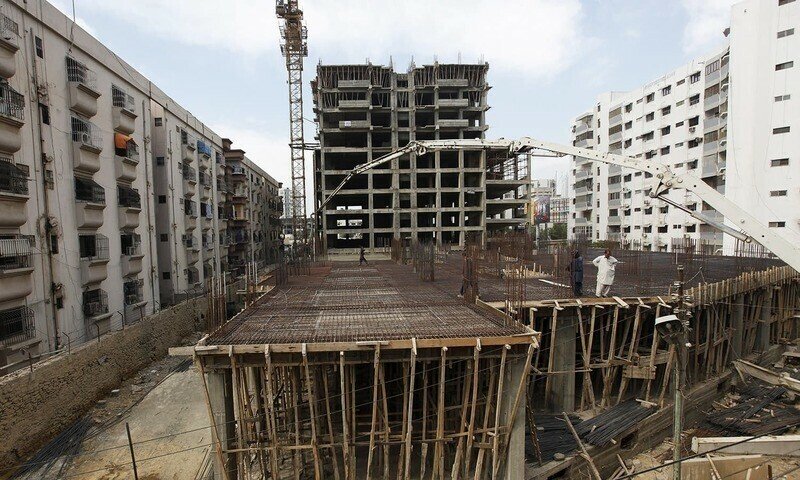

Sindh has lifted a seven-year ban on converting residential plots for commercial use, restoring the process across the province under revised legal and planning requirements.
The Sindh Master Plan Authority withdrew the notification that had prohibited changes in land use since 2019.
The decision follows recent rulings by the Supreme Court and the Federal Constitutional Court.
Commercialisation Allowed on Major Roads
The authority clarified that lifting the ban does not mean residential plots will automatically become commercial.
Property owners must still follow zoning regulations, master plans and other applicable laws. They will also need a formal No-Objection Certificate (NOC) and approval from the relevant authority.
Senior Director Sindh Master Plan Authority Shakeel Siddiqui said commercialisation would be permitted on several major roads.
These include Shahrah-e-Faisal, Tariq Road, University Road, Rashid Minhas Road, Shahrah-e-Pakistan, Stadium Road, Shahrah-e-Noor Jehan, Tipu Sultan Road, Shahrah-e-Usman and Shaheed-e-Millat Road.
Other approved routes include Beach Avenue Road, Khayaban-e-Saadi, Khayaban-e-Rumi, Nishtar Road/Dhoraji Road, Alamgir Road, Shahrah-e-Humayun, Nazimabad A Road, North Nazimabad 300-foot Road, Shahrah-e-Jahangir, Khayaban-e-Iqbal, Khayaban-e-Jami and Khalid bin Walid Road.
Jamaluddin Afghani Road, Allama Iqbal Road, Sir Syed Ahmed Road and Chaudhry Khaliquzzaman Road are also included.
Amenity Plots Cannot Be Commercialised
The authorities stressed that the decision does not apply to amenity plots.
Parks, hospitals, schools, mosques, playgrounds and graveyards cannot be converted for commercial or residential purposes.
The clarification is aimed at preventing misuse of public and community facilities under the revised land-use framework.
The previous ban had kept several property and development projects pending for years, particularly in Karachi.
New Formula for Infrastructure Fees
The Sindh government has also introduced a new formula for distributing infrastructure fees collected when land use is changed.
Under the new arrangement, 45% of the fee collected in Karachi Division and Hyderabad district will go to the relevant Town Municipal Corporations.
The Sindh Master Plan Authority will receive 25%, while 20% will go to the Water and Sewerage Corporation. The remaining 10% will be allocated to the relevant metropolitan or municipal corporation.
A separate mechanism will apply to Mirpurkhas, Shaheed Benazirabad, Sukkur and Larkana divisions.
Where a municipal corporation exists, the same 45%, 25%, 20% and 10% distribution formula will apply.
In areas without a corporation, 75% of the collected fee will go to the relevant municipal committee, town committee or district council. The remaining 25% will go to the Sindh Master Plan Authority.
Builders Welcome Decision
Chairman Association of Builders and Developers (ABAD) Hassan Bakshi welcomed the decision, saying it had provided relief to the real estate sector.
However, he warned that commercialisation must be supported by proper urban planning and improved infrastructure.
He said uncontrolled commercial development could put additional pressure on Karachi’s traffic, water supply, sewerage and other civic services.
Bakshi noted that commercialisation had remained suspended in Karachi while similar activity continued in other parts of the country.
He said allowing commercialisation along the designated roads could create employment opportunities and provide more options for property buyers.

