
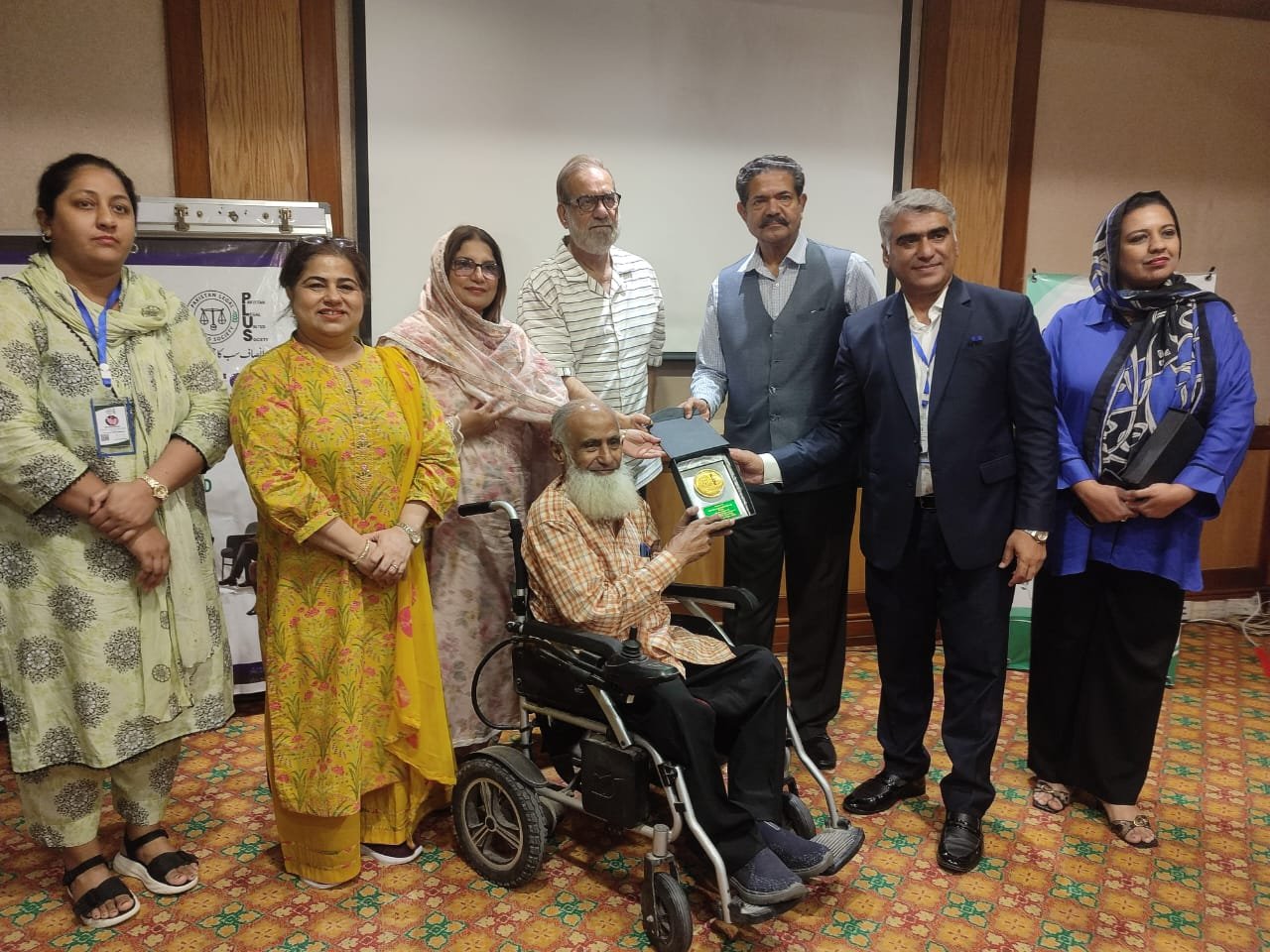

KARACHI: Pakistan Legal United Society (PLUS) In collaboration with: Department of Empowerment of Persons with Disabilities (DEPD) & Sindh Persons with Disabilities Protection Authority (SPDPA) arranged a landmark event on “Assistive Technologies & Accessible Justice in Sindh” to advance disability-inclusive courts and strengthen equal access to justice for Persons with Disabilities (PWDs) across Sindh here in a local hotel.
The event was graced by Mr. Rajveer Singh Sodha, Special Assistant to the Chief Minister Sindh, along with Ms Rubina Brohi , Chairperson Sindh commission on Status of Women, Mr Naveed Ahmed Soomro, District & Session Judge Sindh Judicial Academy, Mr Rashid Shaikh, District Public Prosecutor Central, Mr Zulifqar Shah DSP Sindh Police. Ms Ratna Dewan represented Depd and SPDA. A large number of people from legal fraternity, government departments, civil society organizations attended the ceremony.
Speakers from the government departments and civil organisation appreciated the interest and efforts of CM Sindh, Syed Murad Ali shah who also looks after the portfolio of Minister of Special Department and takes personal interest in bringing positive change in the lives of differently-able people. Further highlighting the services of Department for Empowerment of persons with Disability(Depd), speakers shared their views that Secretary SPDPA and Depd, Mr Taha Farooqui has shown utmost dedication and commitment since the inception of department and after the approval of Act in 2018 Sindh province has shown faster progress in this ministry compared to other provinces by facilitating NGOS working for people with disability(PWD), arranging one window camps and distributing assistive devices in 31 districts and investing in their capacity building.
The initiative is grounded in Sections 18 and 33 of the Sindh Empowerment of Persons with Disabilities Act, 2018, Article 25 of the Constitution of Pakistan, and Articles 9 and 13 of the United Nations Convention on the Rights of Persons with Disabilities (UNCRPD), which guarantee accessibility, equality before the law, and effective access to justice for persons with disabilities.
While designated Courts for differently-abled people were notified in Sindh in 2019, but each district justice department continue to face challenges relating to physical accessibility, communication barriers, assistive technology availability, and procedural accommodations. As a result, persons with disabilities often experience difficulties in participating effectively in legal proceedings, resulting in delays and barriers in obtaining timely justice.
Recognizing these challenges, PLUS has been contributing towards the realization of an accessible and inclusive justice system envisioned under the Sindh Empowerment of Persons with Disabilities Act, 2018. Through sustained advocacy, awareness, capacity building, and practical accessibility interventions, the initiative seeks to make courts more responsive to the needs of persons with disabilities.
During the ceremony, assistive devices including AI-powered smart glasses, wheelchairs, white canes, tablets, and hearing aids were distributed to support persons with disabilities in navigating legal processes independently and effectively. “The assistive devices were handed over to the Prosecutor General Sindh for utilization in district courts through the prosecution department, which is responsible for facilitating their deployment and ensuring accessible justice services for persons with disabilities under its jurisdiction. “They are expected to enhance communication, mobility, access to information, and participation in court proceedings, thereby contributing to a more efficient and accessible justice system.
Speakers emphasized that accessibility was not merely a welfare measure but a legal obligation and a fundamental human right. They highlighted the need for continued collaboration among government institutions, the judiciary, bar associations, prosecutors, lawyers, and civil society to remove barriers and ensure that justice was delivered fairly, equally, and without discrimination.
The event reaffirmed the collective commitment of stakeholders towards building a justice system where every citizen, regardless of disability, can access legal remedies with dignity, independence, and equality.

