

Activist Challenges Facial Recognition at Delhi Demonstrations
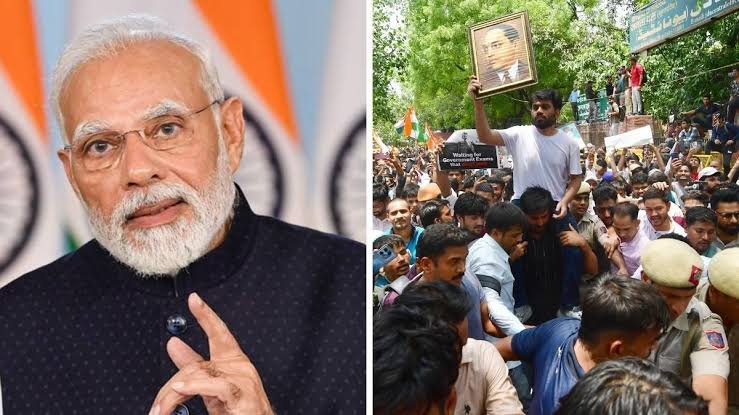
Indian activists have launched a legal challenge against the government’s use of artificial intelligence surveillance during major youth protests in New Delhi.
Student activist Aishe Ghosh has asked the Delhi High Court to declare indiscriminate surveillance of peaceful protesters unconstitutional.
Her petition seeks the deletion of personal and biometric information collected during demonstrations at Jantar Mantar.
She has also requested clear national guidelines governing the use, storage and destruction of surveillance data.
The controversy began after protesters photographed a mobile Delhi Police surveillance van at the demonstration site.
The vehicle carried cameras mounted on a telescopic mast.
Those cameras provided a 360-degree view of the crowd.
Protesters argued that the system was monitoring individuals without suspicion of criminal activity.
Ghosh’s legal challenge is continuing despite the end of the demonstrations.
The youth-led movement withdrew its protests after Education Minister Dharmendra Pradhan resigned on July 25.
The demonstrations followed leaked medical entrance examination papers that led to cancelled results and a retest affecting around two million students.
Prime Minister Narendra Modi’s government later accepted demands for examination reforms and announced measures to overhaul the system.
Government Defends Monitoring as Necessary for Security
The Indian government has defended the surveillance measures as lawful and necessary for maintaining public order.
Solicitor General Tushar Mehta told the Delhi High Court that video monitoring at a public protest served a legitimate state interest.
He argued that claiming complete privacy at a public gathering was unreasonable.
The government maintained that police needed visual records to manage security and investigate possible disorder.
Ghosh’s lawyers rejected comparisons between police surveillance and videos recorded by journalists, protesters or social media users.
They argued that government monitoring carries greater power and creates different risks.
The petition says citizens do not surrender their constitutional privacy rights simply by entering a public space.
It also questions how long the authorities plan to store images and biometric information collected from protesters.
India currently has no specific law regulating police use of facial recognition technology.
Digital rights campaigners say the absence of legislation creates serious accountability and privacy concerns.
They argue that authorities should not collect biometric information without transparent rules, safeguards and independent oversight.
The government says its actions remained within the law and were taken to protect public safety.
The Internet Freedom Foundation wrote to the Delhi police commissioner on July 24.
The digital rights organisation demanded the deletion of biometric data gathered at the protest site.
It also raised concerns about whether facial recognition could discourage citizens from joining peaceful political demonstrations.
Delhi Police said facial recognition technology had not been used to restrict anyone’s freedom.
The force did not provide Reuters with a detailed response about its data collection and retention practices.
The Delhi High Court heard further arguments on Monday and scheduled the next hearing for Tuesday, July 28.
Police Van Used AI to Identify Faces and Count Protesters
The mobile surveillance vehicle displayed the Delhi Police crest and carried advanced cameras.
A previous description from technology company CP Plus said the system included AI-powered equipment, mobile cameras and adjustable surveillance lenses.
The company’s online post describing the vehicle was later removed.
CP Plus did not respond to a request for comment.
A Reuters journalist who walked past the vehicle saw his face displayed on a computer screen.
A green rectangular box appeared around the face alongside a facial accuracy measurement.
A police officer later closed the vehicle’s window.
Police personnel said the system helped identify people with criminal records and estimate the number of demonstrators.
Officers were also seen recording the Instagram account names of people entering the protest area.
Inspector Sunil Kumar said the checks were intended to prevent individuals with criminal backgrounds from joining the gathering.
Activists questioned whether collecting social media details from peaceful demonstrators was proportionate or necessary.
Technology lawyer Akash Karmakar said authorities must demonstrate that surveillance measures are proportionate to any security risk.
He also argued that accountability should apply equally to law enforcement personnel.
He said facial recognition should also identify officers accused of operating without visible name badges during police action.
The case could determine how far Indian authorities may use AI surveillance at political demonstrations.
It may also shape future rules covering facial recognition, biometric data and privacy in public spaces.
The court has not yet ruled on whether the police surveillance was unconstitutional.
Its decision could have major consequences for digital rights and protest freedoms across India.

