
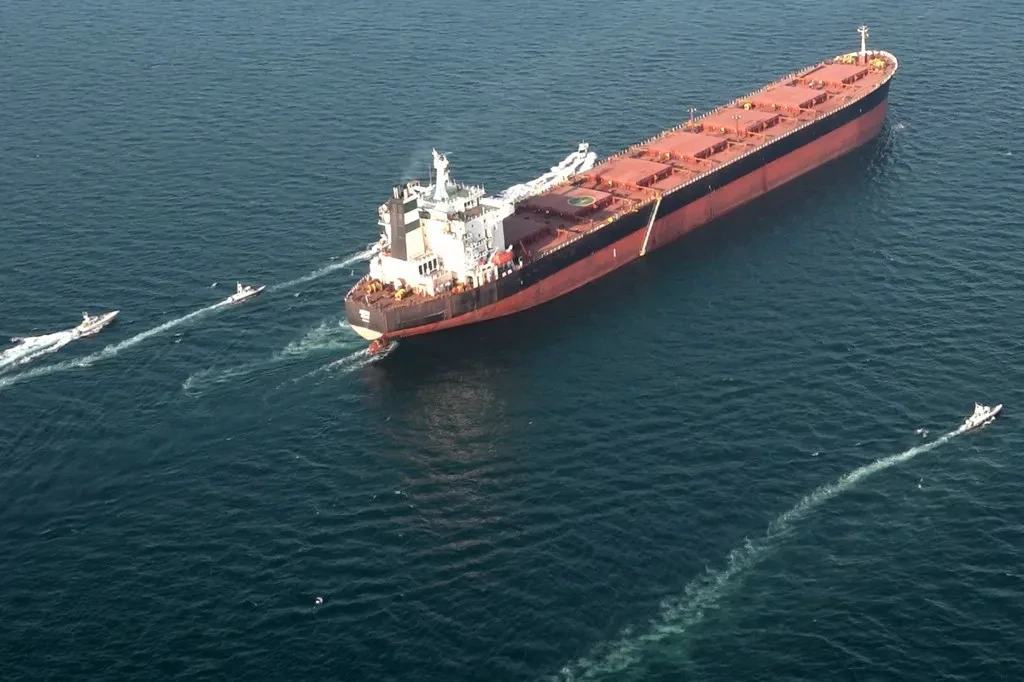

Several vessels have crossed the Strait of Hormuz despite a US-imposed blockade, raising fresh concerns. Maritime tracking data indicates that multiple ships linked to Iran used the route shortly after restrictions took effect.
At least two vessels completed their transit on Monday. Meanwhile, additional ships were also reported to have used the same passage within hours.
Details of Vessel Movements
One vessel, a Liberia-flagged bulk carrier, crossed the strait after unloading cargo at an Iranian port. It carried around 74,000 tonnes of corn before completing its route.
Another ship, a Comoros-flagged tanker, also successfully passed through the strait. It was transporting approximately 31,000 tonnes of methanol. The vessel had departed from an Iranian port earlier.
Additionally, a Chinese-linked tanker crossed the strait overnight. It carried more than 31,000 tonnes of methanol and was heading toward Oman.
More Ships Follow the Same Route
A fourth vessel also crossed the strait, moving westward into the Gulf. It was reportedly empty and heading toward an Iraqi port.
These movements suggest that maritime traffic continues despite heightened restrictions. Therefore, enforcement of the blockade remains under scrutiny.
Sanctions and Strategic Implications
Some of the vessels involved are already under US sanctions due to their ties with Iran. However, not all ships crossing the strait fall under such restrictions.
This situation highlights the complexity of monitoring maritime activity in the region. Moreover, it raises questions about how effectively such blockades can be enforced.
Concerns Over Tracking and Navigation
Maritime analysts have warned that tracking ships in the region has become increasingly difficult. Signals are often disrupted or manipulated during periods of conflict.
As a result, precise vessel movements can be harder to verify. This uncertainty adds another layer of risk to already tense conditions.
Rising Geopolitical Tensions
The Strait of Hormuz remains a critical global shipping route. Therefore, any disruption affects international trade and energy supplies.
The recent crossings are being closely watched by global markets. Some observers view these actions as a test of the blockade’s effectiveness.
Meanwhile, concerns continue to grow about potential escalation. If tensions rise further, maritime security could face additional challenges.

