

Court Says Procurement Process Is Already Complete
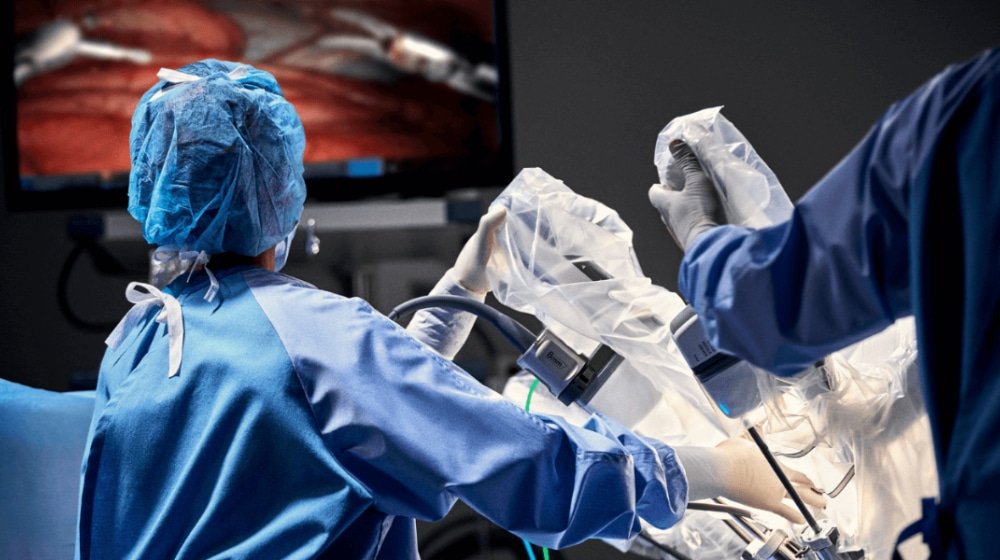
The Sindh High Court has disposed of two petitions challenging the procurement of robotic surgical systems for government hospitals in Sindh.
A two-member constitutional bench headed by Justice Yousuf Ali Sayeed heard the petitions.
The cases questioned whether robotic surgical systems had been purchased at excessively high prices, allegedly causing losses to the public treasury.
However, the court noted that the procurement process had already been completed.
The machines have been received, installed and commissioned at the relevant government hospitals.
As a result, the court said the main requests made by the petitioner had largely become ineffective.
The petitions had originally sought cancellation of the procurement process.
They also asked the court to direct authorities to purchase essential medical machinery through a lawful and transparent process.
The SHC said such relief could no longer practically be granted because the disputed equipment was already installed and operational.
Court Says Inflated Price Claims Require Detailed Investigation
Petitioner Khawar Mehmood Afridi filed the cases in 2024 against the Sindh chief secretary, health secretary, private companies and other respondents.
He alleged irregularities and misuse of government funds in contracts for robotic surgical systems.
The equipment was reportedly intended for Liaquat University Hospital and other government health facilities.
The petitioner claimed the systems had been purchased at prices far above their actual market value.
In earlier proceedings, he alleged that equipment valued at around $37,500 per unit in import documents was intended to be purchased for more than $1.5 million.
He claimed the difference could provide the supplier with an exceptionally large profit.
These claims remain allegations made by the petitioner and were not established as facts by the Sindh High Court.
The court said determining whether the machines were actually purchased at inflated prices would require examination of factual and technical evidence.
Such an exercise could not be conclusively conducted within the SHC’s constitutional jurisdiction.
The bench therefore did not issue a finding that corruption, embezzlement or overpricing had occurred.
The court instead pointed towards the appropriate investigative forum.
Petitioner Allowed to Pursue Complaint Before NAB
The bench noted that concerns regarding at least one of the procurements had already been brought before the National Accountability Bureau.
An application or representation had been submitted to the NAB director general.
The SHC said the petitioner was free to continue pursuing the matter with the federal anti-corruption agency.
If NAB failed to act, the petitioner could seek another legal remedy available under the law.
The court therefore disposed of both petitions without making a final determination on the disputed pricing allegations.
The robotic surgery procurement had previously attracted judicial scrutiny.
In May 2026, the SHC sought a detailed report regarding a Rs2.133 billion procurement of robotic surgery systems for Liaquat University Hospital.
That proceeding was also linked to public-interest petitions questioning the acquisition of robotic equipment for government health institutions.
Liaquat University Hospital officials had defended the procurement process.
The hospital’s medical superintendent maintained that prices were determined by the provincial government after completion of required procedures.
With the machines now installed, the dispute has shifted away from stopping the procurement.
The central question is now whether public funds were misused or equipment was purchased at unjustifiably high prices.
That issue may now depend on any investigation undertaken by NAB or another competent authority.

