
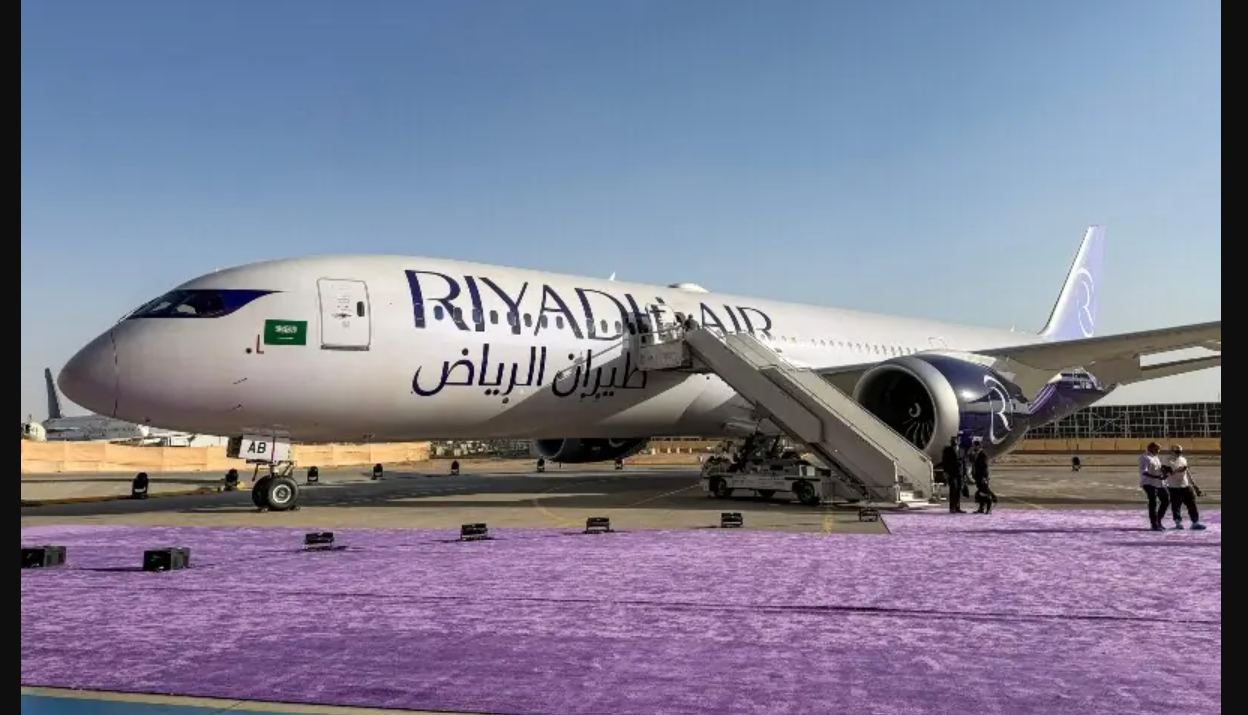

Saudi Arabia has officially launched its second national carrier, Riyadh Air, marking a major step in its aviation expansion strategy. The launch comes after more than a year of delays, as the kingdom continues pushing to diversify its economy away from oil dependence.
A London-bound Boeing 787 Dreamliner, featuring Riyadh Air’s white and lavender livery, completed its inaugural takeoff at 2:30am local time. The flight signaled the start of operations for a flagship project designed to strengthen Saudi Arabia’s global aviation footprint.
A Key Pillar in Economic Diversification Strategy
Riyadh Air represents a central component of Saudi Arabia’s broader economic transformation plan. The airline aims to position Riyadh as a major international aviation hub that can compete directly with established regional centers like Dubai.
The new carrier becomes the country’s second state-owned airline after Saudia, which is based in Jeddah. Authorities expect the airline to support tourism growth, increase connectivity, and attract global investment into the aviation sector.
Riyadh Air CEO Tony Douglas highlighted the airline’s vision during its launch phase, stating, “We want to bring glamour, we want to bring refinement, we want to bring grace back,” reflecting the brand’s premium positioning strategy.
Delays, Global Disruptions, and Strategic Timing
The launch of Riyadh Air was initially planned for 2025 but faced delays due to aircraft delivery setbacks from Boeing. The American manufacturer has been dealing with production challenges and safety-related issues in recent years, which impacted global airline expansion timelines.
Despite these delays, the airline’s debut proceeds at a time of significant regional uncertainty. The Middle East has experienced heightened tensions following attacks involving drones and missiles targeting multiple Gulf locations, including key aviation infrastructure.
Even with these risks, Riyadh Air leadership views the timing as strategic rather than restrictive, pointing to the resilience of Saudi Arabia’s aviation environment compared to surrounding regions.
Leadership Perspective on Launch Milestone
Riyadh Air CEO Tony Douglas described the launch as the result of long-term planning and execution. He said, “I think Riyadh, as a result of its geography, during this particular point in time, has been less affected,” referring to regional instability.
He further emphasized the challenges faced during the development phase, adding, “You have the trials and the tribulations, you win some, you lose some, you make progress, you sometimes have setbacks, but you have made it, and this day we’ve made it.”
His comments underline the operational complexity of launching a new national airline in a highly competitive and geopolitically sensitive region.
Ambition to Build a Global Aviation Hub
Saudi Arabia is also investing heavily in aviation infrastructure to support Riyadh Air’s long-term goals. A new mega airport is under construction in Riyadh, designed to handle up to 120 million passengers annually by 2030.
This planned capacity significantly exceeds the current 53 million passenger capacity of King Khalid International Airport, highlighting the scale of the kingdom’s aviation ambitions.
Riyadh Air is expected to play a major role in this transformation by increasing international routes, strengthening connectivity, and positioning Riyadh as a global transit hub.
Conclusion
The launch of Riyadh Air marks a defining moment in Saudi Arabia’s aviation and economic diversification journey. Despite delays, regional instability, and global industry challenges, the airline’s debut signals a long-term commitment to building a competitive global aviation presence centered in Riyadh.

