
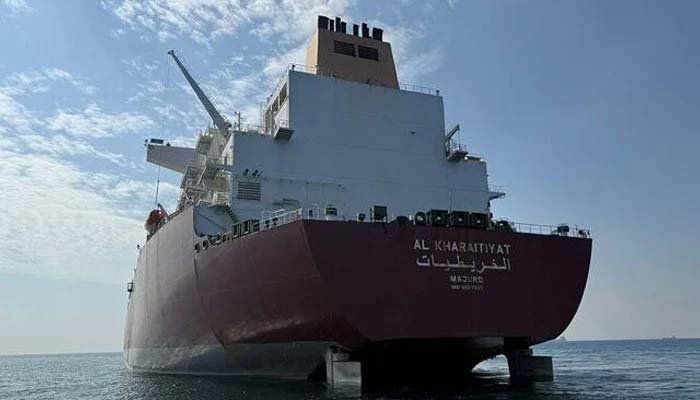

Pakistan has received a timely boost to its LNG supplies after a Qatari cargo reached Port Qasim amid heightened regional tensions.
The LNG carrier Al Marrouna transported around 81,936 metric tonnes of LNG from Qatar’s Ras Laffan terminal. It crossed the strategically important Strait of Hormuz on September 7 under Pakistan’s government-to-government agreement with Qatar.
LNG Cargo Offers Relief to Pakistan
The arrival could provide temporary support to Pakistan’s power sector. Several areas are currently experiencing six to 12 hours of loadshedding.
The cargo was arranged at a price equivalent to 13.37% of Brent. Its successful arrival also provides some relief amid concerns over future LNG supplies.
Meanwhile, Pakistan LNG Limited (PLL) cancelled a spot LNG tender floated on September 5. The tender had been scheduled to open on September 8.
Hormuz Tensions Raise Supply Concerns
The shipment arrived as military tensions continued to affect shipping activity around the Strait of Hormuz.
After a relatively calm August, Iran and the United States have resumed exchanging fire. Shipping traffic through Hormuz has also fallen below its 10-day average.
Iran’s Revolutionary Guards reportedly attacked two US vessels and eight oil tankers in the Gulf. The attacks followed US strikes on five Iranian tankers.
Meanwhile, Iranian-backed Houthis in Yemen launched strikes on several Saudi cities, further expanding the regional conflict.
First Qatari Cargo Since July Escalation
The latest shipment is particularly significant because it is reportedly the first Qatari LNG cargo to leave the Persian Gulf since tensions escalated around Hormuz in July.
The worsening security situation had raised fears of shipping disruptions. It also increased insurance costs for vessels using the vital waterway.
The successful passage of Al Marrouna has eased some concerns about prolonged disruptions to Qatari LNG supplies. Consequently, it has also put downward pressure on Asian Platts JKM and Northwest European LNG prices.
Pakistan Still Faces Energy Risks
Although the cargo provides short-term comfort, it does not eliminate risks to Pakistan’s future LNG supplies.
Any renewed disruption in the Strait of Hormuz could increase procurement costs and put additional pressure on electricity generation.
Qatar has continued diplomatic engagement with Iran while maintaining its position as a major LNG supplier. Its regional diplomatic role could also help reduce risks surrounding future energy shipments.
For the latest updates, visit and follow The Truth International website (www.thetruthinternational.com) and subscribe to the YouTube Channel.

