
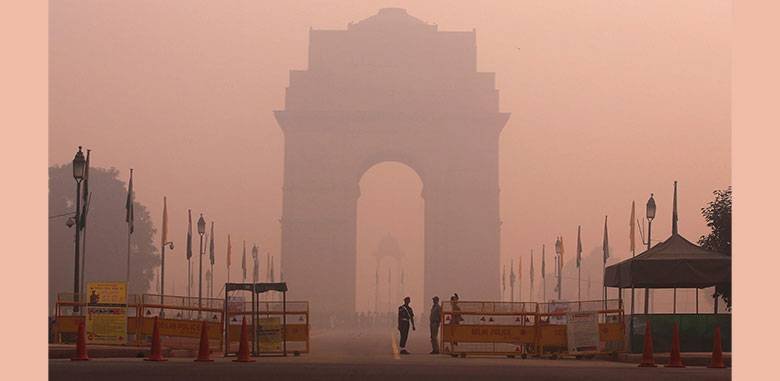

As November arrives, a grey haze often spreads across Punjab’s cities, reducing visibility and raising concerns about air quality. However, what appears to be ordinary winter fog can sometimes signal a much more serious pollution problem.
Although fog and smog may look similar, they have very different causes and environmental effects. Understanding this difference is essential to recognising Punjab’s growing air pollution challenge and evaluating its response.
The provincial government has therefore expanded its efforts beyond seasonal restrictions. Its strategy now targets pollution sources across transport, agriculture, industry and environmental management.
Understanding the Difference Between Fog and Smog
Fog develops naturally when water vapour cools and condenses into tiny water droplets near the Earth’s surface. Smog, however, forms when polluted air contains harmful gases and suspended particles, particularly fine particulate matter such as PM2.5.
This distinction becomes especially important during winter, when weather conditions can trap pollutants closer to the ground. Temperature inversions, weak winds and limited atmospheric movement prevent polluted air from dispersing effectively.
Consequently, emissions from vehicles, factories and other sources accumulate near the surface. When natural fog develops alongside these pollutants, the combination creates the dense grey haze commonly associated with smog.
However, poor visibility alone cannot determine how polluted the air has become. Ordinary fog can reduce visibility without necessarily indicating dangerous pollution levels.
The Air Quality Index (AQI) provides a more useful measure of air pollution and its potential health risks. Therefore, apparently clear skies do not always guarantee healthy air.
Why Punjab Needs a Year-Round Anti-Smog Strategy
Winter weather makes pollution more noticeable, but the sources of harmful emissions remain active throughout the year. Vehicle exhaust, industrial emissions and brick kiln operations contribute significantly to the province’s pollution burden.
Furthermore, construction dust, agricultural residue burning and open waste burning add to the problem. Seasonal weather conditions then intensify these emissions by limiting their dispersion.
As a result, controlling smog requires more than temporary restrictions during winter. Punjab’s strategy increasingly focuses on reducing pollution through coordinated interventions throughout the year.
The approach brings together transport reforms, agricultural alternatives, industrial controls, technological improvements and stricter environmental enforcement.
Punjab Expands Cleaner Transport and Vehicle Emission Testing
Vehicle emissions remain an important target under the province’s clean-air initiatives. To encourage cleaner public transport, Punjab has introduced 1,100 electric buses across 28 districts.
The government also plans to introduce another 1,900 electric buses. This expansion aims to support a transition towards cleaner public transportation.
Meanwhile, authorities have strengthened vehicle emission monitoring to identify excessive pollution. Government testing mechanisms have conducted approximately 1.2 million vehicle emission tests.
These inspections help identify vehicles releasing excessive emissions and support efforts to improve transport-related air quality.
Industrial Pollution Controls and Brick Kiln Reforms
Punjab has also expanded its efforts to control emissions from industrial facilities. The province has facilitated the installation of more than 14,000 emission-control systems.
These installations have brought over 96% of the targeted industrial units under coverage. Consequently, more facilities now fall within the provincial emissions-control initiative.
Brick kilns have also received attention because of their contribution to air pollution. The provincial programme has converted all 8,000 kilns covered by the initiative to zigzag technology.
This transition forms part of broader efforts to reduce emissions from traditional manufacturing activities. Moreover, stronger monitoring and enforcement remain important for maintaining compliance.
How Punjab Is Tackling Agricultural Crop Burning
Agricultural residue burning remains another major concern during the smog season. Farmers sometimes burn leftover crop material, releasing smoke and particulate matter into the atmosphere.
To encourage alternatives, Punjab has distributed more than 10,045 super seeders. Farmers have received these machines through a 60% subsidy.
These machines allow farmers to manage crop residue without relying on traditional burning practices. Furthermore, the initiative aims to make more sustainable agricultural methods accessible.
The reported results indicate a 65% reduction in crop-fire incidents during 2025 compared with 2024.
Punjab has also strengthened field-level enforcement through 67 Quick Response Units. These units comprise 750 officers tasked with responding to reported agricultural fires.
Authorities have set a targeted response time of 10–15 minutes for these teams. This system aims to prevent reported fires from continuing unchecked.
Technology Strengthens Punjab’s Air Quality Monitoring
Effective pollution control requires accurate monitoring and timely identification of environmental violations. Therefore, Punjab has expanded its air-quality monitoring infrastructure.
The province has established 80 air-quality monitoring stations and aims to increase the network to 103 by the end of 2026.
Additionally, authorities are introducing artificial intelligence-enabled monitoring and digital reporting systems. These tools can strengthen environmental surveillance and help officials identify potential violations.
Improved monitoring also allows authorities to assess pollution conditions more effectively. Consequently, technology has become an important component of Punjab’s wider anti-smog strategy.
What Do Recent Air Quality and Health Figures Reveal?
Recent environmental and healthcare indicators provide some encouraging signals about Punjab’s pollution-control efforts. However, these figures require careful interpretation when assessing long-term progress.
According to the reported figures:
- October 2026 recorded Lahore’s cleanest October in the previous five years.
- Reported patients across five smog-related disease categories declined by 43% during January–October 2026 compared with the same period in 2025.
- Respiratory illness outpatients decreased from approximately 22.87 million in January–October 2023 to 7 million during the corresponding months of 2026.
These figures suggest improvements across several environmental and health indicators. Nevertheless, researchers and policymakers must consider multiple factors when evaluating these changes.
Weather patterns, pollution exposure and healthcare reporting can influence the figures. Therefore, authorities cannot attribute every improvement to a single government intervention.
Continued monitoring will help establish whether these positive trends remain consistent over time.
What Punjab Can Learn From Other Countries
Several countries have demonstrated that sustained policies can improve air quality. Experiences from China, South Korea, the United Kingdom, Japan and Mexico offer useful lessons.
Their pollution-control efforts highlight the importance of effective environmental legislation and consistent enforcement. They also demonstrate the value of cooperation across different sectors.
Furthermore, sustained investment in pollution reduction remains essential for lasting improvements. Punjab’s strategy draws on these broader lessons while addressing its own environmental challenges.
Punjab’s 10-Year Smog Mitigation Plan
The provincial government has introduced a 10-year Smog Mitigation Plan to tackle pollution through long-term interventions. Rather than relying exclusively on seasonal restrictions, the programme targets several major pollution-generating sectors.
Its strategy combines stronger environmental regulations with cleaner transport and improved industrial practices. It also promotes sustainable agriculture and expands investment in air-quality monitoring.
The first two years of the programme have brought several interventions across these sectors. Meanwhile, reported environmental and healthcare indicators have shown encouraging downward trends.
However, lasting improvements will require consistent implementation and effective enforcement. Authorities must also ensure that industries, farmers and other stakeholders follow environmental requirements.
The next phase will therefore focus on maintaining progress and strengthening existing measures. Ultimately, the effectiveness of the programme will depend on sustained action throughout its 10-year duration.
How Citizens Can Help Reduce Air Pollution
Government policies and enforcement play an important role in improving air quality. Nevertheless, lasting progress also requires cooperation from businesses, farmers, households and individual citizens.
Everyday activities can contribute to pollution, particularly when people burn waste or ignore vehicle emissions. Therefore, small changes in daily practices can support broader environmental efforts.
Residents can contribute by avoiding open waste burning and maintaining their vehicles properly. They can also minimise construction dust and encourage cleaner agricultural practices.
Businesses should follow environmental regulations and avoid activities that release harmful emissions. Similarly, farmers can adopt alternative methods instead of burning agricultural residues.
Public participation also includes reporting environmental violations to the relevant authorities. Citizens can use the Green Punjab App or contact the helpline at 1373 to report such activities.
Punjab’s fight against smog ultimately depends on reducing pollution at its source, rather than simply clearing the winter haze. Cleaner transport, responsible industrial practices and sustainable agriculture must remain priorities throughout the year.
The challenge now is to turn these initiatives into lasting environmental improvements. Achieving cleaner air and healthier communities will require continued government action and active public participation.
For the latest updates, visit and follow The Truth International website (www.thetruthinternational.com) and subscribe to the YouTube Channel.

