
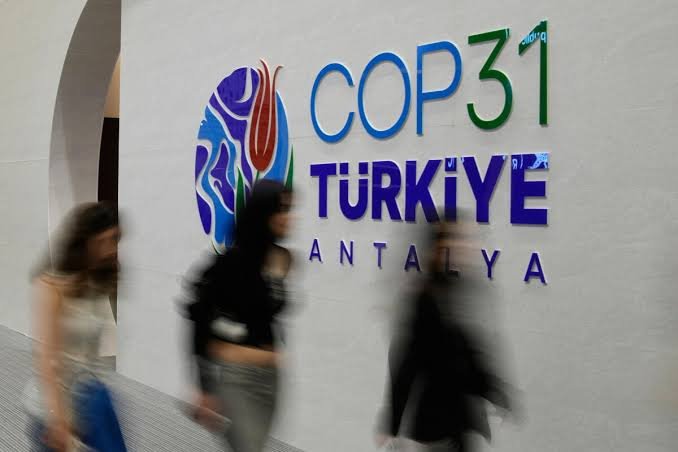

The COP31 climate summit in Türkiye ended without an agreement on Sunday after the European Union and several countries rejected the final draft. They argued that the proposed deal failed to deliver meaningful action against global warming, particularly regarding fossil fuels.
The breakdown followed more than two weeks of negotiations, which continued two days beyond the scheduled deadline. Despite prolonged discussions, delegates failed to bridge major disagreements over fossil fuel commitments and climate finance.
COP31 President Murat Kurum announced that no agreement was possible during the closing plenary. He also confirmed that negotiators would not receive another draft for consideration.
“There is nothing to do, we did all that we could. Since there are 196 countries, they will make the decision and we will respect their decision,” he said. “There will be no new text from now on.”
The collapse marks a significant setback for international climate negotiations. Moreover, it highlights deep divisions over how countries should address fossil fuel consumption and finance climate action.
Fossil Fuels and Climate Finance Trigger Major Disagreements
Australia’s COP31 negotiating president Chris Bowen described the failure to secure an agreement as deeply disappointing. He identified disagreements over fossil fuel language and climate finance as the main obstacles.
Ireland’s Environment Minister Darragh O’Brien said the European Union could not accept the proposed text. One major concern was its failure to explicitly mention fossil fuels.
“It is unconscionable that we would have a climate act that makes no reference to fossil fuel, no reference to transitioning away from fossil fuels,” he said.
Similarly, Panama rejected the draft, arguing that it failed to reflect the seriousness and urgency of the climate crisis.
The latest breakdown marks another difficult moment for international climate diplomacy. The last time UN climate negotiations failed to secure an agreement adopted by all participating countries was in Copenhagen in 2009.
Meanwhile, competing global crises have complicated climate discussions. Ongoing wars and public frustration over living costs have also diverted political attention from climate challenges.
Oil-Producing Countries Oppose Explicit Fossil Fuel References
Pressure from major oil-producing countries reportedly played an important role in shaping the negotiations.
Observers said Saudi Arabia and other major oil producers pushed for a final text without explicit references to fossil fuels. However, they supported including carbon-removal technologies in the proposed agreement.
The draft acknowledged that global temperatures would exceed the 1.5-degree Celsius threshold. However, it emphasised faster development of carbon-removal technologies to eventually reverse the temperature overshoot.
Scientists consider carbon removal important when combined with substantial emissions reductions. Nevertheless, critics warned that the proposed language could allow countries to continue extracting oil.
They argued that relying on future technologies could weaken immediate commitments to reduce fossil fuel consumption.
A representative of the Saudi delegation questioned the opposition to technological solutions during the summit.
“If indeed the climate challenge, as some have mentioned today, is so important, it makes no sense that solutions, concrete solutions… will be taken off the table,” he said.
COP31 Collapse Raises Concerns Over 1.5°C Climate Target
This year’s summit was particularly significant because of growing concerns about global temperature increases.
In October, the UN’s environmental body confirmed that global warming was set to exceed 1.5 degrees Celsius. Countries established this threshold during the Paris climate negotiations more than a decade ago.
The limit aims to prevent the most severe consequences of climate change. Furthermore, scientists warn that extreme weather impacts intensify as temperatures rise beyond this level.
The COP process remains the primary international platform for coordinating efforts against global warming. Annual meetings allow countries to negotiate emissions reductions and financial support for climate-related challenges.
However, the failure to adopt a political declaration in Antalya does not cancel commitments made during previous climate summits. Existing technical and legal frameworks for international climate cooperation also remain in place.
Nevertheless, the breakdown highlights continuing disagreements over fossil fuels, climate finance and responsibility for reducing global emissions.
For the latest updates, visit and follow The Truth International website (www.thetruthinternational.com) and subscribe to the YouTube Channel.

