
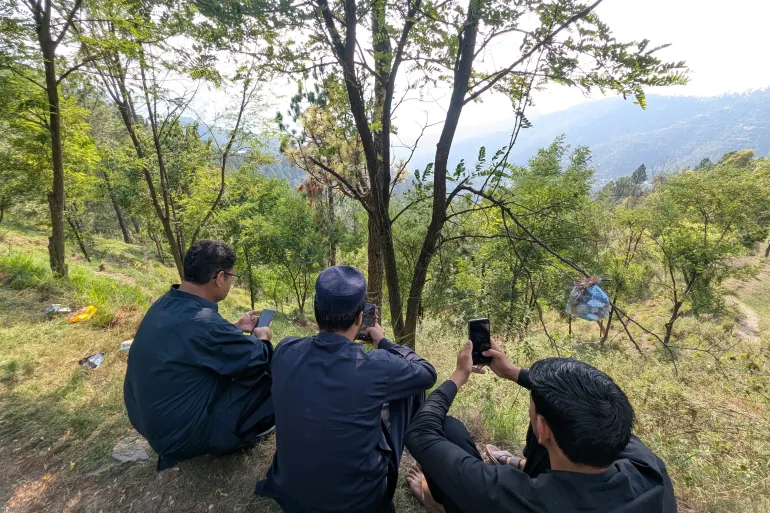

Residents report healthcare, education and business challenges amid prolonged unrest
MUZAFFARABAD: Weeks of protests, road blockades and a prolonged internet shutdown have disrupted daily life across Pakistan-administered Kashmir, with residents reporting growing difficulties in accessing healthcare, education and essential services ahead of the region’s phased legislative assembly elections.
The unrest began in June after authorities banned the Joint Awami Action Committee (JAAC), a coalition opposing several government policies, including the continuation of legislative assembly seats reserved for Kashmiri refugees. Since then, strikes, demonstrations and clashes have resulted in casualties among protesters and law enforcement personnel, while restrictions have affected several districts, particularly Poonch Division.
Residents say the disruptions have created serious challenges. Zaheer Iqbal, a labourer from Keri Kot, recalled carrying his brother on a makeshift stretcher to reach the nearest road after he suffered chest pain because no ambulance could access the village. The family then arranged transport and fuel through relatives and neighbours before eventually reaching a hospital in Islamabad, where his brother received treatment.
Businesses and students face mounting difficulties
Residents and traders say the suspension of mobile and internet services since early June has severely affected businesses, banking and communication. Business owners reported financial losses, while students said they were unable to complete academic activities or entrance examinations.
Educators also expressed concern that delayed examinations could affect university admissions, leaving many students uncertain about their academic future.
Meanwhile, traders reported shortages of subsidised wheat because transport disruptions delayed supplies, forcing many consumers to purchase flour at significantly higher market prices.
Authorities and residents offer contrasting views
Government officials maintain that restrictions remain limited to specific areas and say election campaigning continues normally across much of the region. However, many residents describe widespread connectivity problems and continued disruption to daily life.
While some citizens believe political issues should be resolved through parliament rather than street protests, others remain frustrated by the prolonged restrictions and their economic impact.
With elections approaching, many residents continue to call for the restoration of internet services, uninterrupted transport and improved access to healthcare, education and essential supplies as authorities work to restore stability across the region.

