
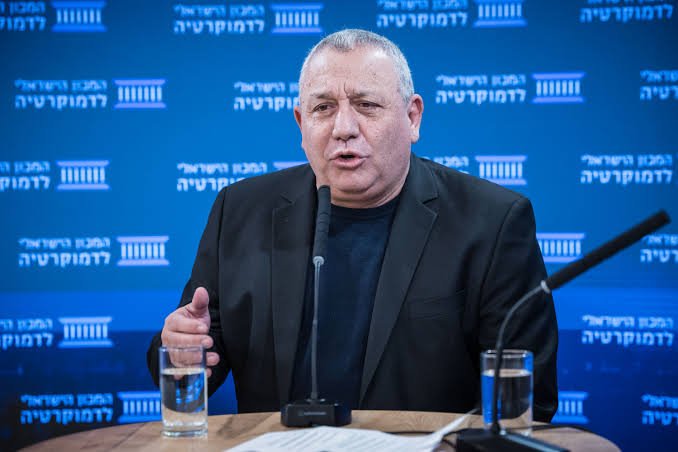

Former military chief campaigns on governance while critics scrutinise his defence policies
JERUSALEM: Former Israeli military chief Gadi Eisenkot has emerged ahead of Prime Minister Benjamin Netanyahu in a recent opinion poll, as political debate intensifies ahead of Israel’s next general election.
According to a July Channel 12 survey, Eisenkot’s newly formed Yashar party would win 23 seats in the 120-member Knesset, narrowly surpassing Netanyahu’s Likud party with 22 seats. The poll also found that 43 percent of respondents viewed Eisenkot as the more suitable candidate for prime minister, compared with 34 percent for Netanyahu.
Eisenkot has criticised Netanyahu’s handling of the October 7, 2023 hostage crisis, alleging that the prime minister approved and later undermined an early agreement with Hamas that could have secured the release of additional captives. Netanyahu has rejected criticism of his government’s conduct.
Campaign focuses on security and domestic reforms
Yashar has pledged to strengthen Israel’s security institutions, promote national unity and reform military conscription by expanding compulsory service to include ultra-Orthodox Jewish men. The party also supports repealing legislation that it says allowed exemptions from military service.
Eisenkot has additionally called for Hamas to be removed from power in Gaza and replaced by a reformed Palestinian Authority. He has also opposed the establishment of a Palestinian state while supporting continued Israeli settlement activity in the occupied West Bank, although he has argued against formal annexation.
Military record remains under scrutiny
Eisenkot’s military career continues to attract significant attention. As head of Israel’s Northern Command, he articulated what became known as the Dahiya Doctrine, a military concept involving the use of overwhelming force against areas from which attacks are launched.
Human rights organisations and United Nations bodies have criticised Israeli military operations conducted during conflicts in Gaza and Lebanon, alleging violations of international law. Israel has consistently rejected allegations that its military deliberately targets civilians, stating that it acts in accordance with international law and attributes civilian casualties to Hamas and other armed groups operating in populated areas.
As campaigning continues, analysts say the election debate is likely to focus on leadership, national security and the future direction of Israeli policy toward both domestic governance and the Israeli-Palestinian conflict.

