
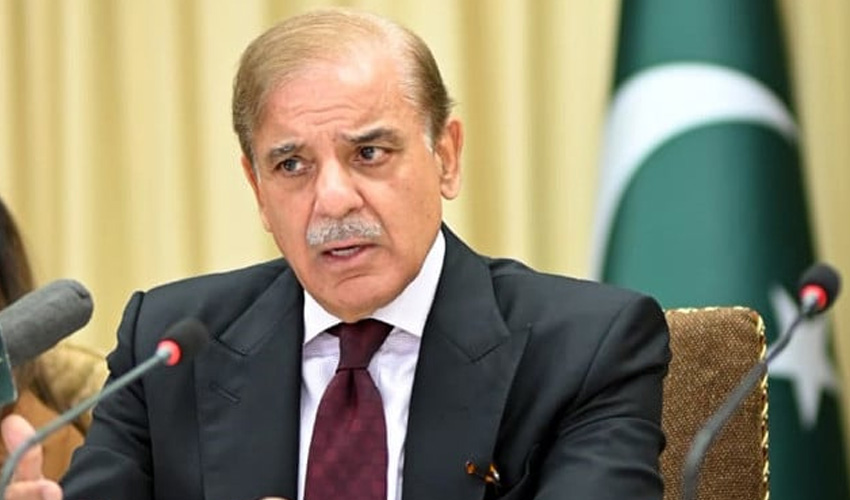

A major diplomatic development emerged early Thursday after Prime Minister Shehbaz Sharif announced that the United States and Iran had electronically signed what he described as the Islamabad Memorandum of Understanding, creating expectations of an immediate reduction in regional tensions and economic disruption.
According to the announcement, the agreement has already entered into force and includes immediate measures affecting regional trade, maritime activity, and broader economic stability.
PM Shehbaz Announces Electronic Signing of US-Iran Agreement
Prime Minister Shehbaz stated that the agreement had been formally approved through electronic signatures by both countries and had also received endorsement through Pakistan’s mediation role.
“The memorandum has been signed by honourable presidents of both the countries and also endorsed by me as the mediator. The signing of this agreement at the highest level of the respective governments demonstrates the commitment of both sides to a diplomatic resolution of the conflict.”
The announcement positioned the agreement as an attempt to move tensions away from military escalation and toward negotiated engagement.
Strait of Hormuz to Reopen as Initial Step
According to the details shared by the prime minister, the agreement introduces immediate reciprocal actions from both sides.
He stated that the first phase of implementation would involve the reopening of one of the world’s most strategically important waterways.
The prime minister said:
“The MoU shall enter into force with immediate effect and as a first step, Islamic Republic of Iran will instantly reopen the Strait of Hormuz and the United States of America will immediately lift the naval blockade”.
These measures could have implications for global shipping activity, regional energy flows, and international trade patterns.
Digital Signing Replaces Planned Ceremony
Initially, it was indicated that an official ceremony would take place on June 19 in Switzerland and that technical-level discussions would begin following the event.
However, later updates suggested that the formal ceremony would no longer take place because both sides had already completed the signing process electronically.
Officials explained that the digital signatures made an additional public signing unnecessary.
Recognition for Negotiating Teams and Regional Partners
Prime Minister Shehbaz congratulated US President Donald Trump and highlighted his diplomatic role during the process.
He stated:
“steadfast commitment to diplomacy and preference for peaceful resolution have once again helped end a conflict that could have led to devastating consequences for the region and beyond”.
He also acknowledged the contribution of senior members of the US negotiating team, including Vice President JD Vance and special envoys Steve Witkoff and Jared Kushner.
According to the statement, these individuals played important roles during the negotiations and supported the final outcome.
The prime minister also expressed appreciation for Iran’s leadership.
He praised Iran’s Supreme Leader Ayatollah Mojtaba Khamenei and President Masoud Pezeshkian for their role in advancing diplomatic engagement.
In addition, he recognised the contribution of Iranian officials including Mohammad Bagher Ghalibaf, Abbas Araghchi, and Eskandar Momeni.
He said:
“I also wish to recognise the efforts of the Iranian negotiating team, including Mohammad Bagher Ghalibaf, Abbas Araghchi and Eskandar Momeni, whose patience, perseverance and commitment to constructive engagement were instrumental in bringing this agreement to fruition.”
Regional countries including Qatar, Saudi Arabia, Turkiye, and Egypt were also acknowledged for engagement during the diplomatic process.
The prime minister additionally highlighted the involvement of Chief of Defence Forces Field Marshal Asim Munir and credited his efforts in supporting dialogue and regional stability.
Agreement Includes Economic and Nuclear Commitments
According to details released about the understanding, the agreement aims to draw a line under the conflict that escalated after military actions beginning on February 28 and the regional responses that followed.
The document outlines several economic and strategic commitments.
Among the immediate measures, Washington would waive oil sanctions affecting Iran’s economy.
Additionally, the agreement states that after a final nuclear understanding is achieved, the United States would facilitate the release of a reconstruction fund worth $300 billion with support from regional partners.
The framework also addresses Iran’s enriched uranium stock.
Under the outlined arrangement, Iran would reduce enriched uranium reserves through possible “down-blending on site under the supervision of the IAEA”.
A Diplomatic Moment With Wider Regional Impact
The announcement has placed attention on diplomacy as a mechanism for reducing regional tensions and restoring economic stability.
If implementation moves forward as described, the agreement could affect maritime trade routes, energy markets, reconstruction efforts, and future negotiations over regional security.
The coming period will determine how the announced commitments translate into practical outcomes and whether the agreement creates a longer-term framework for stability across the region.

