
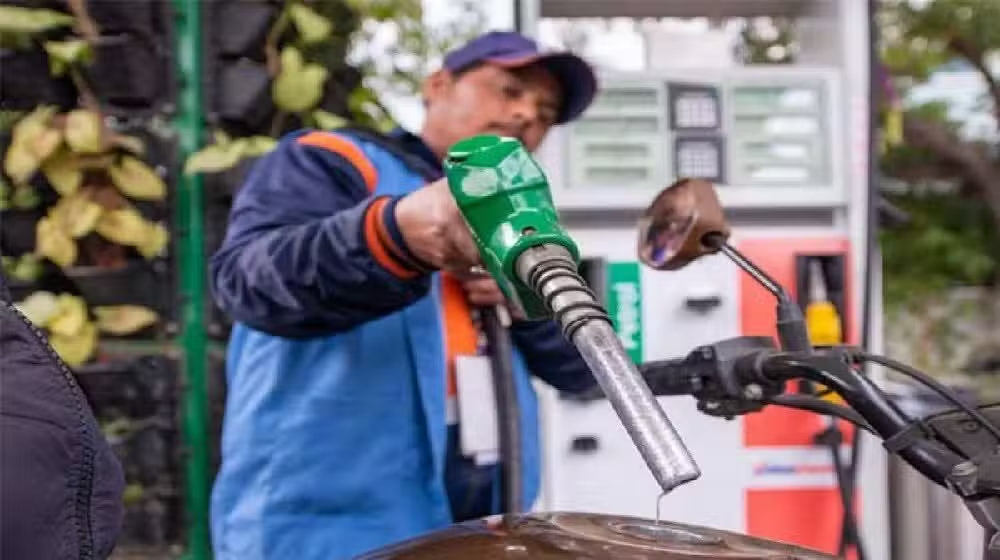

New Fuel Prices Take Effect From August 6
The federal government has increased the price of petrol by Rs4.45 per litre while reducing high-speed diesel by Rs2 per litre.
Following the latest revision, petrol will now cost Rs333.01 per litre.
The price of high-speed diesel has been reduced to Rs383.86 per litre.
The revised prices will take effect from Thursday, August 6, according to a notification issued by the Petroleum Division.
Before the latest adjustment, petrol was selling for Rs328.56 per litre. High-speed diesel was priced at Rs385.86 per litre on August 5.
The government continues to collect Rs110 per litre in taxes and duties on petrol.
Taxes and duties on high-speed diesel remain at Rs96 per litre.
These charges remain a major part of the final retail prices paid by consumers.
Petrol Rises While Diesel Continues Falling From Record Peak
The latest revision moves petrol prices upward after a brief reduction.
However, high-speed diesel has continued its gradual decline from the record level reached during the Middle East conflict.
Diesel reached a peak of Rs520.35 per litre on April 3.
Its price had begun rising from around Rs281 per litre after the conflict between the United States and Iran started on February 28.
Petrol also experienced a sharp increase during the same period.
Its price rose from approximately Rs266 per litre in early March to a record Rs458.40 on April 3.
International oil prices, shipping risks and concerns about supplies through the Strait of Hormuz contributed to the earlier increases.
The government later reduced prices as global oil markets stabilised and supply concerns eased.
Pakistan depends heavily on imported petroleum products. This makes domestic fuel prices highly vulnerable to global market changes and regional conflicts.
Daily Pricing System Brings Frequent Changes
Petroleum Minister Ali Pervaiz Malik previously announced that fuel prices would be revised daily instead of weekly.
The government introduced the system following sharp and frequent movements in international oil prices.
Under the new policy, the Oil and Gas Regulatory Authority determines and publishes petroleum prices based on global market trends.
The government says the daily mechanism will improve transparency and allow international price changes to reach consumers more quickly.
Pakistan had shifted to weekly fuel price revisions in early March after the conflict disrupted global energy markets.
The government also introduced fuel conservation measures and targeted relief programmes amid fears of supply shortages.
However, the move towards daily pricing has faced opposition from petroleum dealers.
The All Pakistan Petroleum Dealers Association rejected the policy and warned that it could consider protests.
Dealers have raised concerns about operational difficulties, changing stock values and daily adjustments at filling stations.
Petrol is widely used in motorcycles, small vehicles, private cars and three-wheelers.
An increase in its price directly affects daily commuters and middle-income households.
High-speed diesel is mainly consumed by buses, trucks, agricultural machinery, power plants and large generators.
A reduction in diesel prices could lower operating costs for transporters and businesses.
However, the impact on fares and commodity prices will depend on whether transport operators pass the reduction to consumers.
Petrol and high-speed diesel remain Pakistan’s largest-selling petroleum products.
Their combined monthly sales are estimated between 700,000 and 800,000 tonnes.
By comparison, monthly kerosene demand stands at approximately 10,000 tonnes.
The latest mixed revision means motorists will pay more for petrol, while commercial transport operators will receive limited relief through cheaper diesel.

