
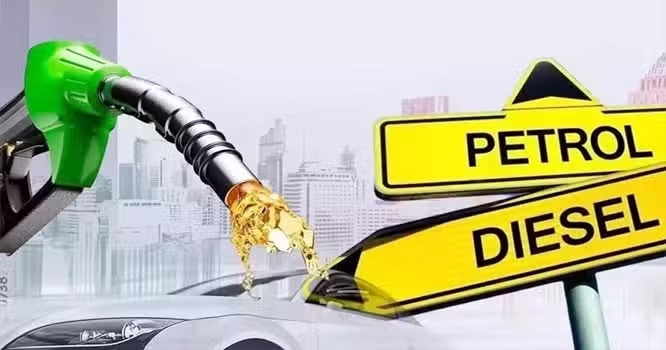

Pakistan has raised petrol and high-speed diesel prices again, adding further pressure on consumers from October 9. The federal government increased petrol by Rs2.31 per litre and high-speed diesel by 78 paisas.
Following the latest revision, petrol will cost Rs398.96 per litre. Meanwhile, high-speed diesel (HSD) will be available at Rs395.72 per litre on Friday.
The government announced the new rates through a Petroleum Division notification on Thursday. The revision came only a day after another adjustment in petroleum prices.
New Petrol and Diesel Prices
Under the latest notification, the price of petrol has increased by Rs2.31 per litre. Consequently, the new petrol price stands at Rs398.96 per litre.
The government also raised the price of high-speed diesel by 78 paisas. Therefore, HSD will cost Rs395.72 per litre from October 9.
The latest increase follows Wednesday’s adjustment. On October 8, the government had increased petrol by Rs1.82 per litre.
However, it reduced the price of HSD by 91 paisas per litre for October 8. The consecutive revisions highlight the impact of the daily petroleum pricing system.
Pakistan Moves to Daily Fuel Price Reviews
The government introduced a new petroleum pricing mechanism on July 17. Under this system, petroleum prices are reviewed and notified every day.
The new mechanism replaced the previous weekly pricing system. The change came as renewed tensions between the United States and Iran increased volatility in global oil markets.
Those developments also raised concerns about fuel supplies. As a result, changes in international oil markets can feed into domestic petroleum prices more frequently.
Government Plans Fuel Relief for Lower-Income Consumers
The government has also proposed measures to reduce the impact of higher fuel prices on lower-income consumers.
On September 13, Prime Minister Shehbaz Sharif announced a special relief scheme. The proposal offers a Rs100 per litre reduction on petrol for eligible users.
The relief targets motorcycles, three-wheeler rickshaws and cars with engines up to 800cc. An estimated 11.8 million beneficiaries would receive support under the proposal.
Around 10 million two-wheeler users and 800,000 three-wheeler users would qualify. Each would receive relief on up to 20 litres of petrol every month.
This would provide a maximum monthly benefit of Rs2,000 per beneficiary. Additionally, around one million users of cars up to 800cc would qualify.
These car users would receive relief on up to 30 litres per month. Their maximum monthly benefit would reach Rs3,000.
Fuel Conservation Measures Return
Rising fuel prices have also prompted the government to revive austerity and fuel conservation measures.
On September 17, the government reintroduced measures aimed at reducing fuel consumption. The measures also tightened operating hours for businesses and restricted certain public events.
Under the notified measures, shops, markets, shopping malls and bazaars must close by 9pm throughout the week. Departmental stores, grocery stores, general stores and kiryana shops also fall under the timing restrictions.
Marriage halls, marquees and other commercial venues hosting festive events must close by 10pm. Meanwhile, restaurants, cafes, eateries and food outlets can operate until 11pm.
Standalone fruit and vegetable shops can also remain open until 11pm. However, takeaway and home delivery services remain exempt from the timing restrictions.
Global Oil Markets Remain a Key Risk
International developments continue to create uncertainty for global oil markets. Several geopolitical and supply-related factors can influence crude oil prices.
OPEC+ decisions remain an important factor in international oil markets. Conflicts in the Middle East and sanctions affecting oil-producing nations can also influence prices.
Moreover, disruptions along important shipping routes can affect crude oil supplies and transportation costs. The Strait of Hormuz and the Red Sea remain particularly important routes for global energy shipments.
Any disruption to these supply chains can increase crude oil prices and freight costs. Since Pakistan imports most of its petroleum requirements, global market changes can quickly affect domestic fuel prices.
For consumers, the latest increase means petrol will reach Rs398.96 per litre from October 9. High-speed diesel will also rise to Rs395.72 per litre under the government’s daily pricing mechanism.
For the latest updates, visit and follow The Truth International website (www.thetruthinternational.com) and subscribe to the YouTube Channel.

