
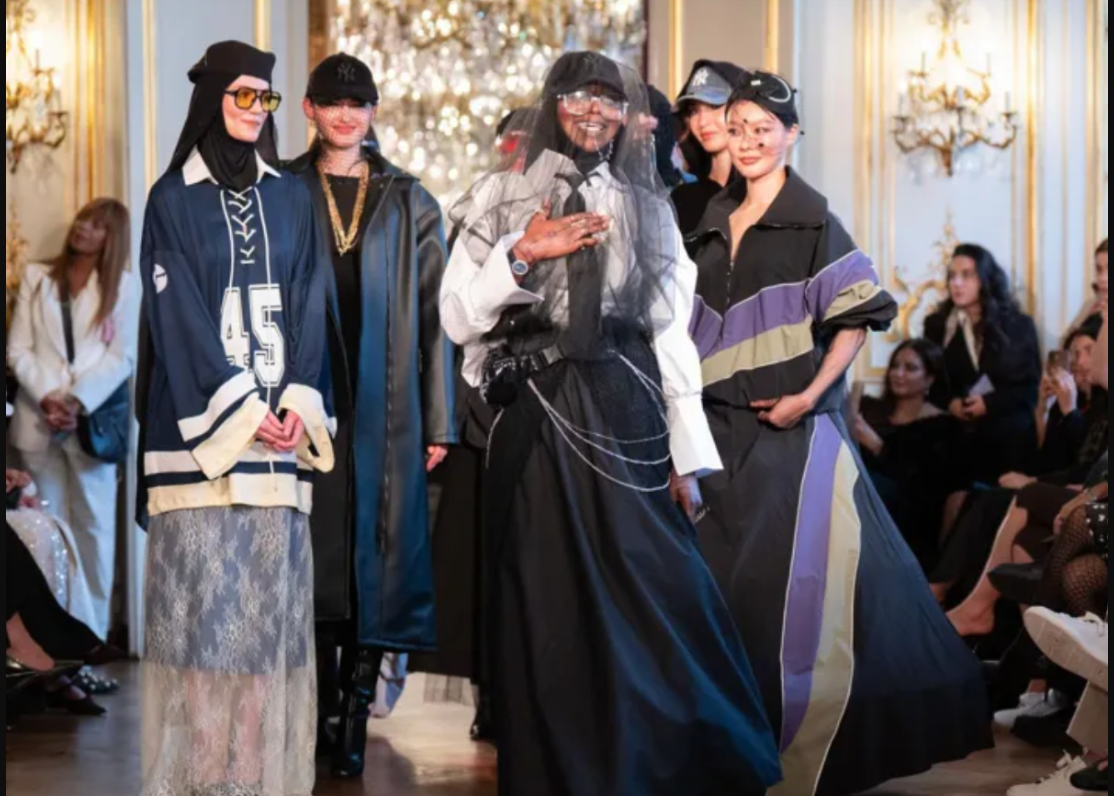

Paris has hosted its first-ever Modest Fashion Week, marking a significant moment in global fashion. The event featured around 30 designers from across the world.
Moreover, the showcase focused on clothing designed for modest dressing. These styles often reflect cultural and religious values.
Global Designers Present Diverse Collections
Designers from countries including Nigeria, Turkey, Indonesia, and Australia participated in the event. Each brought unique interpretations of modest fashion.
In addition, collections included loose-fitting garments, long dresses, and headscarves. Many outfits covered arms, legs, and sometimes hair.
Therefore, the runway highlighted both traditional and modern aesthetics.
Runway Showcases Blend Tradition and Modern Style
The event took place at a historic venue near the Champs-Élysées. Designers presented a wide range of creative styles.
Furthermore, floral prints and flowing silhouettes were prominent. Nature-inspired colour palettes also dominated several collections.
At the same time, some designers introduced contemporary streetwear elements. These looks reflected evolving trends among younger audiences.
Symbolic Significance in France
Organisers said hosting the event in France carried symbolic importance. The country has long debated religious clothing in public life.
Moreover, France follows strict secularism laws that regulate religious expression. This adds deeper meaning to the event’s location.
France is home to an estimated 5 to 7.5 million Muslims. Therefore, the event also reflects the presence of diverse communities.
Growing Modest Fashion Industry
The modest fashion sector has grown rapidly in recent years. Global spending is expected to exceed $400 billion soon.
In addition, the market now attracts a broader audience. It includes both religious and non-religious consumers.
Therefore, modest fashion is no longer limited to a single group.
Debate Over Religious Dress Continues
The event took place amid ongoing discussions about religious dress in France. Laws restrict certain religious symbols in public spaces.
For example, headscarves are banned in state schools. Some restrictions also apply to specific types of swimwear.
However, opinions remain divided on these policies. Some see them as necessary, while others view them as limiting personal freedom.
Voices from Designers and Attendees
Several designers and attendees welcomed the event as a positive step. They said it reflected growing acceptance of modest fashion.
Moreover, some described it as increased visibility for Muslim women. The event highlighted their presence in global fashion.
At the same time, others noted that challenges still exist. Restrictions in public life continue to shape the debate.

