
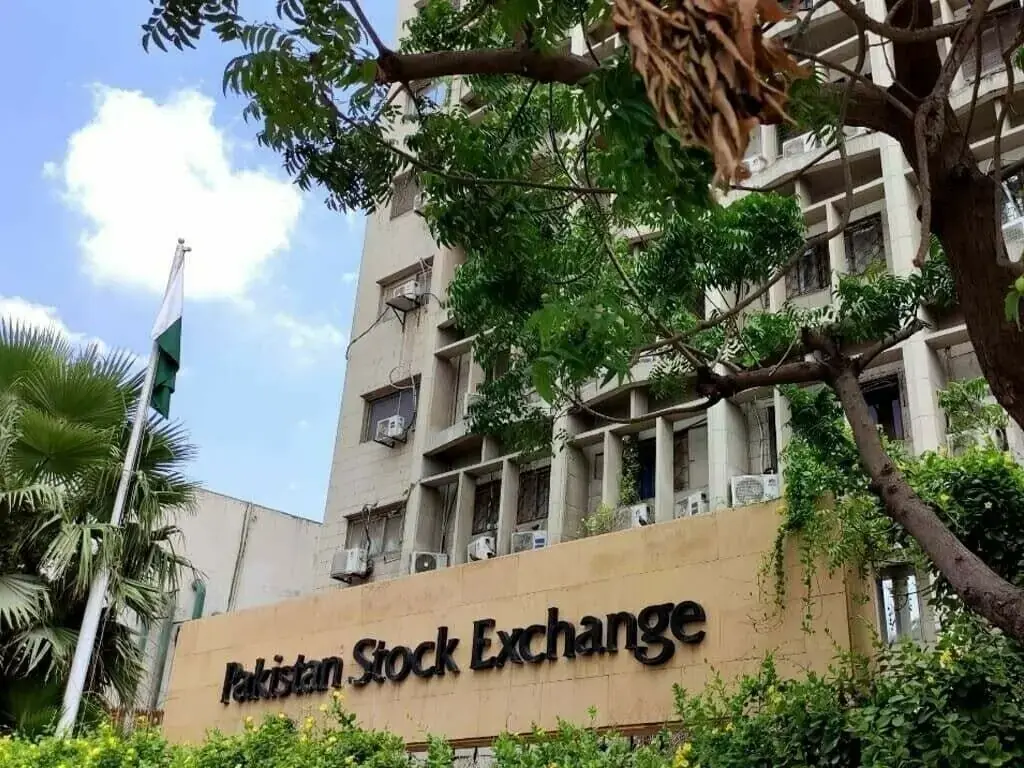

Benchmark KSE-100 gains over 2,100 points while regional markets also advance
KARACHI: Pakistan’s stock market opened sharply higher on Tuesday as investors responded positively to reports of renewed mediation efforts between Iran and the United States, boosting confidence across key sectors.
By 12:00pm, the Pakistan Stock Exchange’s benchmark KSE-100 Index had climbed to 178,119.17 points, rising 2,191.44 points, or 1.23%, from the previous close.
Strong buying interest emerged in automobile assemblers, cement companies, commercial banks, oil and gas exploration firms, oil marketing companies and power generation stocks. Major index-heavy shares, including HUBCO, MARI, OGDC, PPL, POL, HBL, MEBL, MCB and NBP, traded in positive territory, contributing to the market’s gains.
The rally followed Monday’s modest advance, when the benchmark index added 124.95 points, or 0.07%, to close at 175,927.74.
Regional markets strengthen
Meanwhile, Asian equity markets also moved higher as reports of diplomatic efforts in the Middle East eased concerns over a prolonged disruption to global energy supplies.
MSCI’s broad Asia-Pacific index excluding Japan edged higher after three consecutive losing sessions. Japan’s stock market gained more than one percent, while South Korea’s KOSPI surged nearly three percent as investors awaited a fresh round of corporate earnings.
At the same time, market participants continued monitoring geopolitical developments across the region.
Oil prices retreat from recent highs
Brent crude futures fell 0.38% to $88.88 per barrel in early trading after reaching a one-month high of $91.42 during the previous session. The decline reflected optimism that diplomatic efforts could help reduce regional tensions.
However, investors remained cautious after Yemen’s Houthi movement announced a naval blockade against Saudi Arabia, raising concerns about potential risks to regional energy supplies and maritime security.
Analysts said the combination of easing oil prices and hopes for renewed diplomatic engagement supported investor appetite for equities. Nevertheless, they cautioned that markets are likely to remain sensitive to developments in the Middle East, as geopolitical uncertainty and energy price volatility continue to influence investor sentiment across regional and global financial markets.

