
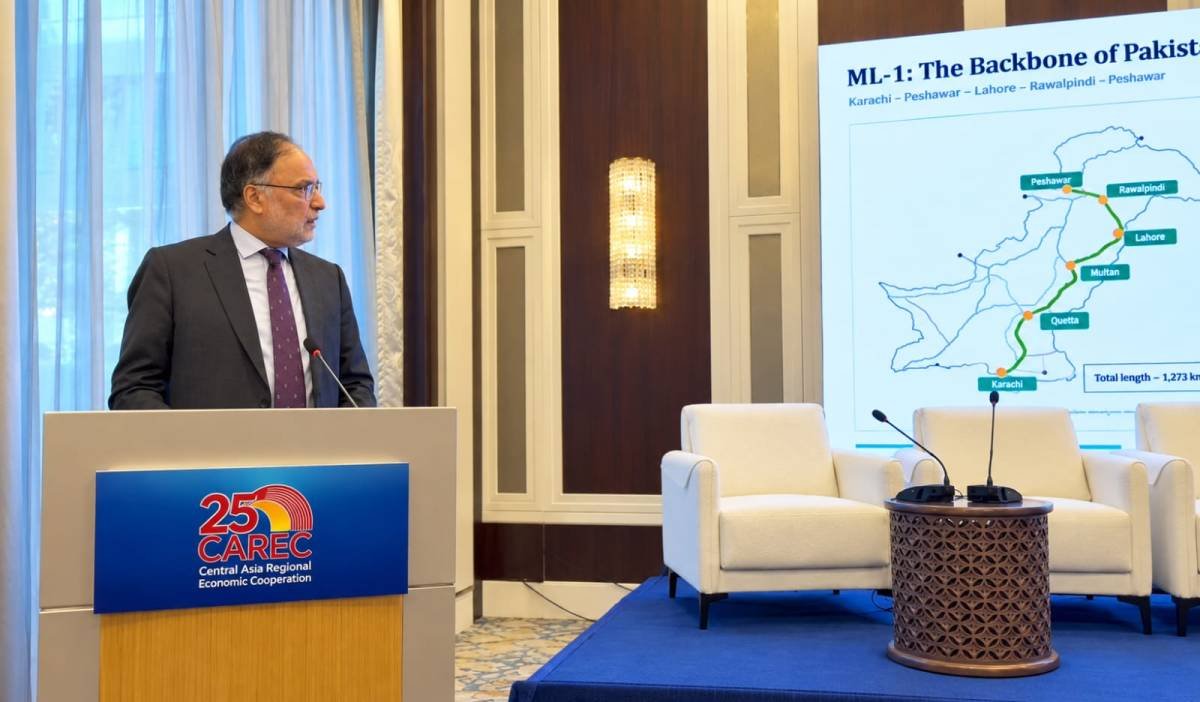

Pakistan has called for a major upgrade of Central Asia Regional Economic Cooperation (CAREC) transport routes, seeking to turn them into integrated economic corridors linking Central Asia with global markets.
Federal Minister for Planning, Development and Special Initiatives Ahsan Iqbal presented the proposal at the 25th CAREC Ministerial Conference in Ulaanbaatar, Mongolia. He said CAREC Corridors 5 and 6 could connect Central Asian markets with the Arabian Sea through Pakistan.
Focus Shifts From Roads to Trade
Iqbal said regional connectivity should go beyond simply allowing trucks to cross borders. The objective, he said, should be reliable, competitive and profitable trade movement.
Pakistan has proposed upgraded CAREC roads, modern border facilities at Torkham and Chaman, stronger rail freight through the proposed ML-1 upgrade, and better links between dry ports and seaports.
The minister also called for logistics and production hubs along major routes. These could include cold storage, packaging, warehousing and light manufacturing facilities. Such infrastructure could help turn transit traffic into exports, employment and local economic activity.
Digital and Energy Connectivity
Pakistan also proposed developing a regional digital corridor using the Pakistan Single Window as a foundation for phased digital integration.
Iqbal called for advance electronic information, coordinated border procedures and fewer repeated checks. He also urged CAREC members to improve energy cooperation and build infrastructure that can withstand climate-related risks.
He proposed measuring progress through indicators such as border delays, delivery times, local employment and small-business participation.
Pakistan to Lead CAREC in 2027
Pakistan is set to assume the CAREC chairmanship in 2027 and host the 26th Ministerial Conference.
On the sidelines of the Ulaanbaatar meeting, a memorandum was also signed between the CAREC Capital Markets Development Forum and ASEAN Capital Markets Forum to strengthen financial cooperation, regulatory coordination and regional capital-market connectivity.

